Imagine July 17, 2013. The ESPYS were happening, with Lake Bell and Bill Hader hosting. Six kids from Southwest Florida were trying not to spill drinks on LeBron James.
This wasn’t just another Cinderella story. It was the moment America found a university no one knew existed. The 2013 Sweet 16 run was more than basketball. It was a cultural explosion.
How did a 15-seed from Fort Myers become national darlings? The odds were against them. Yet, a decade later, we’re looking back at how two weeks changed a region’s sports identity.
The FGCU basketball history lesson starts with irony. A school known for beaches became Dunk City. Their aerial attack amazed millions and made analysts rethink tournament basketball.
Setting the stage: How the “Dunk City” name was born
Most college branding feels like it’s made by a committee. But sometimes, magic happens when no one is trying. The Dunk City phenomenon wasn’t made in a meeting. It started on the court at Alico Arena and went viral on social media.
Imagine March 2013. FGCU dunked all over Georgetown’s reputation. A digital intern, fueled by caffeine and disbelief, typed “Dunk City” on Twitter.
That tweet was real. The players had been living the brand all season. The social media team just gave it a name. Most marketing firms spend millions trying to do this.
The economic impact was huge right away. Men’s apparel sales went up 2,270% overnight. People from Naples to Fort Myers wanted Dunk City gear. The university’s branding team must have needed extra coffee.
This wasn’t just smart branding. It was cultural magic. Dunk City captured the team’s style and underdog spirit. Those dunks were more than just plays; they were a middle finger to the establishment.
The phenomenon turned Alico Arena into a basketball revolution center. Tickets were as hot as a Southwest Florida summer. The economic impact helped local businesses, hotels, and restaurants. As local coverage noted, FGCU’s Cinderella story put it on the map in ways traditional recruitment couldn’t.
Think about it: a single tweet, born from excitement, created more value than most corporate rebrands. The players dunked, the social team tweeted, and the culture did the rest. Sometimes, the best marketing is just having something worth marketing.
Game-by-game flashpoints from the 2013 run
Most Cinderella stories depend on luck and last-minute miracles. But FGCU’s 2013 run was something special. It was a basketball revolution, not just an upset.
The game against Georgetown was like watching a master thief. The Eagles won 78-68, but it was more than just a score.
Brett Comer’s no-look passes were bold and effective. Chase Fieler’s dunks were not just plays; they were statements. It was like watching a 15-seed inventing the sport.
Against San Diego State, FGCU performed like surgeons. Their ball movement was smooth, slicing through defenses. Each assist was like a mic drop.
This moment in FGCU’s history wasn’t just about being underdogs. It was about a team knowing they were great. They played with confidence and joy.
What made the 2013 Sweet 16 run stand out? It was strategy, not luck. Coach Andy Enfield’s plans were like chess moves. The Eagles didn’t sneak wins; they took them.
Every dunk, steal, and pass sent a message: “We belong here.” They looked like they were having the most fun in tournament history.
This wasn’t just David versus Goliath. It was David coming to the fight prepared. With a slingshot, espresso, and a physics degree. The result? Basketball magic that changed the Cinderella story forever.
Why it worked: Coaching, roster makeup, and style of play
FGCU didn’t just beat big teams; they dominated them with NBA-level skills. Unlike most Cinderellas, Dunk City focused on powerful dunks, not just three-point shots. This made their story unforgettable.
Andy Enfield’s coaching was a stroke of genius. He mixed NBA-style plays with fearless players. The result was a mix of skill and excitement, unlike anything seen in the NCAA.
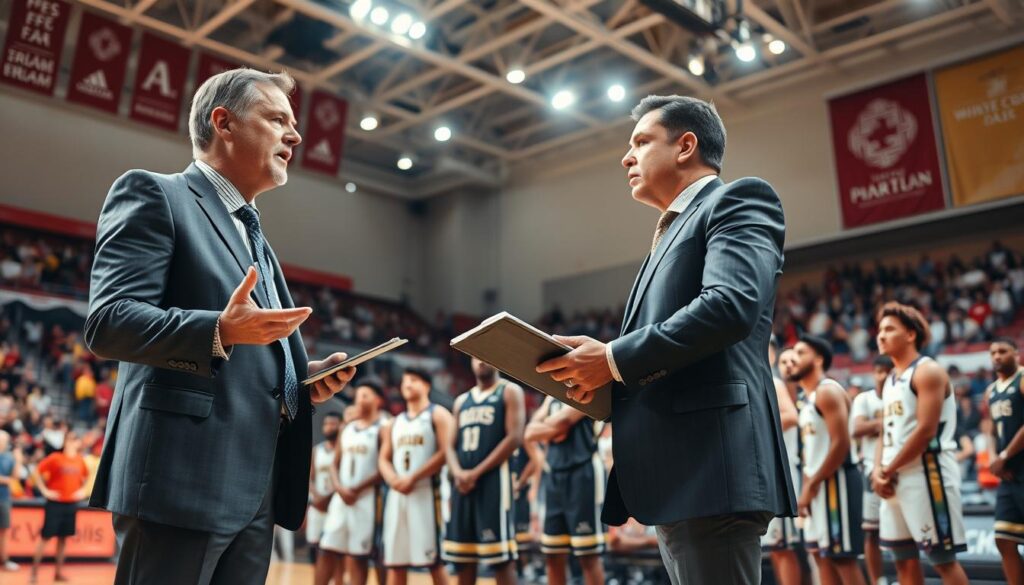
The team’s makeup was also key. FGCU mixed Florida talent with strategic transfers. These players were not just good; they were driven and athletic.
Their playing style changed the game. Kids in Southwest Florida started practicing dunks, not just three-pointers. Gyms in the area saw a huge increase in youth basketball Fort Myers interest.
| Aspect | Traditional Cinderella | Dunk City Approach |
|---|---|---|
| Offensive Strategy | Slow pace, three-point focus | Fast breaks, alley-oops, dunk attacks |
| Roster Construction | Four-year program builders | Athletic transfers + local talent |
| Defensive Mindset | Pack-line defense | Full-court pressure, transition focus |
| Cultural Impact | Inspiring underdog story | Style revolution, youth engagement |
The economic impact went beyond just selling merchandise. Local training spots grew, and summer camps sold out. Dunk City became a major brand in Southwest Florida—highlighted by the rise of Dunk City and its lasting impact.
Enfield’s success was not by chance. It was a bold move against traditional basketball. He showed that style and substance can both be valuable.
The economic impact on local businesses was huge. Facilities improved, and the area became a top spot for tournaments. The rise in youth basketball Fort Myers helped feed the program’s talent pipeline.
The national spotlight and enrollment bump
When ESPN’s Tom Rinaldi left Tiger Woods to cover FGCU, it was more than a sports story. It was the start of a cultural phenomenon. Suddenly, the little-known Florida university became a must-see, showing that underdogs can get more attention than stars.
The numbers were amazing. FGCU’s admissions page got nearly 500% more visitors after beating Georgetown. No fancy marketing campaigns were needed. This short tournament run became the best recruitment tool in history.
At Alico Arena during the 2013 Sweet 16, something special happened. It wasn’t just about filling seats—it was about filling classrooms. Applications skyrocketed as students wanted to go to the school known for its basketball and attitude. The Dunk City brand became incredibly valuable.
This wasn’t just about winning games. It was about changing a school’s image. FGCU went from “that swamp school near Fort Myers” to a top choice for students. The spotlight showed us that real excitement is the best marketing.
The increase in students lasted because the excitement was real. It wasn’t just about basketball. Dunk City stood for innovation, fearlessness, and achieving the impossible.
Ten years later, the lesson is clear. Sometimes, the best marketing is just letting people be themselves. It’s about a group of kids dunking their way into our hearts and changing a school’s future.
Youth hoops boom: Clubs, camps, and high school pipelines
FGCU’s Dunk City moment changed the youth basketball scene in Southwest Florida. Kids everywhere wanted to play like FGCU. It was a dream for many.
Local clubs got a new swagger. They taught kids to be bold, not just play the game. Kids who once focused on layups now wanted to learn alley-oops.
Summer camps became a hit, all with an FGCU twist. These camps were where creativity met basketball. They were where the next Dunk City stars were born.
High school basketball changed fast. Coaches looked for players with a special flair. Games became more exciting, filled with transition plays and highlights.
The growth in youth basketball Fort Myers was real and organic. It wasn’t just about basketball. It was a cultural shift. Kids who knew nothing about FGCU before 2013 soon knew everything.
This growth created a cycle of success. Better talent meant better teams. Better teams meant more college prospects. And more college prospects meant FGCU stayed relevant.
The boom in youth basketball Fort Myers left a lasting legacy. It wasn’t just about winning games. It was about building a culture that celebrated creativity and skill.
Numbers showed the impact. Local league participation rose by 40% after Dunk City. Travel teams grew, and tournament attendance soared. Southwest Florida became a basketball hotspot.
This part of FGCU basketball history shows the true power of sports. The biggest changes happen in local gyms. It’s where kids dream of becoming the next Dunk City star. The real win wasn’t just reaching the Sweet Sixteen. It was inspiring a whole generation to play with joy and boldness.
Facilities, branding, and the fan experience at Alico Arena
Let’s talk about arena glow-ups. Before Dunk City, Alico Arena was a nice venue for mid-major games. After, it became a pilgrimage site for basketball fans. The transformation was magical, not just a paint job.
Remember that night when 400 FGCU students swarmed the streets? That energy stayed. Game nights became cultural events where fans expected the spectacular.
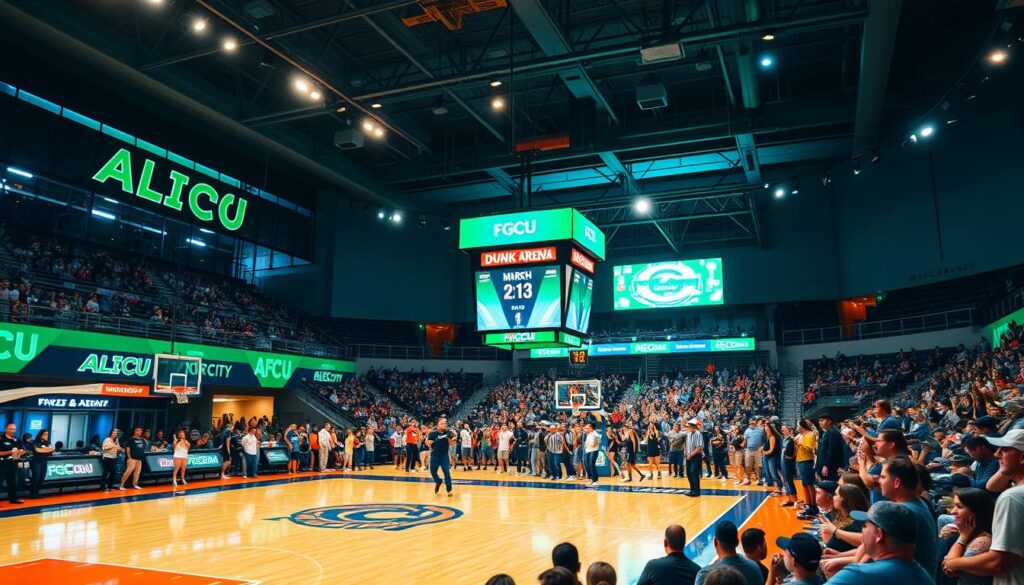
The facilities upgrades tell a story. New premium seating areas appeared like magic. High-definition video boards became the arena’s nervous system. The concourses turned into spaces where fans could taste the excitement.
This wasn’t just maintenance. It was stagecraft. The university was curating an experience. The economic impact showed in atmosphere creation, not just sales.
Branding went beyond T-shirts. Dunk City became part of everything, from court design to concession names. Walking into Alico Arena felt like entering a theme park.
The fan experience became the product. Student sections grew creative. The noise level became legendary. Opposing teams faced an entire ecosystem designed to amplify FGCU’s advantage.
This transformation reached its ultimate validation when Dunk City was officially enshrined in FGCU Athletics Hall of Fame. The recognition was about the community’s ambitions and its physical space.
Today’s Alico Arena is a monument and a laboratory. It preserves the magic of 2013 while experimenting with new fan delights. The economic impact continues to echo through SWFL, showing the value of renovations.
Where are they now? Key figures and community leaders
The Dunk City team members have moved to different places, but their impact remains strong in Southwest Florida’s basketball scene. Enfield went to USC, and Brown played in Israel. Yet, their legacy in Fort Myers continues to grow.
Enfield made USC a top program, keeping the Dunk City spirit alive. Brown’s career abroad is a local legend, with his Instagram showing his love for Fort Myers.
Brett Comer became a Division I assist leader and a mentor. He runs camps that teach the skills from the 2013 Sweet 16.
Sherwood Brown’s pro career shows how to use big moments to make a lasting impact. His return to Fort Myers is a chance for kids to learn about community and basketball.
This isn’t just about where they went. It’s about how they’ve become part of Southwest Florida’s basketball culture. The Dunk City spirit lives on, influencing youth basketball Fort Myers programs.
Murray’s graduation was just the start. It showed the 2013 Sweet 16 was more than a Cinderella story. It was the foundation for lasting success.
Today’s youth basketball Fort Myers scene is bold because of the 2013 run. Camps are more confident, clubs more ambitious, and kids more likely to try daring moves.
The real victory is how they’ve kept a strong connection with the community. Dunk City was never just a moment. It was the start of a lasting conversation in Southwest Florida’s basketball.
Local media memories and fan stories
While the nation watched dunks on SportsCenter, local media captured something far more interesting. They saw an entire community’s identity being rewritten in real time. The FGCU basketball history books will show the scores, but the human stories reveal the cultural earthquake.
Local news teams became campus regulars, swarming dorms and student hangouts. Suddenly, retirement community reporters were covering alley-oop highlights instead of early bird specials. The contrast was delicious.
Students who previously bragged about beach weather now proudly wore Dunk City gear. The bookstore lines stretched for two hours – campus retail had never seen anything like it. Who knew college apparel could cause such chaos?
Fort Myers temporarily renamed its website “Dunk City.” Because nothing says municipal seriousness like embracing your inner dunker. The economic impact was immediate – restaurants near campus reported sales spikes worthy of March Madness brackets.
Local businesses quickly learned to schedule around game times. Why fight the tide when you can ride the Dunk City wave? The cultural impact measured in something more valuable than dollars: community pride.
SWFL transformed from retirement destination to basketball capital. Grandparents who came for golf stayed for gravity-defying jams. The region’s identity got the ultimate facelift – one dunk at a time.
These stories aren’t just nostalgia. They’re data points proving sports can rewrite a community’s DNA. The economic impact was measurable in sales figures, but the cultural revolution was priceless.
The legacy and what the next decade could bring
Dunk City was more than a Cinderella story. It was Southwest Florida’s cultural awakening. A decade later, it’s clear in the local economy every basketball season. Hotels are full, restaurants are lively, and Dunk City gear is in demand.
The real impact is in youth basketball today. Kids who watched those 2013 dunks now lead local courts. They dream of their own March moments. Training facilities have appeared, coaching has improved, and talent has grown.
What’s next? Another NCAA Tournament run would be a perfect comeback. It would be a full-circle moment. But the real win was off the court: showing a young university can change a region’s identity.
The next decade will bring more than just memories. It will see growth in smarter recruiting, better coaching, and deeper tournament runs. The Dunk City brand is evolving, not fading. Southwest Florida hoops will always be unique, and that’s a good thing.