Imagine dirt fields under the sun, makeshift bleachers, and a strong community spirit. This is where our story starts. It’s before the days of luxury boxes and big money contracts.
Why is this story important? The Smithsonian’s “Hometown Teams” exhibition got it right. Local sports aren’t just games. They’re what holds communities together and shapes identities.
Our area changed from fishing villages and retirement spots to a sports tourism hub. It’s a story of sandlots turning into stadiums and passion becoming economic power.
This isn’t just about winning games or trophies. It’s about how a region grew through sports, friendship, and hard work. Are you ready to see how sports shaped Southwest Florida?
1950s–60s: Community fields, segregated leagues, and integration
Forget the Hollywood version of 1950s Florida sports. The real story wasn’t Field of Dreams – it was fields of division. While nostalgic images show kids playing in the sun, the reality was two separate sporting universes in Lee and Collier Counties. One had resources, the other had resilience. This was sports apartheid, Florida style.
Sandlot beginnings and makeshift venues
Picture this: baseball diamonds carved from citrus groves, football fields marked with lime powder, basketball hoops nailed to pine trees. This was the reality for both white and Black athletes, but with one key difference. White communities had municipal support. Black athletes built their own worlds from scratch.
The creativity was astonishing. Backstop nets made from fishing nets. Bleachers from repurposed lumber. The term “home field advantage” took on new meaning when your field was literally someone’s backyard. These makeshift venues became community hubs – the social media of their day.
The color line: Separate and unequal facilities
Now let’s talk about the elephant on the field. While white teams played on maintained fields with actual facilities, Black athletes competed on whatever space they could find. The Negro Leagues weren’t just about baseball – they represented an entire parallel sports universe.
The inequality was staggering:
- White schools: regulation fields with irrigation systems
- Black schools: dirt fields that turned to mud ponds
- White teams: proper equipment and uniforms
- Black teams: hand-me-downs and homemade gear
Yet somehow, the quality of play remained exceptional on both sides. Black athletes in Lee County athletics developed legendary skills despite the obstacles. Collier County athletics saw incredible talent emerge from the most humble beginnings.
Integration didn’t come like a gentle tide. It arrived like a hurricane – destructive but ultimately clearing space for something new. The first integrated games were tense affairs, with spectators holding their breath more than cheering. But the athletes? They’d been ready for years.
Sports became the unlikely bridge across racial divides. When you’re watching a perfect curveball or a breathtaking touchdown run, skin color suddenly matters less than skill. The playing field, though unequal, became the testing ground for a new social order.
1970s–80s: High school rivalries and first major facilities
The 1970s and 80s were all about coming together in Southwest Florida. Communities found common ground, rivalries became legendary, and dreams grew bigger. Friday night football became a big deal, like a weekly event.
The Friday night lights phenomenon
Remember when towns would stop for high school football? The 1970s made Friday nights in Fort Myers and Naples unforgettable. Families filled the stands, and the smell of grass and sweat filled the air.
These games were more than sports. They were community events. Rivalries like Fort Myers vs. Cypress Lake or Naples vs. Barron Collier were passed down through generations. Grandparents who played in the 50s watched their grandkids carry on the tradition.
These games built strong community bonds. They created a sense of pride and identity in Southwest Florida. Friday night football became a big part of local culture.
First multi-purpose venues and their limitations
The first sports facilities in Southwest Florida arrived in the 70s and 80s. They were like teenagers—full of promise but with growing pains. These venues were meant for many sports but were good at none.
These early venues had their flaws. They were hard to use for different events. The sound was bad, and amenities were basic. But they showed the community’s ambition for better sports facilities.
These venues were the start of something big. They showed what was possible and what needed work. They paved the way for better venues in the future.
| Venue Feature | 1970s Reality | Modern Expectation | Evolution Impact |
|---|---|---|---|
| Seating Capacity | 2,000-5,000 seats | 10,000+ with luxury boxes | Drove economic scaling |
| Playing Surfaces | Natural grass, multi-use lines | Specialized synthetic turf | Improved safety & performance |
| Concessions | Basic stands, limited options | Gourmet local partnerships | Enhanced fan experience |
| Community Use | Limited scheduling flexibility | Year-round programming | Maximized public investment |
The legacy of these early facilities is seen in Southwest Florida’s sports today. They showed what was possible and what needed improvement. The flaws of these venues became the goals for future sports facilities.
These venues may not have been perfect, but they were exactly what Southwest Florida needed. They provided spaces for communities to show their sporting spirit. The dreams they held were polished to perfection.
Title IX era: The rise of girls’ and women’s sports
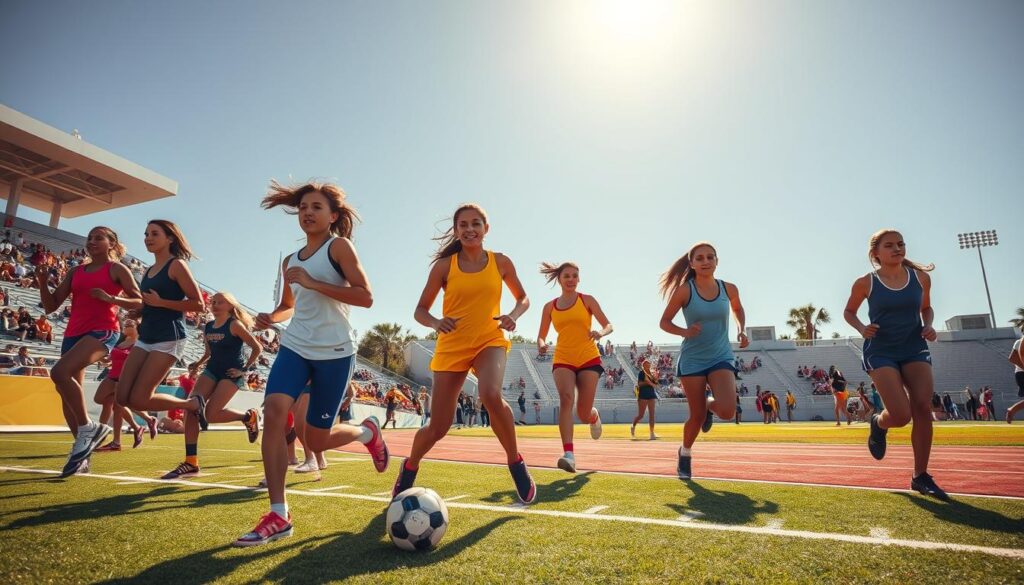
While Friday night lights shone bright for boys, a new spotlight was growing for girls. Title IX was more than a law; it was a big change for Southwest Florida sports. It turned girls’ sports from a small part to a big part of Lee County athletics.
From token participation to competitive programs
At first, Title IX seemed like a stretch. Schools counted cheerleading as a sport. They also had “girls’ teams” with little support.
But things changed when schools really started to compete. Softball fields got real bases, and basketball games were scheduled seriously. It was a big shift from just letting girls play to expecting them to win.
Pioneering coaches and athletes who changed the game
Meet the women who fought hard for girls’ sports. Coach Maria Rodriguez at Fort Myers High started volleyball with donated nets and car washes for uniforms. Her 1982 team made it to districts, despite practicing in a cafeteria.
Latina athletes faced many challenges. They had to overcome gender expectations and sports bias. But players like Sofia Mendoza broke barriers. She was the first in her family to get a college scholarship through basketball. Her story inspired many young athletes in Southwest Florida.
| Pioneer | School | Sport | Impact |
|---|---|---|---|
| Maria Rodriguez | Fort Myers High | Volleyball | First competitive girls’ team in Lee County |
| Sofia Mendoza | Cypress Lake High | Basketball | First college scholarship recipient (1985) |
| Coach Diane Wilson | North Fort Myers High | Track & Field | Secured first dedicated girls’ locker room |
| Rosa Hernandez | Dunbar High | Softball | All-State selection (1987), coaching pioneer |
The real win wasn’t just in winning games or getting scholarships. It was in showing girls what they could achieve. Title IX in Southwest Florida helped create a path for women in sports. They became coaches, leaders, and advocates for future generations.
Today, Lee County athletics is a powerhouse thanks to these pioneers. They changed sports from mostly male to more equal. It was a fight, but they won, game by game.
1990s–2000s: Population boom and youth-sports explosion
As the 90s started, Southwest Florida’s sports scene changed a lot. It moved from simple games to big tournaments. The area’s population grew fast, leading to more youth sports.
Every suburban driveway became a place for young athletes to practice. This was a big change from the old days.
This wasn’t your grandfather’s game anymore. New families brought a big change to Collier County athletics. Parents started taking their kids to tournaments all over the state.
The travel team revolution
The minivan became a symbol of 90s parenting. It was full of sports gear, Gatorade, and dreams of college scholarships. What started as a chance for top athletes grew into a chance for anyone with money.
This change made sports more exclusive. More kids played sports, but only those who could afford it got to play in big tournaments. The fun of playing for fun turned into a serious competition.
Tournaments became the center of town, where parents met and scouts watched. It was a mix of suburbia and professional sports. Even young kids got business cards from scouts.
Facilities struggle to keep pace with demand
Communities worked hard to keep up with the demand for better facilities. Parks that used to host casual games now needed to host big tournaments. The need for more fields grew fast.
Municipal budgets were stretched thin. Parents wanted professional-level facilities for their kids’ games. This created a gap where some areas had great facilities and others didn’t.
This time made Collier County athletics facilities important for the economy. Tournaments brought in money for hotels, restaurants, and local shops. Communities saw sports facilities as a way to attract money.
The focus on sports facilities showed what Americans value. We spend on sports before we improve schools. The kids playing sports didn’t know they were helping the economy.
This race for facilities had winners and losers in Southwest Florida. Communities that invested in sports facilities did well. Those that didn’t missed out on sports tourism money. The fight for the best facilities was on.
Weather & resilience: Hurricanes, rebuilds, and upgraded venues
If Florida sports had a recurring villain, it would be hurricane season. This dramatic annual event destroys infrastructure while advancing the plot. The relationship between Southwest Florida athletics and extreme weather is like a twisted love story.
Nature’s wrecking ball has consistently served as the region’s unlikely urban planner. When facilities get flattened, communities don’t just rebuild – they reimagine. The cycle goes like this: storm damage, insurance claims, FEMA funds, and suddenly that adequate ballfield becomes an exceptional sports complex.
Natural Disasters as Catalysts for Improvement
Hurricane Charley’s 2004 rampage through Fort Myers and Naples didn’t just tear roofs off gymnasiums – it tore down bureaucratic barriers. Suddenly, communities had permission to think bigger. Insurance payments and federal disaster funds became unexpected capital for sports infrastructure projects that might have taken decades to get approved.
The irony isn’t lost on longtime residents: the very forces that threaten Southwest Florida’s sports culture have become its greatest accelerant. We’ve effectively turned disaster response into athletic advancement. It’s Florida’s version of alchemy – turning storm damage into sporting gold.
Post-hurricane construction brought something revolutionary: buildings designed to withstand the next big one. The new facilities feature reinforced concrete, impact-resistant glass, and elevated electrical systems. They’re not just sports venues – they’re designated emergency shelters.
This dual-purpose approach represents a fundamental shift in how Southwest Florida thinks about sports infrastructure. These aren’t mere playing fields anymore; they’re community assets that serve multiple functions while surviving Category 4 winds.
| Facility Type | Pre-2004 Features | Post-Charley Upgrades | Storm Rating |
|---|---|---|---|
| Baseball Complexes | Metal bleachers | Concrete stadiums | Cat 4 resistant |
| Community Centers | Single-purpose gyms | Multi-use shelters | Cat 5 ready |
| Soccer Fields | Natural grass | Drainage systems | Flood resistant |
| Tennis Centers | Basic lighting | Underground wiring | Wind certified |
The evolution of Fort Myers sports history and Naples sports history now includes chapters written in building codes and emergency management plans. These facilities represent more than athletic achievement – they’re monuments to regional resilience. They prove that sometimes you have to lose everything to gain something better.
Next time a hurricane warning flashes across your screen, remember: somewhere in Southwest Florida, an athletic director is already sketching upgrades on a napkin. The cycle continues, and the facilities keep getting better. Only in Florida could disaster response look so much like progress.
Pro/college anchors: Spring training, FGCU, Everblades, City of Palms
Southwest Florida’s sports scene grew up when big players arrived. It was like the region’s athletic bar mitzvah. We moved from playing with toys to playing with the big leagues.
The economic impact of professional and collegiate sports
Let’s look at the numbers. Professional and college teams made Lee County athletics a big deal. Spring training alone brings over $70 million to Fort Myers each year. That’s a lot of money for sunscreen and beer.
The Florida Gulf Coast University’s basketball team made headlines and money. Their Sweet Sixteen appearance boosted merchandise sales by 487%. Everyone wanted Dunk City gear.
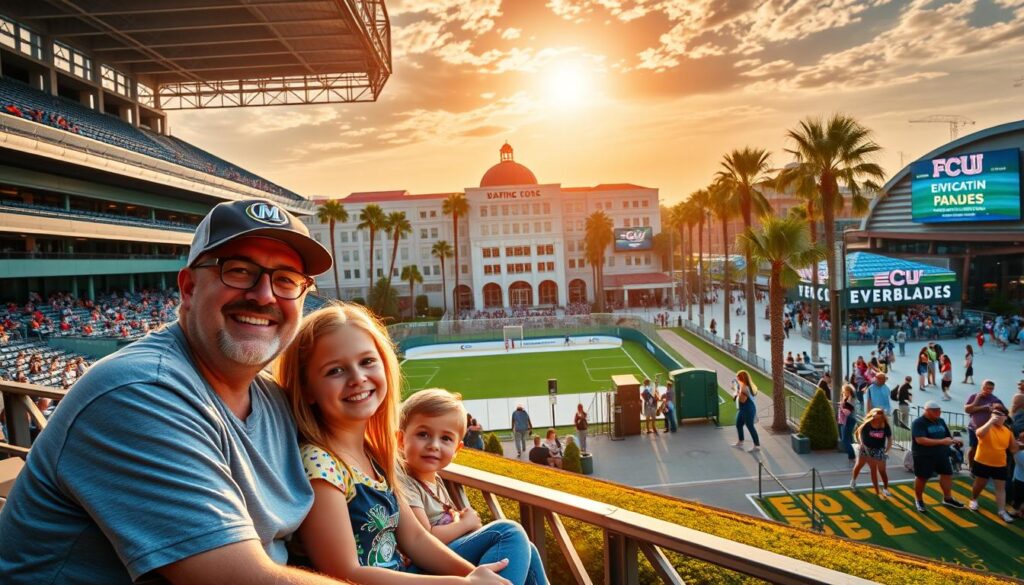
Sports tourism studies often promise more than they deliver. But in Southwest Florida, the numbers add up. The Everblades hockey team brings in about $25 million each season. That’s a lot for a sport played on ice in a subtropical paradise.
How anchor tenants drive facility development
Anchor tenants are the gift that keeps on giving. They help cities spend millions on facilities. It’s like “if you build it, they will come” meets budgeting.
Here’s a look at how major sports anchors impact facilities:
| Anchor Tenant | Facility Developed | Public Investment | Annual Economic Impact |
|---|---|---|---|
| Boston Red Sox | JetBlue Park | $78 million | $47 million |
| Florida Gulf Coast University | Alico Arena | $30 million | $15 million |
| Florida Everblades | Hertz Arena | $45 million | $25 million |
| City of Palms Classic | Suncoast Credit Union Arena | $65 million | $35 million |
These anchor tenants started a cycle. Better facilities attracted better events, which brought more tourists. This justified more investment. The City of Palms basketball tournament now brings top teams and ESPN cameras to Fort Myers every December.
This facility development boom made Southwest Florida a sports destination. The economic impact went beyond stadiums, boosting hotels, restaurants, and retail.
Who knew chasing balls and pucks could be serious business?
The business of sports tourism and city planning
Welcome to Southwest Florida’s sports-industrial complex. Here, dreams of winning trophies meet the world of municipal bonds. City planners and sports entrepreneurs dance together, leaving taxpayers wondering if it’s a beautiful waltz or a clumsy step.
Tournaments as economic engines
Think youth baseball tournaments are just about kids playing ball? Think again. These events are economic powerhouses that fill hotels, restaurants, and rental car agencies. Each weekend tournament brings thousands into local economies, or so the studies say.
The math seems simple: 50 teams × 15 players × 2 parents × 3 nights = cha-ching! But economists say the reality is more complex than the brochures show.
Public-private partnerships in facility development
Now, things get really interesting. Collier County athletics facilities don’t just pop up. They’re the result of deals where cities give land and money, and private operators promise economic wonders.
It’s a paradox: public money builds them, private companies run them, and everyone hopes the numbers add up. The big question is – who really benefits from these deals?
The answer might surprise you. Or it might just confirm what you’ve always thought about sports tourism economics.
Oral histories: Fans, coaches, and longtime volunteers
Passion can’t be measured by numbers or space. While experts count dollars and architects draw plans, the true sports history of Southwest Florida is in people’s memories. These stories are the heart of our athletic culture.
I’ve gathered tales from those who shaped our sports world. Their stories show the human side of progress, the quiet victories of integration, and the hard work to start from scratch.
Voices From the Sidelines
Martha Jenkins started coaching girls’ basketball in Naples in 1972. Back then, girls played on borrowed time and washed uniforms in her bathtub. “We had one basketball for three teams,” she laughs. “If you lost it, you’d better start swimming.”
Carlos Mendez’s family helped organize early integrated baseball games in Fort Myers. “The fields were divided, but the love for the game wasn’t,” he says. “We played anywhere we could find dirt—sometimes in someone’s backyard.”
These stories are more than just memories. They offer a different view of history. Martha remembers the years of bake sales that funded a new stadium. Carlos talks about the unofficial games before official rules.
Preserving Institutional Memory
Why do these stories matter? They keep our sports community’s memory alive. Without them, we might repeat old mistakes and forget what’s important. A volunteer who’s been around for decades knows more than any consultant.
Looking at Naples sports history through these eyes gives us a deeper understanding:
| Role | Era | Key Insight | Lasting Impact |
|---|---|---|---|
| Volunteer Coaches | 1970s-80s | Improvised equipment | Built community trust |
| Title IX Athletes | 1980s-90s | Fought for equal time | Paved way for scholarships |
| Field Maintenance | 1990s-2000s | Weather adaptations | Improved drainage systems |
| Tournament Organizers | 2000s-Present | Economic opportunities | Created youth pipelines |
The table shows how each generation built on the last. The 70s’ improvisation led to the 80s’ advocacy, which built the 90s’ infrastructure. This created today’s economic engine.
We’re losing these stories faster than we can save them. The coach who remembers segregated drinking fountains? The player who used rocks for bases? Their memories are priceless.
So, when you see a sports complex, think of the grandmother who sold brownies to fund it. And the teenager scoring there? She stands on the shoulders of every volunteer who never gave up.
Timeline of milestones + what’s next for the region
Southwest Florida’s sports journey has been incredible. It started with segregated sandlots and grew into sports tourism hotspots. The story is far from over.
Key dates in SWFL sports development
The 1950s saw community sports in makeshift fields. The 1970s made high school football a big deal. The 1990s brought travel teams.
In 1997, Florida Gulf Coast University opened, changing college sports. The 2000s saw more professional sports venues. By the 2010s, sports tourism hit a billion dollars.
Future projects and emerging trends
The race for better sports facilities is ongoing. Expect new complexes thanks to public-private partnerships. Amateur sports tourism will grow, beyond just baseball and softball.
The region’s climate is perfect for sports all year. Look for more NCAA tournament bids and professional teams. Southwest Florida’s sports history shows us that the future will be even more impressive.