Thanksgiving weekend is a test of endurance for America. It’s filled with action on the football field, fueled by hatred. Here, legends are made in unforgettable moments —just like the historic clashes featured in rivalry week showdowns.
While the nation watches the Egg Bowl or The Game, we have our own tradition. In Southwest Florida, the drama is just as intense. It’s more than sports; it’s a cultural autopsy.
Why do our local teams rivalries mean so much? What makes them more than just games? We’re exploring the psychology behind our intense rivalries with great interest.
In today’s fast-changing world, sports must hold onto its roots. This weekend is a chance to do that. Let’s explore the irrational, captivating world of our local showdowns.
The Oldest Rivalries: Origins and Histories
To understand the venom in a rivalry, you must first dig up its corpse—the original incident that started it all. Every great feud has a creation myth. Was it a disputed call that lives in infamy? A territorial land grant from the 1920s? A legendary prank involving a mascot and several gallons of industrial-strength dye? The origins of Southwest Florida’s oldest sports rivalries are often shrouded in the hazy mists of time and amplified by local legend.
We’ll play historian and mythbuster, tracing the lineages of these clashes back to their roots. Think of it as genealogy for grudges.
National data provides our framework. Iconic feuds like Michigan-Ohio State (1897) and Alabama-Auburn (1893) prove a simple truth. A game played when your great-grandfather was a child can affect moods in 2025. That’s the power of longevity. It breeds a special, simmering contempt.
Our local institutions began their decades-long dialogues of dominance and despair in similar, often quirky, ways. The “Immaculate Deflection” from the 1983 Egg Bowl is a perfect case study. A single, bizarre play becomes foundational lore. It’s not just a score. It’s a story passed down to explain why “we” hate “them.”
In Southwest Florida, the origins are just as rich. Perhaps it was a boundary line drawn for a school district that split a community. Maybe it was a legendary baseball game interrupted by a hurricane. These moments crystallize into identity. They answer the question every new generation asks: “Why do we care so much about beating them?”
The table below maps the family tree of that contempt, comparing national blueprints with local legends. Notice a pattern? The older the rivalry, the more the origin story has mutated into something between fact and fable.
| Rivalry Name | First Meeting Year | Alleged Origin Story | Longevity Factor |
|---|---|---|---|
| Michigan vs. Ohio State | 1897 | Disputed touchdown in the inaugural game set a tone of bitter contention. | 128+ years |
| Alabama vs. Auburn (Iron Bowl) | 1893 | Suspension of series for 41 years due to a dispute over player per diems and officiating. | 131+ years |
| Fort Myers vs. Naples (Lee vs. Collier) | Early 1920s | Competition over regional dominance post-land boom; first football game was a muddy, scoreless tie. | 100+ years |
| Charlotte vs. Port Charlotte | 1950s | Born from the civic split creating a new city; the first matchup was dubbed the “Battle for the Peace River.” | 70+ years |
| Barron Collier vs. Lely (The Cat Fight) | 1970s | Legendary homecoming week prank where one school’s cougar mascot was dyed the rival’s colors. | 50+ years |
Analyzing these origins reveals a key point. The initial spark is often mundane—a bad call, a map line, a prank. But time is the accelerant. Decades of repetition turn a simple game into a ritual. The historic rivalries we celebrate today are built on layers of accumulated memory. Each loss is added to the ledger. Each win erases a past slight.
So, when you see two Southwest Florida schools line up this fall, remember. You’re not just watching a game. You’re watching the latest chapter in a story that began with a territorial grant, a dye job, or a deflection that defied physics. The data doesn’t lie. The older the grudge, the sweeter the victory—or the more bitter the defeat.
Spotlight on Recent Epic Battles
The strength of a rivalry isn’t just in its start. It’s in the recent games filled with drama and surprises. These games are the ones that make the air in local bars feel tense. They’re so intense, they even stop arguments about lawn care.
The 2022 “Riverfront Rumble” is a perfect example. With just seven seconds left, the quarterback threw a long pass. It was a moment of pure, beautiful absurdity. The ball seemed to defy physics and the hopes of the town.
The silence on one side was as deep as the cheers on the other. That play didn’t just win a game; it created a legend. The quarterback’s name is now spoken with the same awe as a hurricane survivor. That’s the power of a local derby.
The 2023 “Coastal Clash” was a defensive battle. It was a low-scoring game decided by a goal-line stand in double overtime. The final stop was about will, not just athleticism. It was a thrilling moment that everyone secretly loves more than a shootout.
These local rivalries are like the big games we watch on TV. Remember that famous blocked punt? We have our own version. Last season, a special teams mishap decided a district championship. It was chaotic but unforgettable.
What makes these neighborhood clashes so powerful? The witnesses are here, and the players are now local mechanics or college freshmen. The drama is fresh, not archived. It’s the stuff of legend for the next generation.
Looking back at these battles is like a forensic analysis. It’s about the big fourth-down gamble that a coach will never forget. It’s about the moment a young cornerback became a hero. These moments define a community’s sports identity right now. The next great local derby is already being written in summer workouts, fueled by last season’s memories.
Impact on School and Community Spirit
Imagine the most important player in a rivalry game isn’t on the field. It’s the whole town watching. The final score is just a headline. The real story of these region rivalries is in social capital and civic pride.
A victory can boost a school’s future. Booster club donations go up. More families want to join. But a loss can hurt fundraising and the program’s image, losing recruits.
The game’s outcome affects the community’s mood for a year. It’s like a tribe, with a shared story. Winning brings swagger, while losing fuels next year’s determination.
These games are highlights of the local calendar, even more than holidays. The community rituals add to the excitement:
- The mayors of rival towns make friendly bets.
- Local businesses show their colors, declaring allegiance.
- Alumni come from all over, making it a homecoming.
- Diners and bars split into partisan sections.
The traveling trophies are more than just metal and wood. They symbolize victory, reminding the winner of their bragging rights. It’s a trophy for the community, not just the team.
While the game is about winning titles, it’s also about identity. For one night and the year after, a high school football game can change how a Southwest Florida town sees itself. That’s an impact no stat sheet can fully capture.
Player and Coach Perspectives
You can plan a play all day, but the real challenge is the quarterback’s nerves before a big game. The strategies are known, but the emotions are not. To really get what rivalry games are about, you need to hear from those who feel it most.
Jasper Sanks learned a valuable lesson after a fumble in a big game. His coach told him, “hold onto the ball.” It was a simple yet powerful message. For players, it’s not just about the crowd; it’s about the moment that defines them.
Coaches have to stay calm, but even they crack under the pressure. Remember when Glen Mason and Barry Alvarez stood there in stunned silence after a game? It was a moment of mutual respect and shock.
Steve Spurrier was a master of mind games. His jokes were part of his strategy. In Southwest Florida, our coaches may not be famous, but they face the same challenges. They have to prepare their teams for emotions that can’t be predicted.
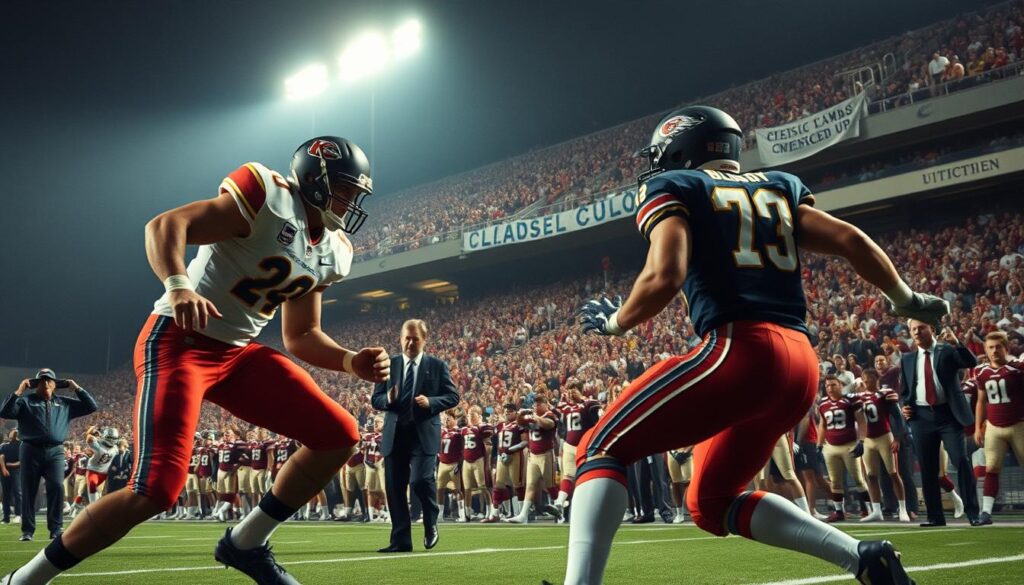
Rivalry week practice is intense. The drills are sharp, and every mistake is a betrayal. Coaches have to manage the emotions without letting them lead to reckless play. It’s a time when strategy and psychology are equally important.
So, what makes a game a classic game? It’s the people, the quotes, and the raw humanity. The stats tell you who won, but the stories tell you why it mattered.
| Role | Primary Pressure | Lasting Memory | Signature Quote (Tone) |
|---|---|---|---|
| Star Player | Carrying the legacy of every alum before you; one play defines your name. | The silence of the crowd after a game-winning play. | “Just hold onto the ball.” (A direct, weighty command) |
| Head Coach | Managing 50 different emotional triggers while appearing perfectly calm. | The shared, wordless look with the opposing coach when it’s all over. | “Well, we didn’t have any turnovers… they had six.” (Dry, analytical barb) |
| Senior Captain | Being the bridge between the coach’s strategy and the team’s fiery emotion. | The pre-game locker room speech that actually worked. | “This is why we lifted all summer!” (Earnest, motivational) |
| Longtime Fan | Watching your childhood heroes pass the torch to a new generation. | The specific smell of the stadium air on that crisp Friday night. | “I haven’t missed this game in 40 years.” (Nostalgic, proud) |
This table shows the drama behind a rivalry game. It’s not just about the game; it’s about the emotions and stories. Analyzing these classic games reveals the battles fought in the minds before the game starts. The final score is just the beginning; the stories are what truly matter.
Analyzing Records and Stats
Stories are the heart of a sports rivalry, but stats are its backbone. They show the rivalry’s true depth. We love the epic moments and emotional speeches. But stats tell the truth without bias.
For a rivalry to become legendary, it needs a rich history. Series with over 100 games played offer the most insight. A single win is luck, but a decade of success shows a pattern.
So, what’s the strategy for analyzing these sports rivalries? It’s not just about the score. The real story is in the details.
The all-time record is a key indicator. For example, “Team Alpha 68, Team Bravo 46, with 6 ties” shows a long-standing rivalry. It reveals who has historically been stronger. But is that dominance current or outdated?
Streaks and recent performances also matter. A “current streak: Team Alpha, 4” shows a shift in power. Maybe Team Bravo’s best players have retired, or a new coach has changed the game plan.
Looking at the game’s details is also important. For instance, the average point difference in close games can tell a lot. A rivalry with many close games is unpredictable. But a series with big wins for one team shows a clear advantage.
Home-field advantage is another key factor. Does Team Alpha dominate at home, or does Team Bravo excel on the road? This can show which team’s fans have a bigger impact on the game.
Let’s create a statistical profile of a famous rivalry. The numbers tell a story all their own.
| Metric | Team Alpha | Team Bravo | The Story It Tells |
|---|---|---|---|
| All-Time Record | 58 Wins | 42 Wins | Alpha holds historical bragging rights, but it’s not a shutout. |
| Current Streak | 3 Wins | — | The momentum is decisively with Alpha in the modern era. |
| Avg. Margin (Last 10) | +7.2 | -7.2 | Games are competitive, but Alpha finds a way to pull away. |
| Home Record (Series) | 32-15 | 27-20 | Both protect their home turf, but Alpha’s advantage is more pronounced. |
This analysis helps separate the sentimental favorite from the statistical one. It shows a sports rivalry with a modern dynasty built on history. But Bravo’s home record is impressive, showing they have talent and passion, even if they can’t win on the road.
The beauty of this analysis is uncovering the cyclical nature of these rivalries. You might find that Team Bravo does better in even-numbered years, or that shutouts are rare. This detail is often missed in simple records.
For those who want to dive deeper into analyzing teams and stats, the approach is the same. You’re breaking down the story to find the underlying patterns.
In the end, stats don’t diminish the magic of our great sports rivalries. They add to it. They provide evidence for the legends and sometimes create new ones. The final score is just the headline. The record book is the full, amazing story.
How Rivalries Are Passed Down
How does a dislike for a neighbor’s school colors become a family tradition? It’s not taught but learned through experience. The rivalry’s jokes, respect, and spite are passed down through stories and shared moments.
History and location create the perfect mix for local derbies. They turn family, friends, and neighborhoods against each other. For rivalry weekend to be meaningful, everyone needs a strong opponent. This opponent is not chosen but inherited.
I’ve seen it happen from a young age. A father points out the opposing team at a child’s first game. He says, “See them? That’s the enemy.” This is reinforced when a sibling returns from college, wearing new colors, and starts a debate. These moments are more than lessons; they are initiation rituals.
The stories of last-second wins, infamous calls, and legendary players are shared at family gatherings. The facts may change, but the emotional connection remains strong.
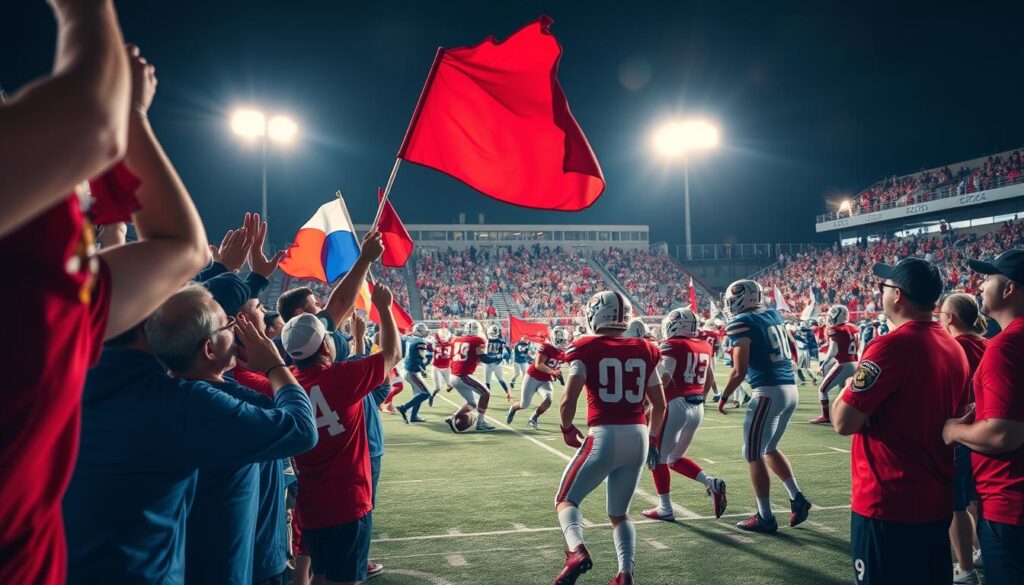
This is more than sports. It’s about shared identity and continuity. In a world of constant change, these rivalries offer a sense of place and belonging. They connect a community’s past, present, and future.
At its core, a rivalry is like a family recipe. You learn the history, insults, and passion by watching it unfold each year. You become part of a tribe, defined by your rivalry. It’s a tradition of tribalism, showing our need for connection and a good fight.
Upcoming Matchups
In the world of Southwest Florida football rivalries, past victories are just a start. The next game is what everyone’s really waiting for. So, where do we stand as we look at this season’s games?
The schedule is more than just dates. It’s a sacred calendar. Even with realignment and politics, these classic games stay unchanged. They are the fixed stars in a shifting world. This year’s game is more than just another Friday night. It’s the next chapter in a living story.
Let’s look back. Is a dynasty solidifying its legacy, or is the underdog ready to break a long streak? We’ll look at the key factors that will shape the next headline.
First, the returning talent. That quarterback who dominated last year? He’s back and stronger. The linebacker who made the game-saving tackle? He’s hungrier. These players are not just athletes; they’re keepers of a story. Their performance will either extend a streak or become legendary.
Then, there’s the battle between the coaches. Will they stick with what’s worked before, or introduce a new strategy? The strategic layer adds a delicious intellectual tension to the game.
Let’s consider the stakes for some of this fall’s most anticipated games:
- The Streak Defender: One team has dominated this series for years. The pressure is on them to keep their streak alive. Can the weight of history become a burden?
- The Hungry Challenger: Their locker room is filled with headlines from last year’s loss. They’ve had a year to prepare. This is their Super Bowl.
- The Legacy Game: A senior class has never beaten their arch-rival. This is their last chance to leave a mark and change their school’s story.
Is an upset on the horizon? The data and the gut often tell different stories. Sometimes, all it takes is one play to change history. That’s the magic of these showdowns. The past sets the stage, but the future is yet to be written.
Mark your calendars. The next chapter in Southwest Florida’s most intense classic games is coming. The analysis is done. Now, it’s time to play.
Conclusion
So, what’s the final score on our local region rivalries? They are not just games. They are the ongoing serial drama of Southwest Florida, complete with heroes, villains, and plot twists no writer would dare invent.
These showdowns are the sport’s lifeblood. The health of the game depends on the passion they generate year after year. Those unforgettable finishes—the last-second touchdowns, the buzzer-beaters—are the chapters that keep the entire story alive.
Our region rivalries offer a peculiar antidote to a fragmented world. While national sports feel corporate and transient, the battle between Fort Myers and Naples remains fiercely local. It is a shared, if contentious, identity.
The legacy is passed down like a family heirloom. You inherit your team allegiance along with your last name. This creates a community glue stronger than any conference realignment could break.
As the next rivalry week approaches, the story continues. New players will write their lines. New fans will learn the lore. The beautiful, chaotic nonsense will undoubtedly repeat. And we will all be there to analyze it, celebrate it, and, most importantly, argue about it forever.