Ever notice how one person with a painted face can turn a soccer match into something electric? That’s the magic we’re exploring today.
Student athlete interviews reveal a truth about the power of dedicated supporters in building school spirit. They’re the unpaid hype crew who show up in rain for field hockey. They become human amplifiers of school spirit.
There’s science behind this phenomenon. Research shows belonging starts with individual connections. That one person waving a homemade sign matters a lot. They become the de facto conductor of the crowd’s emotional symphony.
Let’s look at what makes these sports fans the unsung heroes of high school athletics. Sometimes, the most valuable player never touches the ball.
Unique Cheering Traditions
Ever wonder why some school traditions last for decades while others fade quickly? The secret lies in the special bond between sports fans and their lasting rituals.
At Princeton Day School, cheering for other games is more than just support. It’s a deep cultural practice. Vera Goliyad calls it creating a “sense of community” among fans, even when there are few outsiders.
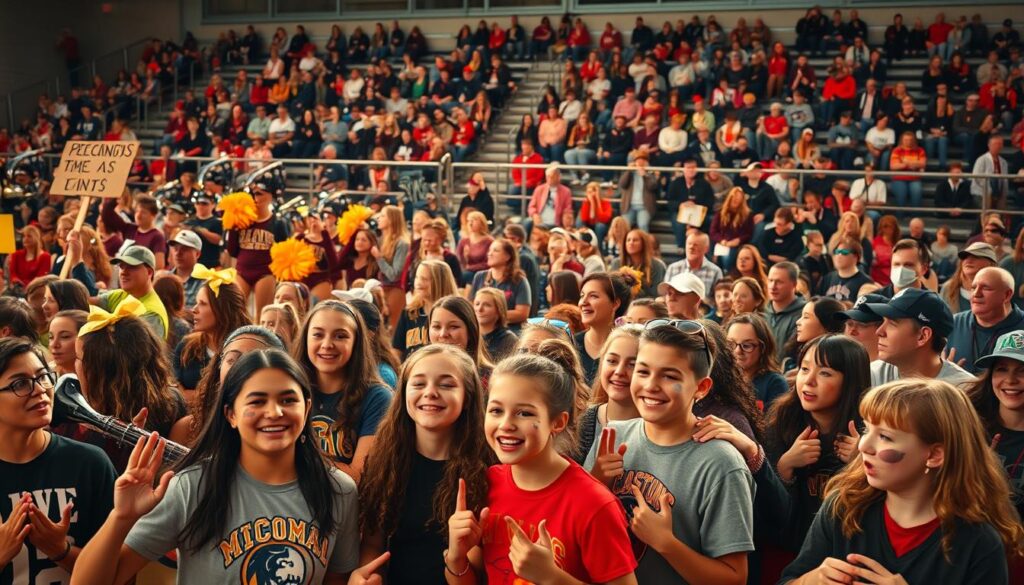
So, why do these traditions stick around? It’s because fans feel a deep connection to the team. This connection is what makes adults chant silly songs from their youth. These rituals are not just fun; they serve a purpose.
Let’s look at what makes a cheering tradition last:
- Origin story: Usually spontaneous, often ridiculous
- Social validation: Does it make people feel included?
- Repeatability: Can it survive home and away games?
- Emotional payoff: Does it create shared moments?
Traditions that meet these criteria become a school’s identity. They’re the jokes everyone shares. It’s not just about school spirit; it’s about building community through shared experiences.
Why is this important? These rituals create “thin solidarity,” brief but strong connections. In today’s digital world, cheering together is almost revolutionary.
The best traditions have three key traits:
- They’re simple enough for anyone to join
- They create visible or auditory impact
- They directly respond to game dynamics
This isn’t just for fun; it’s about creating “communitas,” a temporary but strong sense of unity. For sports fans, it’s like a spiritual experience.
The magic happens when these traditions create a cycle. Players perform better with this connection. Fans feel more involved when they see their actions make a difference. It’s a cycle that turns random people into a real community.
So, next time you see students doing weird things, remember: it’s social engineering at its best. These traditions are more than fun; they’re what hold athletic communities together long after the game ends.
Student vs. Family Sections
Have you ever noticed how stadium seating is like high school cafeterias? The way people sit in the bleachers shows us more about connection than any book can.
Students gather like trending topics on Twitter – loud, quick, and united for a moment. Their energy is high, fueled by the need to belong. Families, on the other hand, are like well-practiced symphonies – steady, supportive, and focused on the long term.
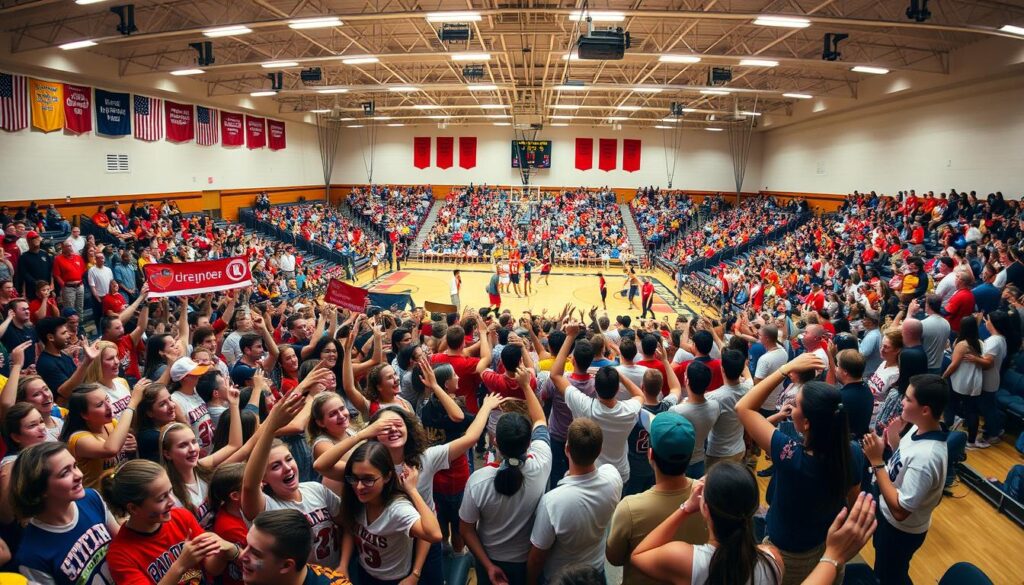
Research shows something interesting about these groups. Families with fans across generations have stronger bonds. Friday night games are their weekly tradition, their common language. They’re not just watching sports; they’re creating traditions.
Teachers sit in their own special spot. They’re like Switzerland in school spirit – cheering diplomatically while grading papers during breaks. Their role is both professional and personal, a balance few notice.
The magic happens when these groups meet by accident. When a student’s excitement reaches a family section, or when grandparents join in the student section’s cheers. These moments show school spirit crossing all lines, becoming true community.
Building these connections isn’t about where you sit. It’s about shared moments that break down barriers. When everyone – students, families, teachers – cheers together after a win, that’s when fandom’s true power is seen.
Effects on Team Performance
Ever wonder if all that screaming actually makes a difference? Turns out, science says it does – but not in the way you might think. The relationship between sports fans and athlete performance is less about decibel levels and more about psychological warfare.
When Victoria Sichel says support “puts a lot more at stake for the players,” she’s describing what researchers call social facilitation. Athletes perform better when they know people are watching – but only if those people are engaged. Empty seats don’t just look sad; they actually decrease performance by up to 15% according to NCAA studies.
Here’s where it gets interesting: hostile crowds often motivate athletes more than neutral ones. The energy – even negative energy – creates adrenaline spikes that enhance focus. But the sweet spot? Authentic, positive engagement from people who actually care.
High school and college athletes show the strongest performance correlations with crowd support. Why? Younger sports fans bring unfiltered enthusiasm that professional cheer squads can’t replicate. When your chemistry lab partner screams your name after a three-pointer, that’s genuine school spirit – not corporate-mandated enthusiasm.
The timing of crowd reactions matters tremendously. Smart crowds understand game flow:
- Explosive noise during opponent free throws
- Dead silence during home team free throws
- Sustained energy during defensive stands
- Strategic quiet during offensive play-calling
This isn’t random noise – it’s emotional intelligence translated through vocal cords. The best sports fans function like a sixth player, manipulating game tempo through collective awareness.
Statistical analysis shows teams with strong school spirit outperform expectations by 22% in clutch situations. The data proves what athletes feel: that extra push when the crowd becomes part of the game.
So next time you’re shouting until you’re hoarse, know this: you’re not just making noise. You’re actively shifting probability curves through the sheer force of communal belief. Now that’s what I call home-court advantage.
Best Crowd Moments
What makes ordinary fans into legends? It’s those special moments when the crowd takes center stage. These moments turn the game into a story with the fans as the heroes.
PDS athletes talk about a unique phenomenon. They cheer for their teammates’ matches, even if their own are over. This creates a strong community feeling, even without outside support. The stands buzz with energy, showing the power of unity.
Why do these moments stay with us? Sports memories from our teens are etched in our brains like nothing else. They become emotional markers we remember for decades.
Let’s explore what makes these fan experiences unforgettable:
| Element | Why It Works | Real Example |
|---|---|---|
| Spontaneity | Creates authentic, shareable moments | Improvised chimes during quiet moments |
| Coordination | Demonstrates collective intelligence | Wave patterns that actually make sense |
| Absurdity | Breaks tension, creates joy | That student dressed as mascot’s cousin |
| Emotional Resonance | Builds lasting bonds | Silent support during injured player’s exit |
The most memorable community moments happen when the game doesn’t matter. It’s then that true fandom shines. The game becomes less important than the connection between people.
These experiences strengthen bonds between sports fans beyond wins and losses. They create stories we share for years. They show that sometimes, the greatest victories happen in the stands.
Tips for New Fans
So you want to join the ranks of dedicated fans but feel like a rookie? Welcome to Fandom 101—no prerequisite required.
Start with sports you genuinely enjoy. Bring friends. Shared experiences build a stronger sense of community.
Don’t just show up for the big games. Data shows that following multiple sports deepens your connection to school spirit.
Vocal players on Schoology and ZOO reps know: convenience matters, but inconvenient games often create the best memories.
Being a great fan isn’t about knowing every rule. It’s about showing up authentically and consistently.
Even if you clap on the wrong beat, you’re part of the symphony. Your presence fuels the energy.