The World Cup has always been more than a tournament. It is a global sports moment that can turn casual viewers into passionate fans, inspire young athletes to train harder, and give local soccer communities a bigger stage to connect with the game.
For Southwest Florida, that energy feels especially relevant as the 2026 FIFA World Cup approaches. The tournament will be hosted across the United States, Canada, and Mexico from June 11 to July 19, 2026, with 48 teams and 104 matches. For local fans in Fort Myers, Naples, Cape Coral, Bonita Springs, Lehigh Acres, and Marco Island, the event will not feel distant. Miami is one of the official host cities, bringing World Cup matches within driving distance of Southwest Florida.
That proximity matters. It gives young athletes a chance to see the world’s best players not only on television, but potentially in person. It gives coaches a teaching tool. It gives parents and fans a reason to gather around the sport. And it gives Southwest Florida soccer programs a rare opportunity to connect local development with the biggest competition in the game.
For readers who follow school competition throughout the region, this World Cup cycle also connects naturally with the growing interest in SWFL high school sports, where soccer continues to play an important role in winter athletics and year-round player development.
Why The 2026 World Cup Feels Closer To Southwest Florida
The 2026 World Cup will be the largest edition in tournament history, but for Florida fans, one of the most important details is geography. Miami Stadium is scheduled to host seven World Cup matches, including group-stage games on June 15, June 21, June 24, and June 27, a Round of 32 match on July 3, a quarterfinal on July 11, and the third-place match on July 18.
For Southwest Florida families, that creates a different kind of connection. In previous World Cup cycles, the tournament often felt like something happening overseas. In 2026, the world’s game will arrive in Florida, making the tournament more visible to young players who already spend weekends at local fields and weeknights training with school or club teams.
That visibility can influence participation. A young midfielder in Naples may watch Spain or Argentina and begin studying movement off the ball. A goalkeeper in Fort Myers may focus on distribution, positioning, and penalty-kick preparation. A forward in Cape Coral may see how elite players create space with their first touch before finishing under pressure.
The World Cup does not replace local coaching, but it can sharpen ambition. When young athletes see the speed, intensity, and technical quality of international soccer, it gives them a clear picture of what the top level demands.

Southwest Florida Already Has The Soccer Foundation
The region is not starting from zero. Southwest Florida has a broad soccer footprint, with recreational, competitive, school-based, and professional pathways continuing to develop across Lee and Collier counties.
The Southwest Florida Soccer Association includes clubs and communities across the region, including Cape Coral Cyclones, Immokalee Cobras, Lee County Strikers, Lehigh Lightning, Florida West F.C., Bonita Azzurri Storm, Marco Island Optimist Club, San Carlos Park Scorpion Soccer Club, and Fort Myers Beach Soccer. That type of regional network gives players access to structured competition before they reach the high school level.
At the professional level, FC Naples has also added another layer to the local soccer landscape. The club plays at Paradise Coast Sports Complex and competes in USL League One, giving Southwest Florida fans a local professional team to follow while young players gain a visible example of what a player pathway can become.
| Southwest Florida Soccer Layer | Local Impact |
|---|---|
| Youth clubs | Introduce skill development, teamwork, and competitive structure |
| High school soccer | Builds school pride, leadership, and regional rivalries |
| FC Naples | Gives local fans a professional team and a visible player pathway |
| 2026 World Cup in Florida | Connects local athletes to the global game at historic scale |
That combination makes the World Cup more than a viewing event. It becomes part of a larger soccer ecosystem. When a young player can train locally, compete for a school team, attend a professional match in Naples, and then watch the World Cup come to Florida, the sport feels more attainable and more meaningful.
How Global Stars Shape Local Motivation
World Cup years often create a wave of inspiration because players become household names almost overnight. Lionel Messi remains one of the sport’s defining figures, especially for Florida fans because of his connection to Inter Miami. Christian Pulisic gives American players a national-team example of attacking confidence and international experience. Kylian Mbappé represents pace, finishing, and composure under pressure. Jude Bellingham shows how a midfielder can combine maturity, strength, and technical control at a young age.
For Southwest Florida athletes, these names are not just celebrities. They are case studies.
A coach can use Messi to teach decision-making in tight spaces. Mbappé can become an example of acceleration and timing. Pulisic can show how American players can compete on the international stage. Bellingham can help young midfielders understand how body positioning, scanning, and confidence affect the rhythm of a match.
The value is not in copying every move. The value is in watching with purpose. Young athletes who study the World Cup can learn how elite players react when they lose the ball, how they communicate without possession, how they manage pressure, and how they stay composed when the match becomes physical.
That kind of learning can translate directly to high school and club soccer. A player who understands movement, spacing, pressing, and recovery runs can become more useful to a team even without scoring every match.
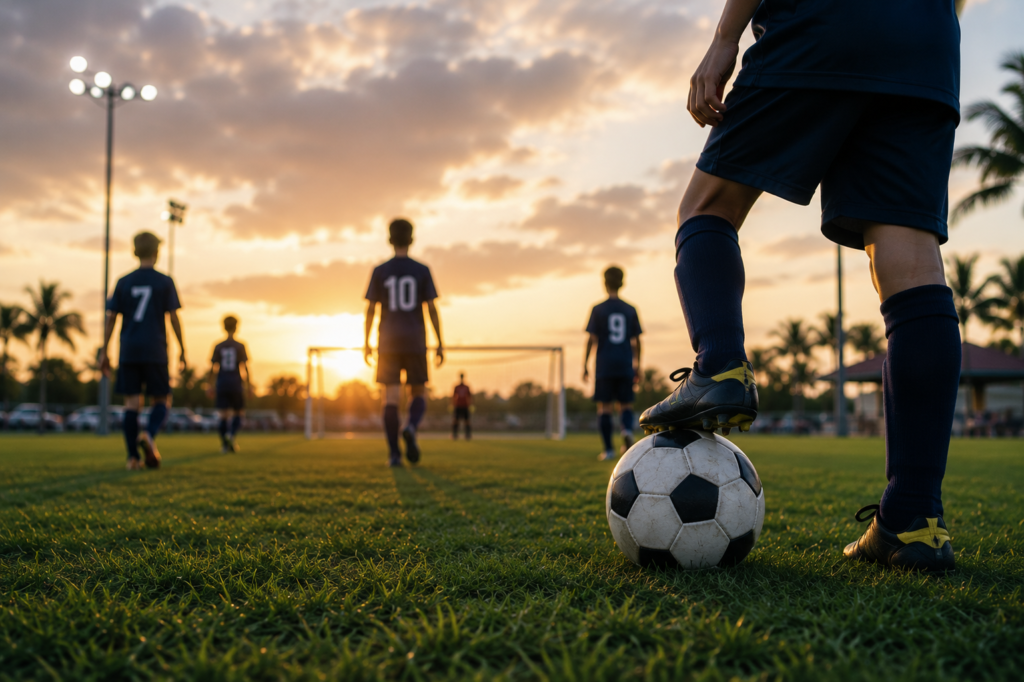
Families And Fans Are Part Of The Growth
World Cup fever also works because it brings families into the game. Soccer is one of the few sports where a household may support different national teams based on family history, heritage, favorite players, or longtime traditions. In Southwest Florida, where communities are culturally diverse and deeply connected through youth sports, that matters.
Watch parties, local restaurants, team gatherings, and family viewing traditions can make the tournament feel like a community event. A young player may first fall in love with the sport because of a dramatic World Cup goal watched with parents, grandparents, teammates, or friends.
The business side of the tournament is changing, too. As more fans follow international matches through streaming, mobile updates, fantasy contests, and sports betting conversations, World Cup fever is shaping how the broader sports world prepares for global attention. For local communities, though, the strongest impact remains personal: more people watching, talking about, and caring about soccer.
That attention can help local programs. More excitement often means more children asking to play, more parents looking for clubs, more students attending school matches, and more fans recognizing the skill required to compete. The World Cup gives soccer a month-long spotlight, and local programs can use that spotlight to build long-term interest.
What Young Players Can Learn Before 2026
The smartest athletes will not wait until the tournament begins. They can use the buildup to sharpen their own habits.
They can study how national teams press defensively. They can watch how fullbacks support attacks without leaving space behind them. They can pay attention to set pieces, where many major matches are decided. They can observe how goalkeepers organize the back line and how captains manage the emotional temperature of a match.
Young players can also learn from the tournament’s pressure. World Cup matches are often decided by small details: one poor clearance, one late run into the box, one missed assignment on a corner kick, or one moment of individual brilliance. That is a useful lesson for local athletes. Talent matters, but preparation, communication, conditioning, and focus often decide close games.
For Southwest Florida coaches, the World Cup offers a ready-made classroom. Film sessions can become more engaging when examples come from matches everyone is watching. Training sessions can connect drills to real moments from the tournament. Players who might normally see conditioning or tactical repetition as routine can better understand why those details matter.
Why This Moment Can Strengthen Southwest Florida Soccer
The 2026 World Cup arrives at a time when soccer has more visibility in Florida than ever. Inter Miami has raised the sport’s profile statewide. FC Naples gives Southwest Florida a professional presence. Local clubs continue to serve communities across the region. High school programs remain an important competitive stage for student-athletes.
That mix creates a powerful moment for the sport locally.
The World Cup will bring global names, historic matches, and massive fan attention to North America. But its lasting impact in Southwest Florida may show up in quieter ways: a child asking to join a team, a high school player training with more purpose, a family attending more local matches, or a coach using international examples to raise standards.
World Cup fever is not only about watching the best players in the world. It is about what that inspiration does after the final whistle. In Southwest Florida, the tournament can help turn excitement into participation, participation into development, and development into stronger soccer communities for years to come.