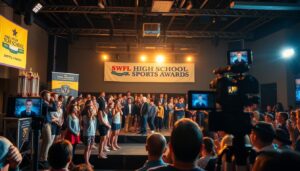
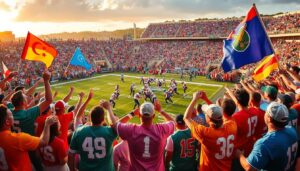
Winning is the goal, not just showing up. It’s about being the best in your field. It’s the moment when you know you’ve reached the top.
Think of FGCU’s “Dunk City” team from 2012-13. They weren’t just good; they were unbeatable. Their win was a cultural moment that stood the test of time.
Look at the FGCU Athletics Hall of Fame class from recently. Mikel Alvarez is remembered for his hits and being part of championship teams. This is what makes a legend.
Does winning a title make someone a legend? Or does being a legend lead to winning titles? It’s a question that has puzzled many.
All-Star Team Selections
All-Star selections are like whispers of praise from critics. They highlight individual brilliance within a team. It’s peers and experts saying, “You were essential.”
Getting an All-Star nod is more than winning a championship. It’s about excellence, even in defeat. But is it truly a measure of impact, or just a popularity contest with better stats? We’ll explore the politics and prestige.
FGCU’s Courtney Pohlman was named ASUN Player of the Year in 2011. She also got the Easton All-American honor. This is more than just being good in your conference. It’s being exceptional nationally.
KC Correllus made history in 2010 by winning both Player of the Year and Defensive Player of the Year. Being good on both sides of the ball is rare. She was a true dual-threat legend.
These local sports legends didn’t just play well. They changed the record books.
Now, let’s look at Cape Coral’s rising stars. McKenna Beach was named ASUN Freshman of the Year and First Team All-Conference. This shows she was ready to lead from the start. It’s like starting a job and getting promoted to manager right away.
Mackenzie Romich was named the “News-Press Softball Player of the Decade.” This honor lasts a decade. It means she set the standard for a decade.
What do these selections tell us about our local sports legends?
- All-Conference: You dominated your competition. You were the top player in your conference.
- All-Region: Your excellence was recognized across a wider area. You stood out in a larger pool.
- All-American: You entered the national conversation. Your name became known far and wide.
The politics of these awards are interesting, especially when you look at sports awards and how different levels evaluate performance. Conference awards show season-long consistency. Regional honors consider head-to-head matchups. National selections compare your highlight reel to thousands of others. It’s a mix of stats and beauty pageant.
The FACA All-State selection is special. It’s not just sportswriters voting. It’s the Florida Athletic Coaches Association, your rivals, saying you’re among the best. It’s like getting an award from your professional peers.
Are these selections a true measure of greatness? Or are they influenced by team success, media, and program prestige?
Here’s my take: The best All-Star honors balance both. They recognize players who excelled within their team while standing out from it. KC Correllus winning both awards shows she was indispensable to her team.
These local sports legends show that individual brilliance can shine, even on teams that don’t win much. A player on a mediocre team can earn All-American status. A freshman can be Freshman of the Year, even on a rebuilding team.
The legacy of these selections goes beyond trophies. When Courtney Pohlman becomes an All-American, she sets a new standard for FGCU players. When Mackenzie Romich is named Player of the Decade, she sets a benchmark for Cape Coral athletes.
This is how local sports legends are made. Not just through championships, but through expert endorsements. These selections become part of the region’s athletic DNA. They inspire aspiring players to reach for excellence.
Next time you see an All-Conference list, see it differently. It’s not just a list of good players. It’s a map of influence. It shows who shaped their team’s identity and dominated their position.
In Southwest Florida, these selections highlight our true athletic pioneers. They show players who didn’t just play the game—they redefined it.
Sportsmanship and Character Awards
The Southwest Florida Sports Hall of Fame gives its quietest applause for what happens between the whistles. It’s not about points or victories. Instead, it’s about the person’s character.
This section is not about who’s the best athlete. It’s about who is a true community pillar. These awards show a regional athletic history of integrity, not just wins.
McKenna Beach won the ASUN “Winner for Life” Award. It’s not just about her skills. It’s about her lasting impact. Adrianne McNally and KC Correllus also received awards for their academic achievements.
Quotes from inductees reveal the true essence. Mikel Alvarez thanked his family for their values. Coach Dave Tollett praised Alvarez’s character, not just his skills.
This section explores how sports shape a community’s soul. Champions may leave, but character remains. It builds a regional athletic history to be proud of.
In the end, these awards ask a simple yet profound question. What did you do when no one was watching? The Southwest Florida Sports Hall of Fame remembers. It values the how as much as the how many.
Most Improved Player Recognition
Forget the MVP for a moment. The real soul of the SWFL sports hall of fame often lies in the stories of radical transformation. It’s not about where you start, but the vertical distance you travel. It’s the sports world’s ultimate “character arc” trophy.
Why are we captivated by the grind? It’s the promise of untapped talent. Every local sports hall of fame needs that narrative—the proof that heart and hustle can redraw the map.
The Prototype’s Progress
Bryan Crislip was the “first basketball recruit” for FGCU. That sounds ceremonial until you hear the context: practicing on concrete courts, building a program from an idea.
His improvement is a meta-commentary on improvement itself. He wasn’t just a player getting better. He was the prototype, and his growth mirrored the program’s explosive leap from obscurity to the national spotlight of “Dunk City.” His legacy isn’t just points scored; it’s a blueprint for building something from nothing.
The Lifetime Arc
Martin Robinson was a 12th-round draft pick by the Yankees—a footnote in baseball’s machine. But the story didn’t end there. He parlayed that athletic foundation into a later career as a Doctor of Physical Therapy.
That’s not a season of improvement. That’s a lifetime arc. His journey represents the ultimate payoff: using the lessons from the field to contribute back to the athletic community that shaped him. It’s improvement with a purpose.
Versatility Forged in Fire
Adrianne McNally’s story under Coach Smesko at FGCU is a masterclass in developed versatility. She wasn’t a one-tool player refined; she was an entire toolkit assembled under pressure.
This type of improvement is about adaptability and intellectual growth. It’s learning to fill whatever role the team needs, morphing your game to meet the moment. In a hall of fame, this versatility is a quiet, powerful testament to coachable talent.
| Inductee | Starting Point | Peak Achievement | The Improvement Arc |
|---|---|---|---|
| Bryan Crislip | First recruit on concrete courts | Architect of “Dunk City” foundation | From program prototype to legacy builder |
| Martin Robinson | 12th-round MLB draft pick | Doctor of Physical Therapy | From athlete to healer, a lifetime of growth |
| Adrianne McNally | Talented multi-sport athlete | Versatile star under Smesko’s system | Mastering adaptability and role expansion |
These stories form the core mythology of a community’s sports identity. They tell fans, and young athletes, that your first chapter doesn’t define the book. The Southwest Florida sports hall of fame enshrines this belief. It honors not just the finished product, but the gritty, glorious process of becoming.
So, who’s the next great transformation story? Look for the one putting in the unseen work. That’s where the next legendary arc begins.
Coach and Volunteer Appreciation
Every plaque in the Southwest Florida Sports Hall of Fame has a story behind it. We often focus on the athletes’ big moments. But who planned those plays? Who saw the talent and shaped it?
This section is about the unsung heroes. The ones who build local sports legends from scratch.
Take Coach Chuck Insalaco of Cape Coral. He coached for 25 years, winning 421 games and reaching the State Final Four. But it’s not just about the numbers. It’s about the athletes he helped grow.
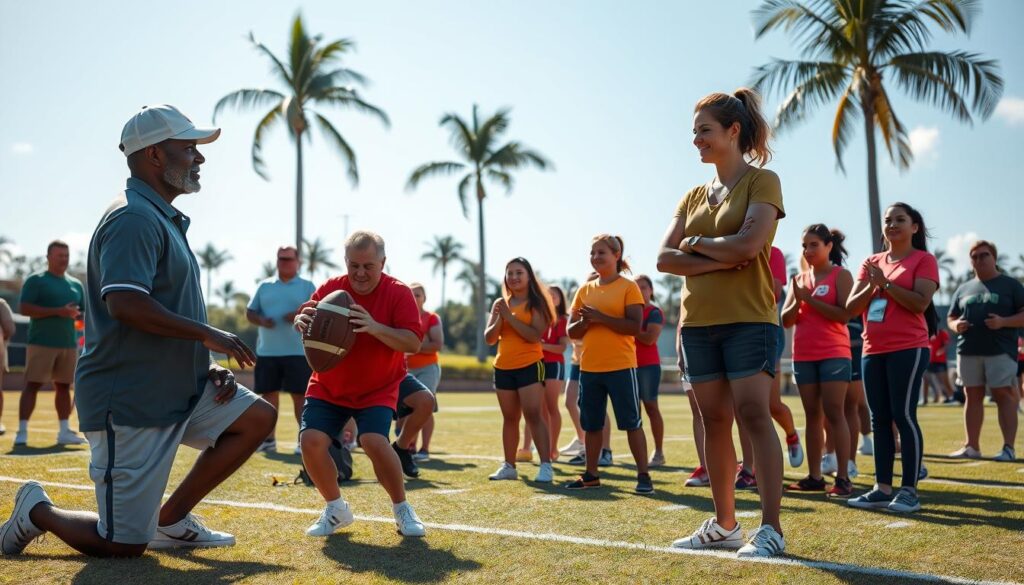
Listen to the inductees. They thank their mentors, not just agents or sponsors. Alvarez credits Coaches Tollett and McKee for pushing him. Crislip thanks Coach Balza for believing in him. McNally credits Coach Smesko for his winning mindset.
FGCU Athletic Director Ken Kavanagh called it the “pioneer’s era.” These coaches were creating new traditions. They turned empty fields into places of competition.
So, what makes a great coach? It’s not just about the game plan. It’s about psychology, talent development, and leadership. They’re like psychologists, parents, and CEOs all rolled into one.
| Coach Name | Tenure & Program | Signature Achievement | Legacy Players Developed |
|---|---|---|---|
| Chuck Insalaco | 25 years, Cape Coral Baseball | 421 wins, State Final Four appearance | Multiple professional & collegiate players |
| Karl Smesko | 20+ years, FGCU Women’s Basketball | Multiple NCAA Tournament appearances, conference dominance | WNBA draft picks, All-Conference athletes |
| Dave Tollett | Longtime FGCU Baseball | Building program from inception to national contender | MLB draft selections, All-American players |
| Various Youth League Volunteers | Decades of community service | Creating first sports experiences for thousands | Foundational skills for future high school athletes |
The table shows the impact of coaches and volunteers. From introducing kids to sports to preparing athletes for the pros. Each level builds on the last.
What do they get in return? Not just plaques or big contracts. It’s the pride of seeing their work last long after they’re gone.
Next time you see a standout athlete from Southwest Florida, think about who helped them. It’s often a coach who saw their talent early. That’s how local sports legends are made.
Parent Involvement Awards
The regional athletic history of Southwest Florida is not just about athletes. It’s also about the early morning car rides, late-night talks, and rainy game days. These moments are just as important.
Parents get formal awards less often than a cool breeze in August. But when they’re thanked first in hall of fame speeches, it’s a big deal. It shows where the athlete’s success comes from.
Mikel Alvarez’s words are a lesson in gratitude: “I want to thank my family for all of their sacrifices and support… I wouldn’t be the person I am today without the values they instilled in me.” He’s not just thanking them for rides. He’s thanking them for who he is today.
This is the unseen side of sports. It’s about the roles that don’t get recognition:
- The Logistics Coordinator: Expert in navigating the three-town travel circuit.
- The Emotional First Responder: Skilled in boosting morale after losses.
- The Financial Backer: The one who pays for shoes, fees, and “team dues.”
These roles don’t get a plaque. But their impact is seen in their child’s achievements. It’s a reward that goes beyond any banquet.
This network of support is key to a regional athletic history. Places with strong youth sports have engaged parents. The carpool lanes are the heart of this history.
So, while we honor athletes, let’s not forget the unsung heroes. They built the foundation, one sacrifice at a time. Their story might be in the margins, but it’s the most vital part of our regional athletic history.
Safety and Health Recognition
The SWFL sports hall of fame honors more than just past achievements. It celebrates the systems that make those achievements possible. It’s like the blueprint behind the trophy case.
While we cheer the spectacular plays, someone had to ensure the field wasn’t a hazard. They made sure the players weren’t running on borrowed knees.
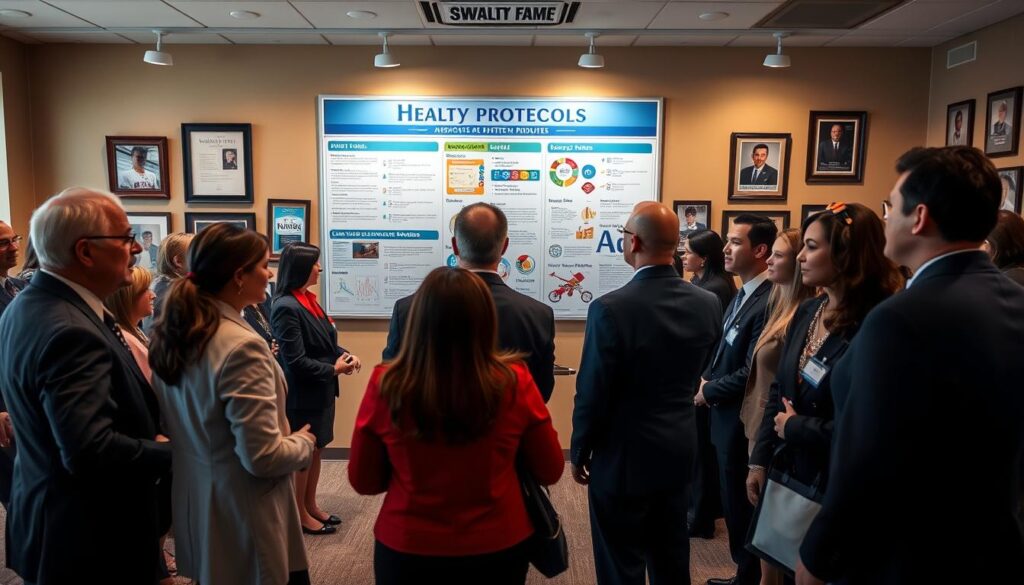
This recognition is the grown-up in the room. It’s the Hippocratic Oath of athletics. When Cape Coral’s own Martin Robinson, a hall of fame-caliber athlete, becomes a Doctor of Physical Therapy, the narrative completes a profound circle.
Robinson’s legacy isn’t measured in points scored, but in careers extended. He dedicated his career to maintaining the system for others.
Why does this matter in a hall of fame context? Glorifying past exploits without championing safe practices is like praising a beautiful building while ignoring its crumbling foundation. A responsible sports culture values the vessel over the victory.
The greatest athletic achievement isn’t a single season’s stats—it’s a long, healthy life after the final whistle. This form of recognition operates on multiple levels. It’s not just about immediate injury prevention during games.
It’s about the long-term view: concussion protocols, proper training techniques, recovery science, and even nutritional guidance. The modern SWFL sports hall of fame ethos should nod to these unsung heroes and protocols.
| Area of Safety & Health Focus | Traditional Recognition | Modern Hall of Fame Value | Long-Term Impact |
|---|---|---|---|
| Injury Prevention | Rarely highlighted | Core to sustainable athletics | Extends playing careers & quality of life |
| Medical Staff & Therapists | Behind-the-scenes support | Essential part of team legacy | Directly preserves athlete health |
| Equipment & Facility Safety | Basic requirement | Foundation for all achievement | Prevents catastrophic injuries |
| Mental Health & Wellness | Historically ignored | Critical to performance & longevity | Supports life beyond sports |
| Post-Career Health Transition | Not considered | Complete athlete life cycle view | Ensures hall of famers thrive after retirement |
The table above shows the evolution. We’re moving from celebrating only what happens during competition to valuing what happens because of and after competition. This shift transforms the SWFL sports hall of fame from a museum of relics into a living institution that advocates for athlete welfare.
Consider the alternative. A community that inducts athletes into its hall of fame while ignoring the broken bodies left in the sport’s wake is practicing a form of selective memory. It’s celebrating the champagne toast while ignoring the hangover. True honor requires acknowledging the full cost of glory and working to reduce it.
So when we look at the SWFL sports hall of fame, we should ask: Does it merely enshrine past stars, or does it also champion the practices that keep future stars safe? Does it recognize only the visible triumphs, or also the invisible safeguards? The answer determines whether it’s a monument to nostalgia or a blueprint for a healthier athletic future.
This recognition might lack the glamour of a championship trophy. You won’t see crowds cheering for a perfectly executed concussion protocol. But in the quiet calculus of a career—and a life—it might be the most important award of all. The body that earns the induction deserves protection long after the ceremony ends.
Inclusive Program Awards
If your hall of fame feels like a private club, you’re missing the point of local sports legends. A trophy case full of baseball or dominated by one gender shows bias, not brilliance. The real award goes to places that see athletic legacy as a mosaic.
Inclusion isn’t about showing off or meeting quotas. It’s about telling the true story of your community. Did your area have great female athletes? Did swimmers and quarterbacks achieve equally? A hall that ignores half its history is editing, not preserving, legacy.
FGCU’s 2024 induction class is a perfect example of intentional recognition. The class includes athletes from baseball, women’s soccer, men’s basketball, women’s basketball and volleyball, and softball. Each inductee has a unique story of excellence.
Cape Coral’s 2026 class goes even further. They celebrate athletes from nine sports, from swimming to tennis. This shows that every sport matters, not just a few.
This approach shows that a hall of fame can grow up. It recognizes that local sports legends come from different backgrounds. A swimmer’s discipline is different from a basketball player’s teamwork. Both are important.
Think of it like investing in different stocks. You wouldn’t put all your money in one. Celebrating all types of athletic achievements makes a region’s sports heritage stronger. Athletes from different eras, like softball pitchers and soccer stars, create a complete story of community excellence.
This inclusivity asks if your hall of fame reflects your community. If not, you’re not honoring local sports legends. You’re creating a selective memory museum. Programs that get this right earn an invisible “inclusive excellence” badge.
Southwest Florida’s evidence is clear. The inductees show a conscious effort to represent all sports. This creates a richer, more authentic history. It shows young athletes that their greatness is valued, no matter the sport.
An inclusive hall of fame does more than honor athletes. It maps the community’s athletic DNA. It shows where excellence came from across generations and genders. This is not just fair—it’s smart for inspiring future local sports legends.
So, when you visit a sports hall of fame, don’t just look at names. Look at the patterns. The variety itself is the award. A collection that spans sports and eras shows a community that truly understands its legends come from everywhere.
Equipment and Facility Recognition
Every hall of fame story needs a stage. Sometimes that stage is humble concrete.
Bryan Crislip remembers FGCU’s early days. They practiced outside on concrete basketball courts. Now, the program is “known around the country.” The journey of a team, or an entire region’s athletic identity, is written in the upgrades to its physical space.
This recognition honors the builders and funders. Events like FGCU’s “Night at the Nest” are more than galas. They are rituals where a community invests in the future backdrop for its future legends. The check written today pours the foundation for tomorrow’s lore.
The pool, the field, the gym floor—these are the silent, steadfast witnesses. They absorb every cheer and every tear. Our regional athletic history isn’t just recorded in record books. It’s etched into the very beams and bleachers. The patina on a old track, the shine on a new scoreboard; each tells a chapter.
To maintain a facility is to curate a museum of local effort. It is to preserve the platform where character is forged and community gathers. The recognition here is for those who understand that legacy, quite literally, needs a home. They build the nest where eagles learn to fly.