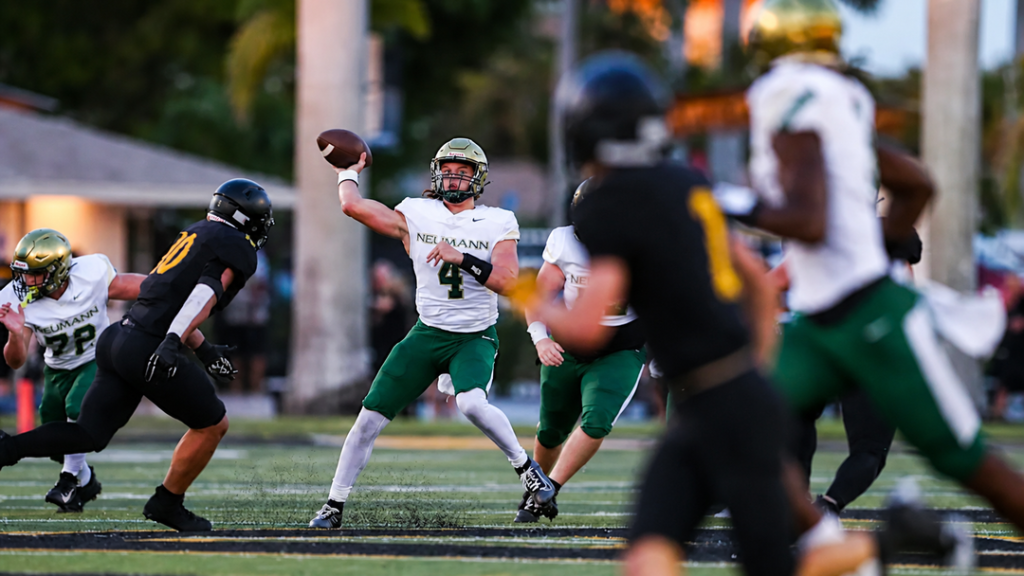
Southwest Florida football players matter this season because the region is no longer just producing solid Friday night performers; it is developing prospects who shape games, attract college attention, and raise the standard for entire programs. When I look at this year’s watch list, I see more than individual talent. I see a regional football scene built on speed, discipline, and rising competitive pressure.
Why Southwest Florida Football Players Deserve More Attention
Southwest Florida has always had football talent, but the way that talent is being evaluated has changed. Coaches, recruiters, trainers, and local observers are no longer looking only at touchdowns or highlight clips. They are studying frame, positional versatility, explosiveness, decision-making, classroom progress, and how players respond when opponents finally adjust to them.
That is why a watch list should not be treated like a simple popularity ranking. The real value comes from identifying players who influence the game in different ways. Some are obvious because they dominate with size. Others stand out because they make difficult plays look routine. A few may not have the loudest profiles yet, but their development arc makes them dangerous.
The best way to understand the region is to look at the players who create mismatch problems. A running back who forces defenses to load the box changes play-calling before the snap. A defensive lineman who collapses the pocket changes every passing concept. A receiver who wins vertically opens room underneath. These are the players who shape games even when the ball is not in their hands.
For broader recruiting and regional context, the conversation around Southwest Florida football players has already shown how deep the area’s talent pool can be when skill, size, and opportunity meet at the right time.
Southwest Florida Football Players Who Can Define The Season
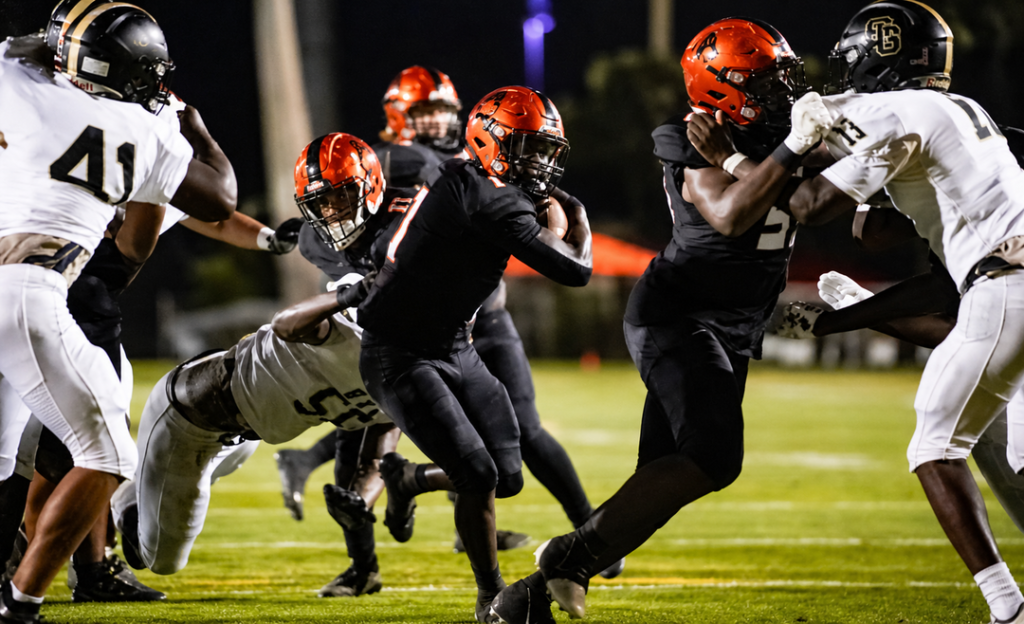
The first name that belongs in any serious regional discussion is Deshon Jenkins Jr. of Bishop Verot. A powerful running back with a physical profile that fits modern high school football, Jenkins has the kind of downhill style that can punish a defense over four quarters. What makes him especially interesting is not only his production but the way he carries contact. He is not just looking for space; he creates it.
Running backs are sometimes reduced to yardage totals, but Jenkins brings something more complete. His presence forces defensive coordinators to decide how much risk they are willing to take near the line of scrimmage. If they commit too heavily, Bishop Verot can attack elsewhere. If they stay balanced, Jenkins can control tempo. That kind of leverage is rare.
Micah Anderson, also from Bishop Verot, brings a different kind of importance. As a linebacker, his job is not just to tackle. He has to diagnose, communicate, cover ground, and bring authority to the middle of the defense. Players like Anderson become the emotional center of a unit because they must react quickly without playing recklessly.
Linebacker play often separates good defenses from great ones. A strong defensive front can disrupt, but a smart linebacker cleans up the chaos. Anderson’s value is tied to recognition, not only athleticism. If he continues reading plays with confidence, he can become one of the defining defensive players in the region.
Quinn Enguita gives Bishop Verot another disruptive piece. Defensive linemen who can win behind the line of scrimmage are always worth watching because they change the rhythm of the offense. Enguita has the frame and physical style to create negative plays, and negative plays are often what swing high school games. One tackle for loss can flip a third-down situation. One sack can break a drive. One forced hurry can become an interception.
That impact is not always captured in a box score. The true risk for opposing offenses is that players like Enguita shorten the amount of time a quarterback has to think. When that happens, even talented teams begin rushing decisions.
Bishop Verot’s Talent Makes The Region More Competitive
Bishop Verot has become one of the essential programs to watch because its roster does not rely on one type of player. The Vikings can put pressure on a defense with power, speed, and structure. They can also pressure an offense with disciplined defensive talent. That balance creates a weekly standard that other teams in Southwest Florida must match.
Justin Prieto is part of that picture. Offensive linemen rarely receive the public attention they deserve, but Prieto’s size and blocking profile make him a major factor. A strong tackle changes the confidence of an offense. He protects the quarterback, secures the edge, and gives the run game a physical foundation.
When I evaluate offensive linemen, I look for more than size. The better question is whether a lineman can stay balanced while moving a defender against his will. Prieto’s development matters because line play is where many high school games are truly decided. Skill players finish the highlight, but linemen build the opportunity.
That point also applies to the broader football culture in Southwest Florida. Athletic success is often connected to community commitment, consistent training, and local support systems. The same regional energy that supports road races, youth athletics, and public participation across the area can be seen in the Florida community race culture that helps make sports part of everyday life rather than a seasonal distraction.
Fort Myers Has The Line Talent To Control Games
Fort Myers remains a program with the kind of physical identity that can make opponents uncomfortable. Joel Ervin is one of the key players to watch because of his size, two-way potential, and ability to influence the line of scrimmage. A player with his frame can become a major anchor if he maintains pad level and consistency.
The challenge for big linemen is always refinement. Size gets attention, but technique earns trust. Ervin’s ceiling depends on how well he handles quick defenders, how efficiently he uses his hands, and how reliably he finishes blocks without losing body position. Those details are not glamorous, yet they decide whether a lineman becomes merely large or genuinely dominant.
Kendall Guervill gives Fort Myers another strong two-way presence. His ability to contribute on both sides of the ball adds flexibility for coaches and creates matchup problems for opponents. Two-way players must manage fatigue, role changes, and mental demands that single-position players do not always face. That makes consistency especially impressive.
Guervill’s defensive profile also deserves attention. When a lineman can occupy space and still make plays, he changes the math for an offense. Running lanes close faster. Quarterbacks feel less comfortable climbing the pocket. Offensive coordinators begin adjusting protections, which can limit what they want to do.
First Baptist Academy Has Skill And Defensive Upside
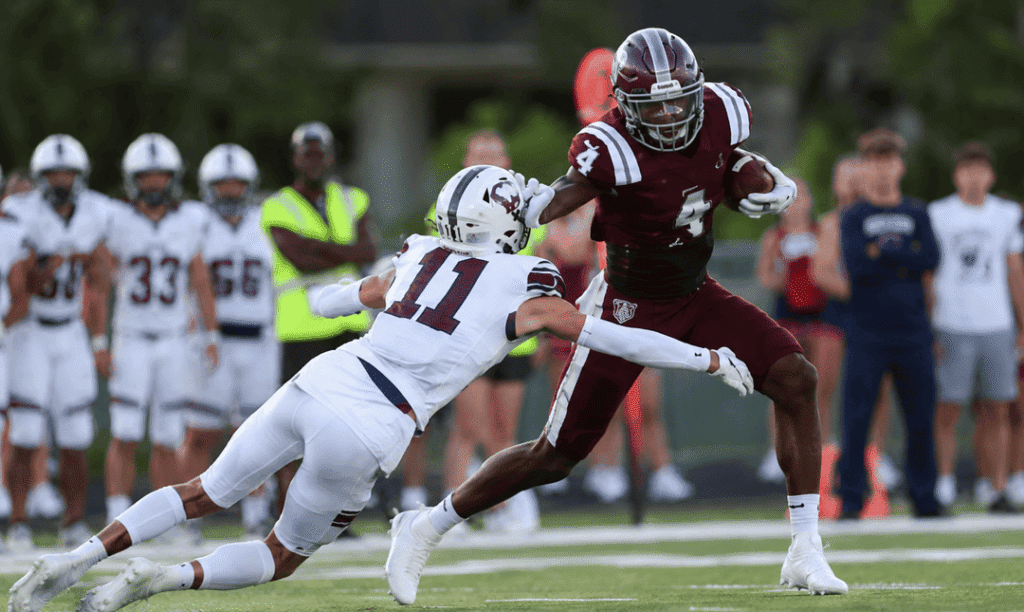
First Baptist Academy enters the discussion because of the way it continues to produce players with clear roles and high ceilings. Jayden Petit is one of the most intriguing offensive players in the region because a receiver with length, catch radius, and scoring ability can tilt a game quickly. A big receiver does not need constant separation if he can win at the catch point.
Petit’s importance lies in trust. Quarterbacks need receivers who can make contested plays when the design breaks down or when coverage is tight. A player who can turn a 50-50 ball into a realistic offensive option gives a team another layer of confidence.
Micah Fils-Aime adds defensive intrigue. Defensive line play is often about disruption before recognition. A lineman who can penetrate early forces the offense into survival mode. Fils-Aime’s development will be worth watching because defenders who win with both strength and timing can become weekly problems.
First Baptist’s broader opportunity is to turn individual talent into collective execution. Talent wins plays. Structure wins drives. The teams that become most dangerous are the ones that blend athletic ability with repeatable habits.
North Fort Myers Has A Defensive Name To Watch
James Johnson of North Fort Myers deserves attention because defensive linemen with power and production are never minor figures. A strong interior or edge presence can alter a game without needing constant statistical fireworks. Johnson’s profile suggests a player who can generate disruption through strength, leverage, and short-area burst.
What I like about this type of player is the way he can affect both phases of defense. Against the run, he can squeeze space. Against the pass, he can collapse timing. That combination creates stress for offenses that prefer rhythm and balance.
North Fort Myers will need players like Johnson to set tone early in games. A defense often reveals its identity in the first few series. If Johnson wins early, it can give the entire unit more confidence and force opponents away from their preferred plan.
Community School Of Naples Has A Foundation Piece
George Haseotes of Community School of Naples is another offensive lineman who should be watched closely. The reason is simple: high-level offensive line play allows a team to become more than reactive. It lets a program impose its preferred style.
Haseotes brings size, athletic ability, and the kind of line presence that can stabilize an offense. For a program that wants to protect its quarterback and sustain drives, that matters. Line play is where patience becomes possible. Without it, offenses rush throws, abandon run calls, and become predictable.
What separates strong linemen is not only whether they win one-on-one. It is whether they allow the entire offense to stay on schedule. A clean first down leads to manageable second down. A solid protection call gives receivers time to finish routes. A reliable run block keeps the defense honest. That is the hidden impact of players like Haseotes.
What Makes This Watch List Different
A serious player watch list should not simply collect the most familiar names. It should explain why those names matter. Southwest Florida’s best players are not all valuable in the same way. Some are finishers. Some are tone-setters. Some are stabilizers. Some are future college prospects still learning how to dominate every snap.
That is what makes this season compelling. The region has players who can influence the game at every layer: backfield, perimeter, offensive front, defensive front, and second level. That variety creates depth in the local football conversation.
The watch list also reflects a broader truth about high school football. Development is rarely linear. A player can enter the season with attention and still need to prove durability. Another can begin as a secondary name and become unavoidable by October. Coaches know this. Recruiters know this. The best players know it too.
That uncertainty creates momentum. Each week becomes a test of whether a player can turn potential into performance.
The Positions That Will Shape The Season
The most important position group in Southwest Florida may be the offensive line. That might surprise casual fans who focus on quarterbacks and receivers, but the region has enough big, skilled linemen to make line play a defining theme. Ervin, Guervill, Prieto, and Haseotes all represent different versions of the same idea: control begins up front.
If these linemen play to their potential, their teams can dictate pace. They can protect leads. They can slow games down when needed. They can also create the kind of confidence that helps younger skill players settle into bigger roles.
Defensive line play may be just as important. Enguita, Johnson, and Fils-Aime give the region several players who can change field position through pressure and penetration. High school offenses often struggle when their timing is broken. A defensive lineman who wins early can create a chain reaction.
At linebacker, Anderson represents the importance of communication and judgment. Modern linebackers cannot simply run downhill. They must handle motion, space, misdirection, and passing-game responsibilities. The best ones combine physicality with restraint.
At running back and receiver, Jenkins and Petit bring the finishing ability that turns solid structure into points. They are different types of offensive weapons, but each creates defensive tension. Jenkins forces physical commitment. Petit forces coverage awareness.
For statewide perspective, Florida high school football coverage helps show how regional players fit into a larger competitive environment without diminishing the importance of local rivalries.
How College Attention Changes The Local Picture
Recruiting attention can be useful, but it can also distort how people evaluate high school players. Offers, rankings, and social media clips create visibility. They do not automatically prove weekly dominance. The best prospects still have to block, tackle, compete, recover, and perform under pressure.
That is why I prefer to evaluate college interest as one part of a larger context. It matters when a player has the physical tools and production to justify attention. It matters less when the attention becomes louder than the performance.
For Southwest Florida players, the key is translating profile into responsibility. A player with offers cannot disappear in big games. A player with size cannot rely only on frame. A player with speed must show route discipline, tackling consistency, or ball security. Talent opens the door. Accountability keeps it open.
This season will reveal which players are ready for that standard. The difference between being noticed and being trusted is enormous.
The Hidden Traits That Separate The Best Players
Fans often notice speed, size, and scoring first. Those traits matter, but the hidden traits are usually more revealing. Can the player handle a bad series without losing focus? Can he play through contact? Can he communicate? Can he avoid penalties? Can he make the routine play every time?
Those questions define long-term credibility. A spectacular play can change a game, but reliability changes a season.
For linemen, the hidden traits include footwork, hand placement, and stamina. For linebackers, they include eye discipline and tackling angles. For receivers, they include route detail and willingness to block. For running backs, they include vision, pass protection, and ball security. For defensive linemen, they include leverage and snap anticipation.
The players who master those details become more than talented. They become dependable.
What Readers Should Watch On Friday Nights
When watching these players, do not only follow the ball. Watch how defenses align when Jenkins is in the backfield. Watch whether Petit draws safety help. Watch whether Ervin, Guervill, Prieto, and Haseotes move defenders or simply shield them. Watch Anderson before the snap. Watch Enguita, Johnson, and Fils-Aime after the snap.
That kind of viewing reveals the real signal beneath the highlights. A great player often changes what the opponent wants to do. That influence can be subtle, but it is powerful.
Also watch how these players perform in close games. Blowout performances can be impressive, but tight fourth quarters reveal more. Fatigue, pressure, and decision-making become part of the evaluation. The best players do not only produce when everything is comfortable. They respond when the game demands resilience.
Why Coaching Will Matter As Much As Talent
The best players on this list will still depend on coaching structure. A running back needs blocking angles. A receiver needs route timing. A linebacker needs the right calls and clear responsibilities. A defensive lineman needs a plan that lets him attack without losing gap integrity.
That is why team context matters. Some players are asked to carry heavy workloads. Others operate inside deep rosters where their role is more specialized. Neither path is automatically better. What matters is whether the player’s role gives him room to show quality without forcing him into mistakes.
Coaches also determine how quickly players adjust when opponents begin game-planning specifically for them. Early success is one thing. Sustained success is another. By midseason, the best players are rarely surprising anyone. They must win when the other sideline knows exactly where they are. That is where adaptation becomes crucial.
The Bigger Meaning For Southwest Florida High School Football
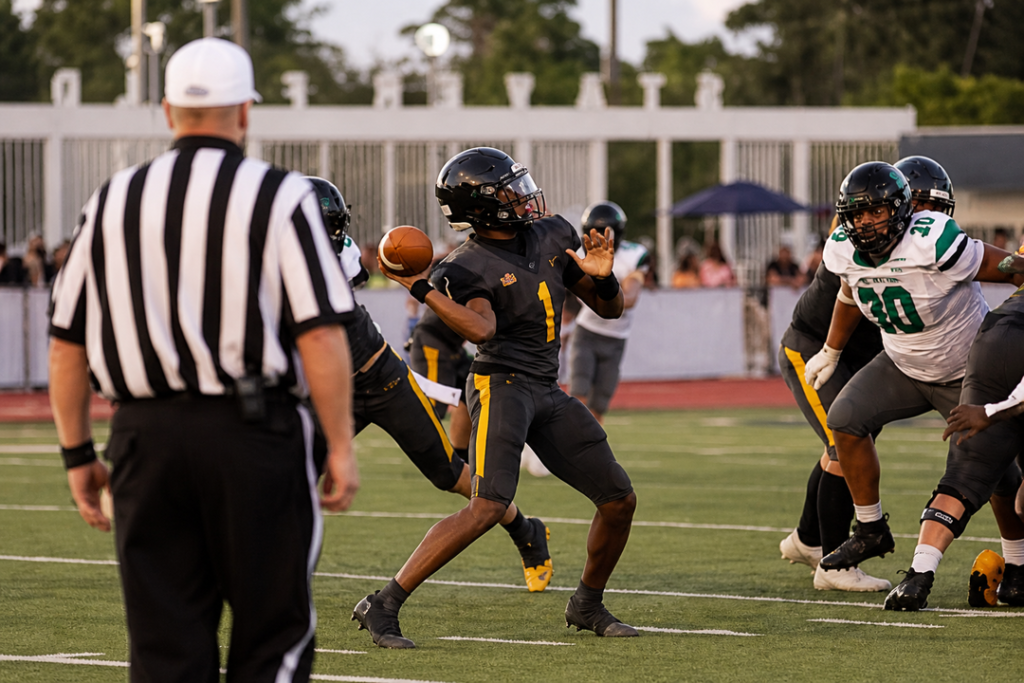
The strength of this watch list says something encouraging about the region. Southwest Florida is producing players with size, skill, and positional diversity. That matters for local programs because talent raises expectations. It also matters for younger athletes who can see a pathway from local fields to larger opportunities.
The region’s next step is consistency. A few standout players can create headlines. A sustained pipeline creates growth. That requires coaching, facilities, offseason development, academic support, and community investment. It also requires patience because not every prospect develops at the same pace.
High school football is not only about who is biggest at 16 or fastest at 17. It is about who keeps improving. The most exciting player in September may not be the most complete player in November. That is part of what makes the season worth watching.
Final Perspective On Southwest Florida Football Players
This season’s top Southwest Florida football players give the region a strong mix of physicality, skill, and competitive promise. Deshon Jenkins Jr., Micah Anderson, Quinn Enguita, Joel Ervin, Kendall Guervill, George Haseotes, Jayden Petit, Micah Fils-Aime, James Johnson, and Justin Prieto all bring something meaningful to the field, whether through power, protection, disruption, or playmaking.
The larger story is not just who makes the biggest highlight. It is who handles expectation, improves under pressure, and helps his team win the moments that decide games. Southwest Florida football players are worth watching because they show how local football can blend talent, purpose, and leadership into something bigger than a weekly scoreboard.