Imagine jeeps and boats mixed together racing through swampy land where panthers roamed. This wasn’t a fantasy from a post-apocalyptic world. It was post-WWII Florida at its most weird.
My great-uncle R.L. Walker’s Flying Saucer buggy was more than a car. It was a challenge to the world. His win as Swamp Buggy King in 1951-1952 turned hunting weekends into wild chaos.
What started with a dozen muddy fans grew into a unique Florida tradition. It’s more than orange juice and hurricane season. It’s in my family’s history for four generations.
This story is the real deal, unlike NASCAR’s corporate feel. It’s where the true off-road racing Florida spirit began. Not in offices, but in the Florida Sports Park‘s muddy glory.
Post-WWII origins and local pioneers
Imagine Florida’s Four Corners in the 1940s. Back then, panthers were more common than cars. You needed racing stripes on your bike just to stay safe. This was the start of a unique local festival Naples would later celebrate.
The post-war era is often seen as a time of suburban growth. But in Southwest Florida, it was different. Men like my great-uncle R.L. Walker were dreaming up wild ideas. They wondered, “What if we raced these things?”
These weren’t just any vehicles. They were odd creations, made from whatever was available. Think of a Jeep mixed with a tractor, or a truck with an outboard motor. The early engineering swamp buggies were all about speed through the mud.
By 1949, things got organized. The Swamp Buggy, Inc. was formed. It wasn’t a fancy corporate move. It was just a group of hunters-turned-racers who had created a sport by accident. They didn’t worry about safety or money. They just wanted to see who could get through the mud the fastest.
This movement was huge. It showed Florida’s shift from a wild place to a more organized one. These pioneers were building more than just vehicles. They were creating a new Florida, where creativity and determination mattered more than money or education.
What started with a few hunters racing their creations turned into a big event. The swamp buggy races became a key part of Naples’ culture. They celebrated resourcefulness, creativity, and the joy of getting dirty.
The machines: Classes, innovation, and safety standards
These aren’t your daddy’s hunting rigs – unless your daddy was welding aircraft parts to tractor tires in his backyard. The engineering swamp buggies of today show decades of innovation. This would make any mechanical engineer either cringe or applaud with equal enthusiasm.
We’ve got seven distinct classes, each with its own personality and purpose. From the relatively tame to the absolutely insane, here’s what separates the swamp crawlers from the mud flingers:
| Class | Top Speed | Wheel Size | Key Features |
|---|---|---|---|
| Jeep Class | Up to 40 mph | Standard | Snorkels, basic modifications |
| Pro-Modified | Up to 75 mph | 4-foot wheels | Aircraft fuselage bodies, extreme power |
| V8 Sportsman | 55-65 mph | 3-foot wheels | Big block engines, aggressive tires |
| 6-Cylinder | 45-55 mph | 2.5-foot wheels | Balance of power and control |
| 4-Cylinder | 35-45 mph | 2-foot wheels | Entry-level racing, cost-effective |
| Air-Cooled | 30-40 mph | 1.5-foot wheels | Small engines, lightweight builds |
| Mini-Modified | 40-50 mph | 2-foot wheels | Compact design, agile handling |
The transformation from practical hunting vehicle to purpose-built racing machine is amazing. It’s like a Southern Gothic version of Transformers. What started as modified Jeeps and trucks for hunting became specialized monsters.
Pro-Modified buggies are the top of this evolution. They have four-foot wheels and airplane fuselage bodies. Their engines sound like geological events.
Safety standards have also evolved, but not as fast as the machines. Early races were more about hope than safety. Now, they have ambulances ready.
Glenn Chesser’s compound fracture shows this evolution. He raced with a broken leg because stopping wasn’t part of swamp buggy culture. Chessers don’t cry – they just add more horsepower.
The real innovation in off-road racing Florida style happens in backyards and garages. Welders and mechanics create these machines. It’s engineering by necessity, creativity by immersion, and safety by optimistic caution.
Pageantry: The Swamp Buggy Queen and ceremonies
The Swamp Buggy Queen pageant is like a mix of Miss America and WrestleMania, raised by swamp people. It happens every April. The queen is crowned and then gets dunked in the mud the buggies race on.
This event is all about community, not just beauty. Contestants wear colorful dresses that would make Scarlett O’Hara blush. There are also beard competitions, where facial hair is celebrated, no matter how wild.
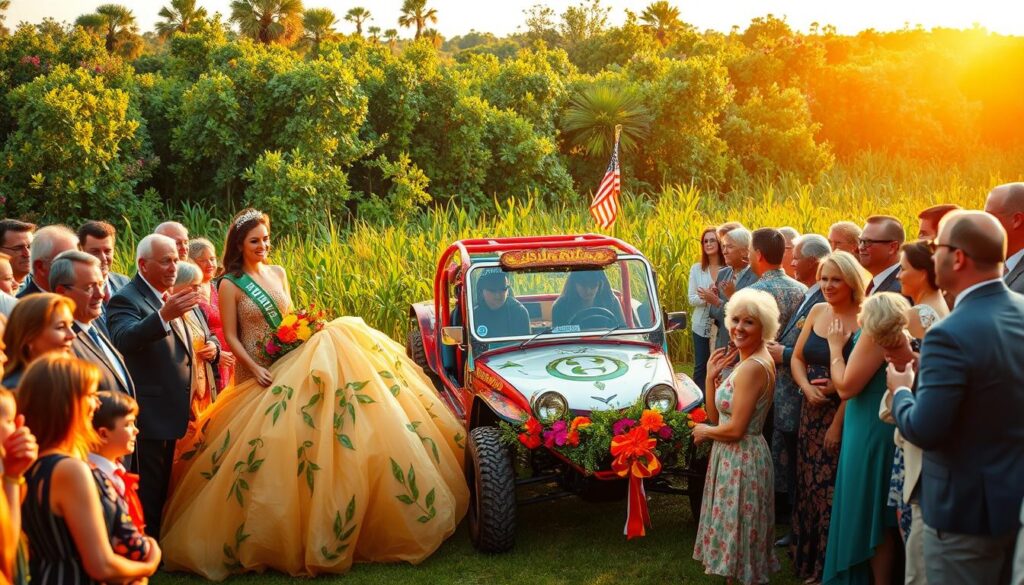
The parade is a unique blend of Southern charm and mechanical excitement. It’s like Gone with the Wind meets Mad Max. It’s a fascinating mix.
The ceremonies are more than just fun. They show the community’s playful side. They mix tradition with a bit of mud, making it a special event.
Family dynasties and multigenerational teams
Forget about political dynasties. The real family empires are built in the mud at Florida Sports Park. The Chesser clan makes the Kennedys look like amateurs, if the Kennedys traded Hyannis Port for hydraulic fluid.
Leonard Chesser retired as the winningest driver in swamp buggy history. His daughter Amy then shattered glass ceilings by becoming the first woman to win a Big Feature race. This isn’t just competition – it’s hereditary excellence playing out in gasoline and glory.
My own family connection through great-uncle R.L. Walker reveals how these dynasties form. It’s not about wealth or fame. It’s about passing down mechanical intuition and competitive fire through generations.
The most fascinating evolution? Women like Courtney Jolly transitioning from Swamp Buggy Queen to actual racer. Pageantry and horsepower coexist beautifully in this Southern ecosystem.
These families represent the soul of engineering swamp buggies. They prove that the most powerful engines aren’t just built in garages – they’re born in bloodlines.
Weathering storms: Rebuilds and resilience
If Sisyphus had a Florida cousin, he’d be pushing a swamp buggy out of the mud at the Florida Sports Park. The resilience here isn’t just a cliché—it’s real. It’s in the clay that makes up the Mile O’ Mud.
Take Hurricane Wilma in 2005. While others were boarding up, swamp buggy racers were thinking about how the storm might improve the track. The cancellation was just a break in Florida’s off-road racing Florida tradition.
Then there’s Glenn Chesser’s story of a compound fracture. Most would take a break after such an injury. But Chesser saw it as a minor adjustment to his driving. This mindset treats broken bones as minor issues.
The constant rebuilding of buggies shows the bigger fight for survival. While Naples grows with condos and golf courses, the Florida Sports Park stands as untouched Florida. It’s a rare sight of untouched terrain.
Political battles over land ownership? No problem. These folks can pull three-ton vehicles out of mud. Bureaucratic paperwork is a breeze compared to Saturday night in the swamp.
The real story isn’t just surviving one hurricane or proposal. It’s about keeping cultural traditions alive in a state that often tries to erase them. The buggies get rebuilt because the tradition must go on. Even if it means racing with some duct tape holding things together.
What makes this off-road racing Florida tradition so strong? It’s the will to preserve things, even when it seems illogical. The swamp buggy races are more than an event. They’re a symbol of Florida’s unyielding spirit.
Environmental and sustainability efforts
Imagine your playground becoming a protected habitat. That’s what’s happening in swamp buggy racing. The sport was born in the wild wetlands, now home to endangered species like the gopher tortoise. It’s a surprising turn of events.
Florida’s landscape has changed a lot. Urban areas have grown, and people have become more aware of nature. The “Mile O’ Mud” is now seen as a vital ecosystem, not just a challenge.
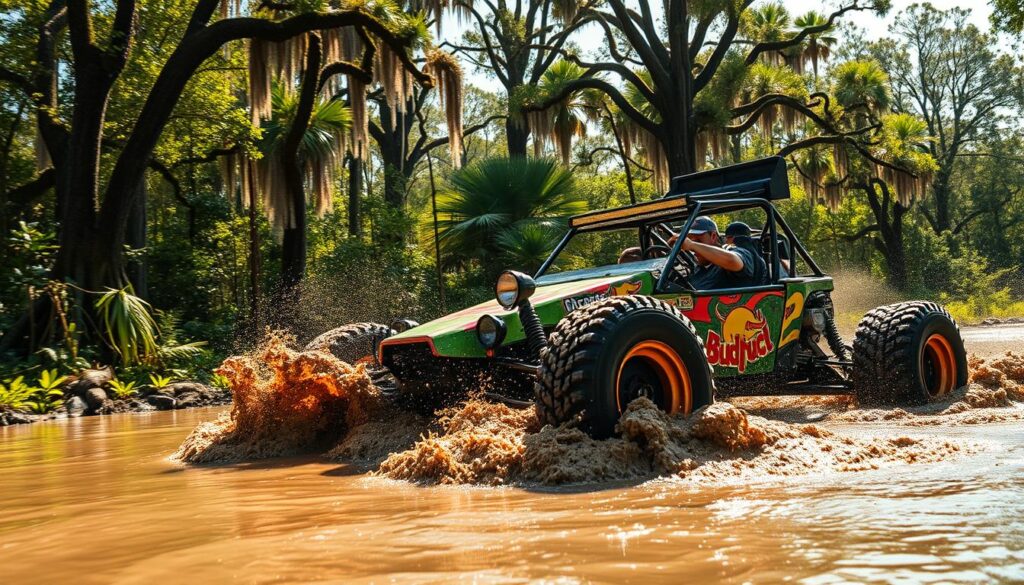
The link between off-road racing Florida style and caring for the environment is complex. They both need each other but sometimes clash. How can a sport that loves speed and mud live with endangered species?
Race organizers now work hard to get permits and protect habitats. They’ve become accidental guardians of nature, balancing tradition with the need to protect the environment.
Here are some ways they’re adapting to be more sustainable:
| Traditional Practice | Modern Adaptation | Environmental Impact |
|---|---|---|
| Unrestricted wetland access | Designated race corridors | Minimized habitat disruption |
| Minimal cleanup operations | Mandatory post-race restoration | Reduced long-term ecological damage |
| Local resource consumption | Sustainable vendor partnerships | Smaller carbon footprint for events |
This isn’t just about following rules—it’s about changing with the times. The creativity that built these amazing machines is now used to protect their home. Local festivals Naples must also adapt or risk being forgotten.
There’s a big conversation going on. How can we celebrate Florida’s wild side while keeping it safe? Can loud engines and nature conservation go hand in hand? These questions spark interesting talks everywhere.
The future of swamp buggy racing might depend on finding the right answers. The mud will always be there. The question is, who or what will share it with us?
What to expect on race day: Tickets, seating, gear
Imagine the Daytona 500 meets mud wrestling in the Everglades. That’s what you get at the Florida Sports Park’s swamp buggy races.
The races have changed a lot from their wild 1970s start. Back then, people carried guns and drank a lot. Now, it’s more fun for families.
Every three weekends, this Naples event turns into a wild ride. It’s like Mad Max: Fury Road, but in Florida.
Before you even park, you’ll smell gasoline and mud. Then, you’ll feel the rumble of the engines. These aren’t your average cars.
Ticket strategy is straightforward. General admission lets you join the fun. VIP tickets offer cleaner bathrooms.
Seating? Forget about it. Folding chairs are okay, but they’ll get dirty. The best views might get you a mud facial.
Ear protection is a must. These engines are loud. It’s like nature’s way of saying, “Just enjoy it!”
The Florida Sports Park changes during these events. It turns into a lively spot for a unique Naples festival.
Dress like a swamp creature. Wear old clothes and boots. Sunscreen is key, but light colors aren’t.
Food vendors have everything from burgers to unique dishes. Stay hydrated in the Florida heat.
This isn’t Wimbledon. It’s raw and unforgettable. Swamp buggy races mix Florida’s wild past with its modern side.
You’ll leave tired, a bit deaf, and covered in mud. But you’ll also see why this tradition has lasted so long.
Community impact: Charities, vendors, and tourism
Golf tournaments and art festivals are big in Naples, but swamp buggy races have their own special place. They bring thousands of people from all over, making the races more than just a fun event. It’s a way to help the community grow.
Local vendors are key to the races. They offer everything from food to unique mud-themed items. These businesses have been around for years, keeping local culture alive while serving visitors.
The races also give back to the community. Money from tickets and vendors goes to help kids, protect the environment, and support local projects. The Swamp Buggy Queen pageant is a big part of this, helping young women grow and lead.
During race weekends, Naples gets a boost. Hotels are full, restaurants are busy, and ATV rentals are in high demand. It’s a different kind of tourism that supports local businesses in a big way.
But the impact doesn’t stop after the races. Visitors often stay longer to check out other local festivals Naples has. This creates a bigger economic effect, showing off the real Florida.
| Economic Sector | Pre-Race Weekend | Race Weekend | Percentage Increase |
|---|---|---|---|
| Hotel Occupancy | 62% | 98% | 58% |
| Restaurant Revenue | $3.2M | $5.8M | 81% |
| Local Vendor Sales | N/A | $1.4M | N/A |
| Charitable Donations | Quarterly Average | Race Weekend Total | 340% |
The races are special because they help the community while keeping traditions alive. They show how unique events can make a big difference. Other Florida communities are taking notice.
The Swamp Buggy Queen program is more than a beauty pageant. It’s a chance for young women to become leaders and ambassadors of Florida culture. They represent values that go beyond just looks.
As Naples grows, the swamp buggy races remind us that we can keep traditions alive while moving forward. They show how cultural preservation and economic growth can go hand in hand, making Naples unique in Florida’s tourism scene.
The future of the Mile O’ Mud
What’s the future for a tradition born in mud and post-war ingenuity? The Florida Sports Park is more than racing grounds. It’s a place where keeping traditions alive meets the push of real estate.
Modern engineering swamp buggies show amazing innovation. But they face a challenge: time itself. As condos and golf courses spread, the land under those tires becomes more valuable. This isn’t just a sport—it’s a microcosm of Florida.
New faces like Amy Chesser and Courtney Jolly bring energy to this legacy. Their machines show how engineering swamp buggies keep improving, even with challenges. Safety gets better, designs get finer, but the spirit stays muddy.
The Florida Sports Park might face development, but the community is strong. This tradition won’t fade away quietly. These races show something special in modern Florida—true heritage that hasn’t been commercialized.
Can innovation and cultural value beat the economics of land? The answer might show what happens when traditions meet Florida’s endless growth. The mud will likely keep flying, even as the landscape changes.