We’re not just talking about keeping kids busy after school. We’re really about helping young minds grow through movement. This is what neuroscientists call building the brain’s motor-control centers.
A child’s brain is like a high-performance engine. It needs the right fuel and the right conditions to grow. The region’s programs offer both, focusing on each developmental milestone through physical learning.
It’s not just about scoring goals. It’s about building neural pathways. Dribbling a basketball can actually help with impulse control, science shows. Local initiatives are proving it every day with their multi-sport approaches.
This isn’t just about creating athletes. It’s about growing emotional and cognitive skills through targeted youth training. This training improves blood flow and builds important connections. The sunshine state is becoming more than just a place for retirement communities—it’s a hub for youth development and structured training.
Popular Programs & Organizations
If Southwest Florida’s youth sports scene were a political convention, the YMCA would be the establishment candidate sweeping every primary. Their programming operates like a well-oiled machine that somehow manages to be both comprehensive and surprisingly humane.
Let’s break down their offerings like a political analyst dissecting swing states. Basketball programs focus on fundamentals – because apparently someone needs to teach kids there’s more to the game than just dunking like LeBron. Soccer? They’ve mastered the art of making teamwork actually fun, not just a corporate buzzword.
But here’s where it gets interesting. Their flag football program isn’t about creating tiny Tom Bradys. It’s about building confidence and character – which sounds suspiciously like what our education system promises but rarely delivers.
The baseball philosophy deserves its own think tank analysis: “no try outs, no getting cut and no bench warmers.” In an era of hyper-competitive youth sports, this approach feels almost revolutionary. It’s the athletic equivalent of universal basic income – everyone gets to play.
Then there’s the martial arts program teaching “restraint, focus and control.” Basically everything we wish our social media algorithms would learn. The Sports Sampler for 3-4 year olds functions like a political polling system – testing which sports might stick before full commitment.
Here’s how the major programs stack up:
| Program | Age Group | Focus Areas | Unique Benefit |
|---|---|---|---|
| Basketball | Youth | Fundamentals | Skill development |
| Soccer | Youth | Teamwork | Social skills |
| Flag Football | Youth | Confidence | Character building |
| Baseball/T-Ball | Youth | Fundamentals | Inclusive participation |
| Martial Arts | Youth | Focus & Control | Discipline development |
The Youth Golf Clinic might be the most Southwest Florida thing imaginable. While retirees perfect their putts nearby, kids are learning the game that will eventually help them network in corporate America. It’s never too early to start building those business connections.
What makes these local sports clubs remarkable isn’t just the variety. It’s the underlying philosophy that sports should build humans, not just athletes. In a culture obsessed with winning, these programs focus on development first.
The YMCA’s approach to local sports clubs demonstrates what happens when community values trump competitive intensity. They’ve created a ecosystem where participation trophies aren’t controversial – they’re expected.
Other local sports clubs could learn from this model. The focus remains on fundamental skills and personal growth, not just tournament championships. It’s the athletic equivalent of teaching critical thinking, not just to the test.
These programs prove that youth sports don’t have to be miniature versions of professional leagues. They can actually be about development, fun, and building better humans. What a radical concept.
Training Facilities & Coaches
Let’s talk about the real MVPs behind Southwest Florida’s youth sports revolution – the facilities and coaches transforming playground chaos into coordinated movement. These aren’t your grandfather’s dusty gymnasiums with whistles and disappointment. We’re talking about spaces where kids accidentally learn life skills while thinking they’re just having fun.
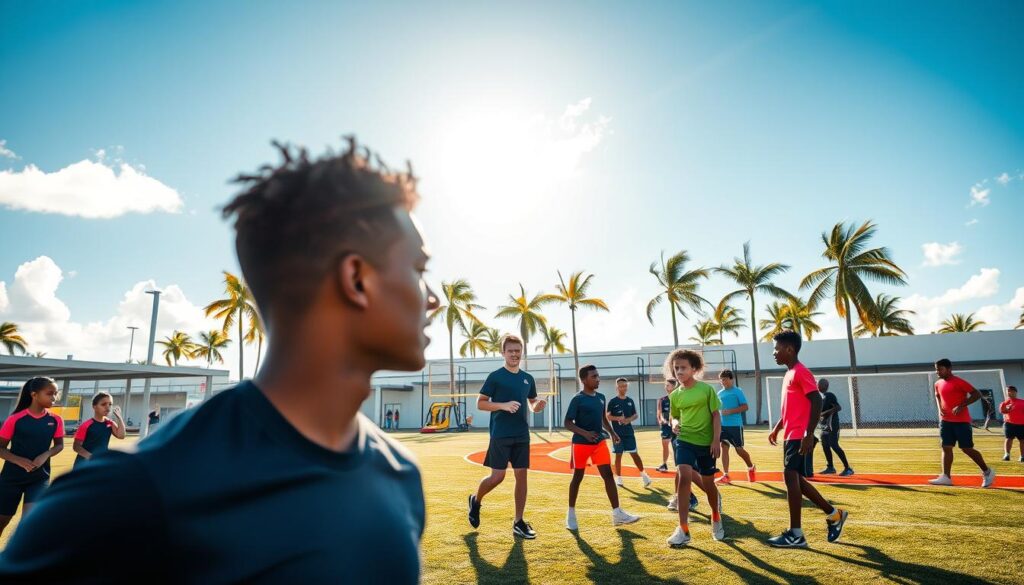
The magic happens through what I call “stealth learning” – a brilliant conspiracy where children believe they’re playing games while actually developing neural pathways that would make a neuroscientist applaud. Coaches here aren’t just shouting instructions from the sidelines. They’re conducting symphony orchestras of coordinated chaos.
These mentors focus on fundamental skill development through carefully designed drills. Basketball players learn dribbling, passing, and shooting while simultaneously developing spatial awareness. Baseball participants master catching, throwing, and batting in environments that feel more like playgrounds than practice fields.
The facilities themselves range from state-of-the-art indoor complexes to outdoor spaces that teach kids to navigate physical and mental challenges. It’s preparation for adult life disguised as playtime – capitalism training with more laughter and fewer spreadsheets.
Martial arts instructors take this philosophy further, teaching students to break through mental barriers. They instill values like discipline, self-awareness, and the ancient art of putting mind over matter. It’s like a mini-Ivy League education, but with more sweat and significantly less debt.
| Training Type | Primary Skills Developed | Hidden Benefits | Coach Approach |
|---|---|---|---|
| Basketball Programs | Dribbling, passing, shooting | Team dynamics, spatial awareness | Drill-based skill building |
| Baseball Training | Catching, throwing, batting | Hand-eye coordination, timing | Game-simulated practice |
| Agility Development | Movement, coordination, speed | Cognitive processing, quick thinking | Challenge navigation focus |
| Martial Arts | Discipline, stance, control | Mental resilience, self-awareness | Mind-over-matter philosophy |
The real genius of Southwest Florida’s youth training ecosystem lies in its dual-purpose design. Kids develop athletic fundamentals while unconsciously building life skills. They learn teamwork through shared challenges and develop resilience through controlled failure.
Coaches here understand that the best lessons often come disguised as games. The most valuable training happens when children don’t realize they’re being trained at all. It’s education through elevation – raising skill levels while keeping spirits even higher.
Mentorship Programs
Imagine a sports program where learning is more important than winning. Welcome to Southwest Florida’s mentorship revolution. These programs focus on more than just sports skills.
Amazing Athletes leads the way with their Powers Team concept. It’s not just about motivation. It’s a deep dive into daily activities and nutrition. Kids learn how to make smart food choices.
The basketball program shows how mentorships can change players. Coaches teach teamwork and sportsmanship. Players grow in confidence and learn to work together.
YMCA’s baseball program is special. It doesn’t cut players. Every child plays half the game. This helps them develop skills and friendships.
Volleyball programs add to the whole picture. They teach more than just volleyball. Kids learn about character and self-esteem. They make new friends and learn the value of teamwork.
These programs in Southwest Florida show that great coaches mentor the whole child. They focus on making better humans, not just athletes. And the results are clear.
Age Divisions & Skill Levels
Southwest Florida’s youth sports programs are ahead of the game. They know every child is different, not all are born athletes. Some might not even know how to hold a bat.
The Sports Sampler for 3-4 year olds shows you can start learning early. It turns toddler energy into structured movements. Kids learn through fun games, making kindergarten look easy.
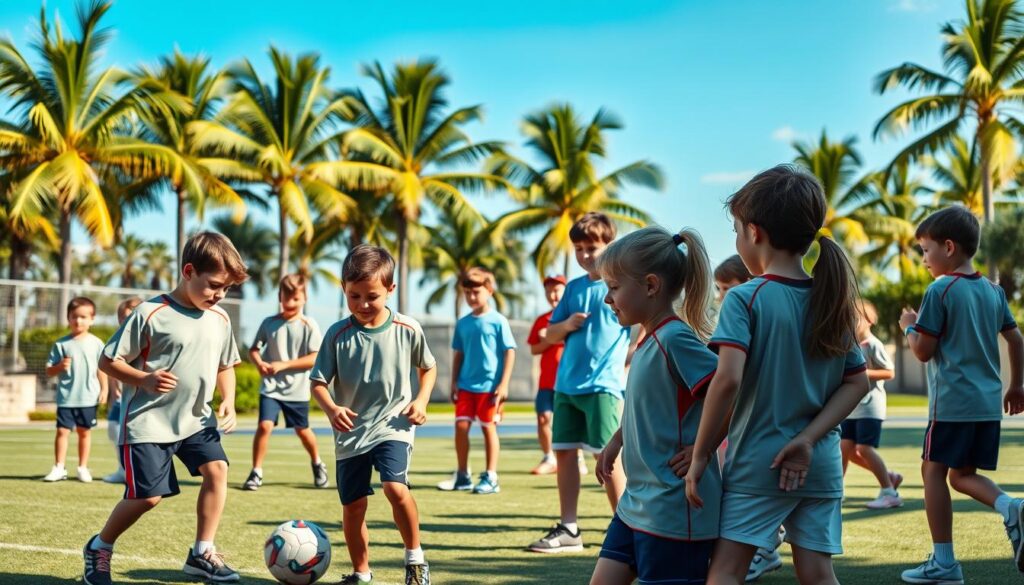
Golf clinics welcome all, from beginners to those getting better. Baseball programs say if you can stand, you can hit. Soccer and basketball build confidence by teaching skills step by step.
The system is designed to meet kids where they are:
- Discovery level: For those who think a baseball is something to run from
- Fundamentals level: Where catching becomes less accidental and more intentional
- Development level: For players ready to move beyond “which way do I run?”
This isn’t just training – it’s teaching kids to grow. It’s about learning at your own pace. The goal is to build confidence, not just win games.
Whether your child dreams of scholarships or just wants to run without tripping, Southwest Florida has you covered. It makes sports welcoming, not scary. Learning to run around the bases is a big win.
How to Get Involved
Think signing up for youth sports is as hard as getting a mortgage? Think again. Southwest Florida’s local sports clubs make it easy. They’ve made the sign-up process simple, even for those who struggle with tech.
The magic happens at sweetwaterparks.com. This website makes organizing sports for thousands of kids look easy. It’s designed so parents can quickly sign up without hassle.
These programs are welcoming to all. They don’t care if your child doesn’t know the first thing about sports. All they need is to show up and have fun.
The options are endless. Kids can play baseball, softball, soccer, or basketball. Each sport is a chance to have fun and learn new skills.
The YMCA of Southwest Florida offers more programs. They help kids turn their interest in sports into real skills. It’s all about building confidence and having fun.
The hardest part isn’t mastering a sport. It’s getting off the couch. Southwest Florida’s youth sports scene makes it easy to join in. It’s perfect for kids who love to play and have fun.
Local Success Stories
Let’s talk about real victories on Southwest Florida’s fields and courts. These victories don’t make ESPN but are worth celebrating.
Take 12-year-old Marcus, who learned teamwork in our basketball program. He used to think passing was only when he couldn’t get a clear shot. Now, he knows helping a teammate score is more rewarding. His parents say he’s now eager to help out in group projects.
Sophia improved her hand-eye coordination through volleyball drills. This skill helped her write better and not spill drinks at dinner. Who knew volleyball could make a kid better at everyday tasks?
Our mentorships teach important life skills through games. We focus on teamwork, communication, and resilience. The scoreboard becomes less important when kids learn to handle victory and defeat well.
Transformations aren’t always big. Sometimes, it’s the quiet kid who speaks up or the easily frustrated child who moves on from a missed shot. It’s about finding joy in making others succeed.
Our coaching mentorships teach sportsmanship beyond the field. Kids participate more in class, have better family dynamics, and even put down their devices. (Yes, really.)
The data shows our program’s success:
| Program Element | Athletic Skill Developed | Life Skill Application | Parent Feedback |
|---|---|---|---|
| Team Drills | Ball Handling | Cooperation & Planning | “Less sibling arguing at home” |
| Communication Exercises | Game Strategy | Clear Expression | “More conversational at dinner” |
| Friendly Competitions | Agility Development | Grace Under Pressure | “Better test anxiety management” |
| Skill-Building Games | Coordination | Problem Solving | “Improved homework focus” |
These success stories show progress in ways stats can’t. It’s about gaining confidence, feeling proud of team contributions, and understanding the value of assists.
Southwest Florida’s youth sports programs aren’t just about sports. They’re about creating future collaborators, communicators, and community members. And honestly? That’s a championship worth winning every season.
Future of Youth Athletics
The future of youth sports in Southwest Florida is looking up. It’s like a bright, sunny day in July, but without the heat. Now, movement is more than just play. It’s about improving your brain, growing emotionally, and reaching important milestones.
Local sports clubs are at the forefront of this change. They focus on more than just winning. They teach kids about nutrition and make sure everyone plays a lot. It’s a world where having fun and making friends is just as important as winning.
This shift is not just about making athletes. It’s about raising kids who are strong, team-oriented, and smart. The future is bright for local sports clubs that value learning and growth. So, get ready to run towards a healthier, smarter future with the next generation.