Drive through any American suburb on a Saturday morning and you’ll see something special. Kids are chasing balls, parents cheering, and coaches are very serious. It’s like a Norman Rockwell painting, but with better sneakers.
But there’s more to it than just fun. These scenes are the heart of neighborhood development. They bring families, local businesses, and shared values together.
It’s like social capitalism, where the return is in high-fives and life skills—driven by youth development programs that build character.
We’re looking at how these groups shape young people and strengthen neighborhoods. The real win isn’t in the game – it’s in the stands.
Economic Impact
Did you know that youth soccer tournaments can boost the economy more than many government plans? While politicians talk about money, local areas have found a great way to grow their economy. It’s through sports programs for young people.
Think about Saturday morning soccer. Families go to diners for breakfast. Stores sell sports gear. And the ice cream truck waits near the field for fun after the game. It’s more than just fun; it’s a small economy at work.
The model of volunteers is strong and sustainable. It’s like an open-source project with grass stains. People give their time, not just money, making the economy strong.
Local tournaments really help the economy. Teams stay in hotels, eat out, and shop. One weekend can bring in thousands of dollars for local businesses.
| Economic Sector | Direct Impact | Indirect Impact | Annual Value |
|---|---|---|---|
| Hospitality | Hotel bookings | Extended stays | $15,000-50,000 |
| Food Services | Team meals | Family dining | $20,000-75,000 |
| Retail | Equipment sales | Impulse purchases | $10,000-35,000 |
| Local Services | Field maintenance | Infrastructure upgrades | $5,000-25,000 |
Programs like Jumpstart and local leagues keep money in the community. Instead of going to far-off tournaments, it stays local. This is called the multiplier effect.
The beauty is in how it keeps going. Fees pay for basics and extra money goes to improve facilities. Better facilities attract more tournaments, starting a good cycle.
This isn’t just about money trickling down. It’s about splash-down economics. The effect is quick, clear, and very good. Local businesses do well, property values go up, and everyone feels proud.
The story of youth engagement is more than just spending money. It creates jobs for coaches and officials. It also keeps teens busy and out of trouble, saving money for the city.
Most amazing, this engine runs on passion, not profit. Volunteers, parents, and communities support young athletes. It’s a mix of capitalism and heart, economics with a soul.
Adam Smith would be proud. The invisible hand of the market gets a high-five from a young soccer player. This is economic theory we can all support.
Social & Cultural Benefits
Forget corporate diversity training – the real cultural melting pot is happening on neighborhood playing fields. Youth sports leagues are where social alchemy occurs organically, without HR manuals or compliance seminars. It’s democracy in cleats.
Community programs create something precious: genuine friendships that extend far beyond the final whistle. These aren’t the transactional relationships of the adult world. Kids from the same neighborhood bond over shared victories and defeats, creating social networks that last for years.
Soccer clubs and other youth sports become incredible mixing bowls of diversity. Children from different economic backgrounds, cultures, and languages become teammates. The banker’s kid and the barista’s kid learn to communicate through the universal language of sport.
This isn’t theoretical – programs like Toronto’s Midnight Basketball prove that even late-night hoops can build community bridges. The court becomes neutral territory where social hierarchies get checked at the door. Everyone’s equal when the game begins.
The cultural benefits ripple outward, strengthening the entire community fabric. When families from different backgrounds connect through youth sports, they create understanding that benefits the local economy through increased social trust and cooperation. It’s social capital that money can’t buy.
These programs are cultural petri dishes where diversity actually works. No forced interactions, no awkward icebreakers – just kids being kids while accidentally becoming better citizens. The only agenda is making sure everyone gets a turn at bat.
This organic social engineering creates communities where people actually know their neighbors. It’s like The Sandlot meets the United Nations, with less concern about retrieving baseballs and more cultural awareness. The benefits to social cohesion and the local economy are immeasurable.
Building Lifelong Skills
While Silicon Valley focuses on hackathons, real character-building happens on community soccer fields. These programs teach more than just how to score. They build resilience in young minds through every challenge.
Studies show kids learn best when sports are fun, focus on skill, and build positive relationships. It’s about creating athletes and people who can handle life’s ups and downs.
When 10-year-old Sarah misses the game-winning shot, she learns more than basketball. She gains emotional intelligence that would impress any HR director. Through wins and losses, players learn resilience, sportsmanship, and teamwork.
Coaches become life mentors, teaching more than just sports. They instill discipline, responsibility, and a strong work ethic. These skills help in school and future careers.
Programs like First Tee Canada use golf to teach honesty and perseverance. They show that sports can be like mini-MBAs, focusing on personal growth.
The community impact goes beyond the field. These experiences teach teamwork and communication skills. They help kids work together and celebrate together.
This isn’t just theory. Community sports teach resilience better than any corporate team-building. The lessons kids learn feel real, making them stick.
The magic happens in those imperfect moments. It’s where character is built. Future leaders learn that failure isn’t the end and teamwork is essential. These lessons create lasting community impact one game at a time.
Improving Public Health
Politicians often talk about healthcare reform. But the real solution might be simpler. It could be found on our soccer fields. Forget about complicated laws; sometimes the best medicine is a game of soccer.
Youth sports offer something rare today: they make kids move. In a world where screens dominate, these leagues ensure kids get active. They learn coordination, improve their heart health, and develop motor skills that last a lifetime.
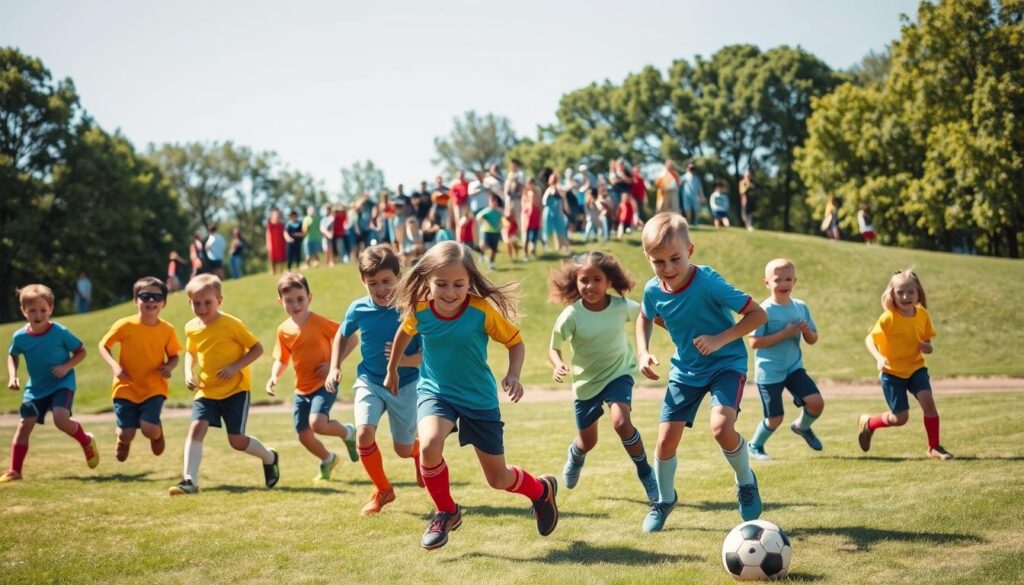
Think about it: regular sports activities are a form of preventive healthcare. It’s fun, and volunteer coaches are the unsung heroes. They help kids stay healthy without them even realizing it.
Studies show that kids who play sports stay active as adults. This leads to lifelong health benefits. It’s not just about burning calories; it’s about building healthy habits for life.
Let’s look at how sports tackle our nation’s health problems:
| Health Challenge | Traditional Approach | Sports Solution | Long-term Impact |
|---|---|---|---|
| Childhood Obesity | Government programs | Regular team practices | Reduced diabetes risk |
| Sedentary Lifestyle | Screen time limits | Game participation | Active adulthood |
| Poor Coordination | Therapy sessions | Skill development | Better motor skills |
| Social Isolation | Counseling | Team camaraderie | Stronger community ties |
Programs like KickStart Soccer and local Little Leagues do more than teach soccer. They fight childhood obesity with every game. Kids don’t see it as health intervention; they just enjoy playing.
This natural way of engaging kids in sports offers lasting health benefits. It’s effective because it feels like fun. This approach benefits everyone, including our healthcare system.
The evidence is clear: more soccer fields could do more for public health than any government program. Sometimes, the simplest solutions are right in our communities, waiting for us to join in.
Collaborations With Schools
What if the secret to better education isn’t tests but teamwork? Schools and sports programs working together can lead to amazing results. It’s a game-changer for education.
Local coaches often know teachers well. This creates a network of support that policies can’t match. Coach Johnson can help his shortstop with fractions by working with math teachers.
Many programs now check grades and offer tutoring. It’s not just about playing sports. It’s about learning to succeed in school too. Students see how their sports skills help in class.
Skills from sports, like discipline and time management, help in school. Kids who practice early for sports do better in school. Learning to focus on a curveball helps with tough math problems.
These partnerships help the local economy too. Successful students become good workers. Sports programs keep kids safe and focused. It’s a win-win for everyone.
Groups like Project Play show how these partnerships work. They lead to better attendance, behavior, and graduation rates. It’s about making well-rounded people, not just athletes.
This approach isn’t just about sports. It’s about making better students and citizens. The baseball field and soccer field become places to learn life skills.
When schools and sports teams team up, everyone benefits. Teachers get more involved students. Coaches get better athletes. The local economy gets a boost of talented, team-oriented people.
City Initiatives
Who says municipal governments can’t score big wins? Cities like Toronto and Tampa are showing us how. They’re using smart partnerships to make a difference in youth sports.
Toronto’s Ready to Rebound program is a great example. The Raptors didn’t just donate sneakers. They built bridges to underserved communities. The Maple Leafs’ Home Ice Hockey program also breaks barriers to Canada’s favorite pastime.
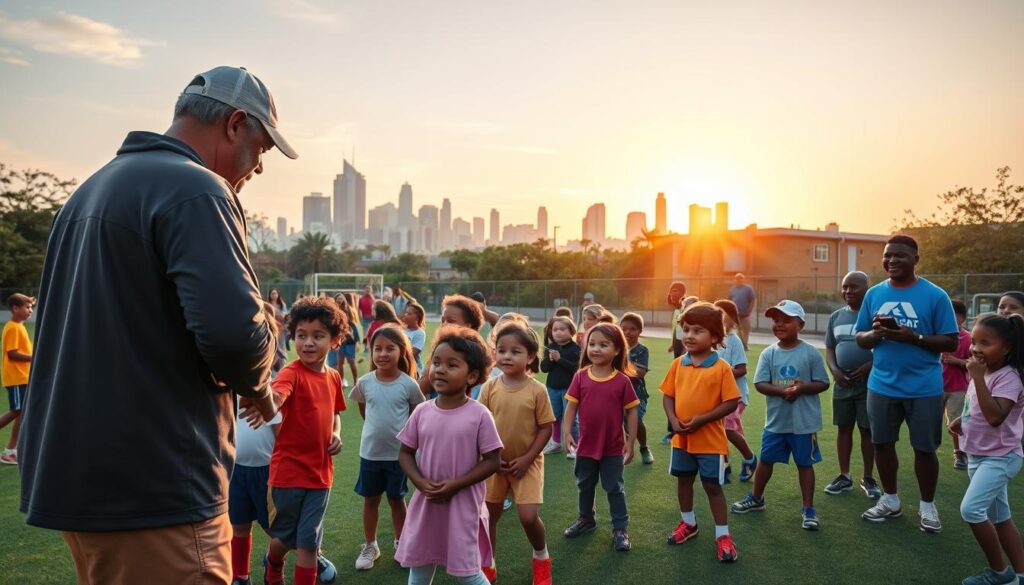
These aren’t just photo ops. They’re strategic investments with real returns. Midnight Basketball programs across American cities show how keeping courts lit keeps kids safe. The math is simple: occupied courts mean fewer troubled streets.
Urban planning meets athletic development in these innovative approaches. Cities use existing facilities and create public spaces that serve the public. This is the opposite of taxpayer-funded stadiums that mainly benefit billionaires.
| Initiative | City | Primary Focus | Community Impact |
|---|---|---|---|
| Ready to Rebound | Toronto | Basketball access | Youth engagement |
| Home Ice Hockey | Toronto | Ice sport inclusion | Skill development |
| Midnight Basketball | Multiple US cities | Crime prevention | Safety enhancement |
| Community Court Revitalization | Tampa | Facility upgrades | Neighborhood unity |
These programs show how small investments can have big returns. Volunteer hours and facility maintenance create assets that benefit families for decades. The real victory isn’t on the scoreboard – it’s in stronger, safer communities.
Smart city initiatives prove sports can be more than games. They become tools for development, prevention, and connection. When cities and teams collaborate, everyone wins.
Community Testimonials
Want to see where policy meets real life? Just listen to the people living this youth engagement story. The data is impressive, but the stories are even more so. They’re like something out of a Hollywood movie.
Michael Rodriguez played in our city’s Little League in the 90s. Now, he coaches his daughter’s team on the same field. That’s a connection that can’t be made with just grants. “I’m literally standing where my coach stood,” he said. “The same dusty spot, the same life lessons.”
The connections between different cultures are also remarkable. Sarah Jenkins, a soccer mom from the north side, became friends with Lena Petrov, an immigrant mother from the east side. Their kids played together, then had playdates, then family dinners. “We’d never have met without those soccer fields,” Sarah said.
This community building is like a special kind of social glue. It’s not something you can bottle or control. The handshakes after games, the shared snacks, and the carpool conversations all help build strong bonds.
The volunteer pipeline is another clever part of this system. Players become coaches, and then board members. It’s a cycle of youth engagement that keeps going. The fields become classrooms for learning about citizenship, and the lessons last long after the uniforms are gone.
These stories show the secret to successful communities: relationships built through shared purpose. The stats can show you how many people are involved, but only the stories can show you why. It’s not just about making better athletes. It’s about making better neighbors.
Case Studies
Imagine if the best investment wasn’t in big projects or tax cuts. It’s actually in teaching kids how to throw properly. Programs like First Tee Canada and Jumpstart are more than just good deeds. They are economic boosters hidden in youth sports.
Take Soccer Pups for example. They own their facilities, not just rent them. This creates community centers that make money all year. The Hockey Coach Education Program also helps by hiring more coaches, boosting local jobs.
Even the Toronto Argonauts’ flag football program helps by selling equipment and hiring maintenance staff. It’s not just about giving back—it’s about growing the local economy. This approach shows how community programs can have real economic.
Removing barriers to sports doesn’t just build athletes. It creates customers, employees, and taxpayers. These examples show that helping the community can also help the local economy. It’s like finding hidden gems that pay off big time.