Let’s start with a truth as Floridian as a surprise afternoon thunderstorm: this state doesn’t just breed athletes; it forges legends.
Consider the hall-of-fame blueprint. Deion Sanders literally changed cleats between the NFL and MLB. Emmitt Smith showed relentless excellence.
Southwest Florida is no mere spectator to this legacy. We’re here to analyze the renaissance kids. They are local standouts who excel in multiple sports.
Why be a master of one when you can be a compelling threat in two? This is your intellectual scouting report on the hustle that defines our homegrown, multi-sport athletes.
The Rise of Multi-Sport Participation
Florida’s top high schools show a surprising trend: more sports lead to better athletes. The idea of focusing on just one sport is fading. In Southwest Florida, athletes are encouraged to try many sports.
Look at the numbers. Schools offer 24 to 37 varsity sports. This isn’t by chance. It’s a well-thought-out approach to building well-rounded athletes.
Our area is shifting its focus. In a world that values specialization, we’re going back to basics. We believe that being good at many sports builds a strong foundation.
It’s like a mix of science and psychology. A quarterback who plays basketball gets better at reading the game. A soccer player’s endurance helps in football. These skills add up, making athletes hard to beat.
Southwest Florida’s schools are designed for this approach. Athletes here excel in many sports. They’re not just good at one thing; they’re versatile and tough to match.
Featured Athlete Profiles: Balancing Sports
What do a football safety and a quarterback have in common? For Jaxson Banhie, it’s all part of the same mental game. It’s not just about playing different positions. It’s about running several high-stakes programs at once.
Banhie plays safety, quarterback, and running back. He reads an offense as a QB, which sharpens his instincts on defense. He’s not just versatile; he’s building a database of opponent tendencies.
Savaughn Berryhill is another example. He uses wide receiver skills on the soccer pitch as a center back. His hand-eye coordination for catches is the same as tracking a ball in flight. His soccer defense is informed by football tactics.
Edgardo Max Flores is the third athlete. He’s a strong safety, linebacker, and wide receiver. He’s a defensive enforcer who knows how to beat coverage. His understanding of route concepts from both sides of the line makes him a nightmare for opponents.
These athletes show that being a three-sport athlete is more than a myth. Their schedules are complex, with practice, film study, and recovery. They are the modern-day Swiss Army knives, not just scalpel-wielding specialists. Their approach to cross-discipline training sets them apart as multi-sport athletes.
Training Approaches for Versatile Athletes
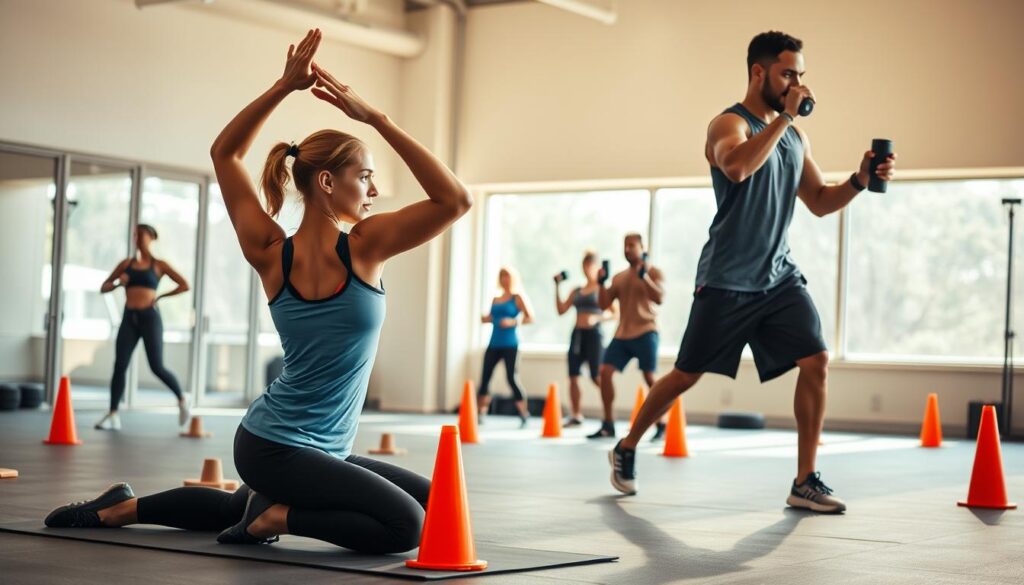
Forget the ‘two-a-day’ grind. Modern athletes thrive on a balanced schedule, not a boot camp routine.
Training a dual-sport star isn’t about doubling the work. The old “more is more” idea is outdated. Instead, focus on cross-discipline training that integrates different skills.
Coach Neil Harris treated his players like valuable assets. He used a “pitch count” to limit their practice and game time.
This approach led to just one concussion in six seasons. It’s not about being soft. It’s about managing risks and planning for the long term.
The body used for tackling on Friday is the same one needed for track or basketball on Monday. Smart training makes it strong in all areas.
Modern programs aim to build athleticism that works in any sport. They focus on building a strong foundation that transfers well. This includes:
- Plyometrics for explosive power.
- Core stability for control in any motion.
- Dynamic flexibility to prevent pulls and tears.
Compound movements like squats, deadlifts, and medicine ball throws are key. They build a better athlete, not just a better linebacker.
Periodization is also key. It means scheduling training wisely. A good coach aligns training peaks with competitive seasons.
The goal is to avoid constant fatigue. Athletes should peak for football playoffs and then recover for track season. It’s about finding a natural rhythm, not constant stress.
The table below shows the shift from old to new training methods.
| Training Aspect | Old-School Model | Modern Cross-Discipline Approach |
|---|---|---|
| Primary Focus | Sport-specific skill repetition | Foundational, transferable athleticism |
| Volume Philosophy | “More is always better” | Managed load with “pitch counts” |
| Injury Outlook | Acceptable risk, “part of the game” | Active prevention through balanced training |
| Seasonal Structure | Year-round focus on one sport | Periodized peaks aligned with sport seasons |
| Coach’s Role | Sport technician | Holistic athletic director |
This isn’t just about exercise. It’s about managing your physical capital wisely. Think of your body as an investment that needs careful management.
Overuse is the enemy of versatility. The best cross-discipline training plans focus on what’s most important. They do it at the right time to keep your body running smoothly for years.
Coach and Family Insights
Let’s forget about the two-sport star for a moment. Instead, let’s talk about the two-job coach and the taxi-parent. They are the real heroes behind this local phenomenon. Their world is filled with color-coded calendars, sideline psychology, and a logistical symphony.
Coach Julius Holt is a great example. When he says, “I’m very happy with the way our kids played and competed and represented Tucson,” he’s not just giving out trophies. He’s conducting a cultural audit. For him, these victories prove that versatile talent exists here, on a national stage. The win is nice, but the representation is the real headline.
Coach OJ Flores, an attorney by day, cuts through the noise about youth sports with legal precision. “Football, with all the criticism… also has brought some fantastic benefits to these little kids,” he observes. He’s talking about the briefs filed off the field: academic scholarships, community bonds, grit. His coaching isn’t cheerleading; it’s character witness testimony.
The coach’s clipboard is only half the story. The family commitment is a masterclass in operational management. They fundraise via cornhole tournaments and travel to nationals. This investment isn’t just financial. It’s emotional equity. They’re not building a single-sport robot. They’re funding a venture in human development, where the payout is a resilient, adaptable kid.
The coach becomes a mentor. The team morphs into a second family. That minivan? That’s the mobile war room. Every success story is, in reality, a collective victory. The table below breaks down this unique economy of effort.
| Stakeholder | Primary Investment | Key Returns |
|---|---|---|
| Coach | Time, mentorship, strategic planning, emotional labor. | Team cohesion, athlete development, community reputation, witnessing dual sport success. |
| Family | Logistics, finances, emotional support, endless travel. | Child’s growth, life lessons learned, community network, shared achievement. |
| The Athlete | Dedication, time management across disciplines. | Scholarship opportunities, versatile skill set, mental toughness, a broader identity. |
So, what’s the final score? It’s not on a billboard. It’s in the kid who knows how to adapt. It’s in the parent who sees resilience as the ultimate trophy. It’s in the coach who measures wins in lifetimes, not just seasons. This ecosystem doesn’t just produce athletes. It builds people. And that, as any savvy analyst will tell you, is the most valuable dual sport success of all.
Injury Prevention for Multi-Discipline Athletes
Think of a specialist athlete like a musician who only plays one scale every day. Their skills might improve, but their fingers could get cramped. Eventually, their instrument might even break.
Now, imagine a multi-sport athlete. They’re not just a pianist; they’re also a drummer and a guitarist. This variety in movement is not chaos. It’s a smart defense strategy.
The body needs balance. A pitcher might have a strong arm but neglect their back. A soccer player might have strong quads but weak hamstrings. This imbalance can lead to injuries.
Multi-sport athletes, by design, work on different muscle groups. This helps spread out physical stress. It prevents the kind of repetitive strain injuries that can happen to specialists.
It’s all about using a full toolbox, not just one tool. This is what makes multi-sport training so valuable.
Coach Harris is worried about young athletes. He says they’re at high risk for concussions. Their developing brains and bodies are very vulnerable.
To make multi-discipline training positive, we need to focus on smart management. Here’s how:
- Technique Over Trophy: Proper form in every sport is essential. A bad landing in volleyball can teach the knees a hard lesson that football will punish.
- Recovery is a Discipline: It must be scheduled like practice. Sleep, nutrition, and active recovery are key to keeping the athlete together.
- Listen to the Body’s Whispers: The multi-sport athlete needs to be able to interpret their body’s signals. Is that shoulder soreness from swimming or baseball? Addressing fatigue early can prevent injuries.
The goal is not to avoid all stress. That’s impossible. The goal is to build a body that’s strong and adaptable. This way, sport-specific injuries become less likely.
The most dangerous path might be the narrowest one. Specialists risk burning out a single system. But a wisely managed multi-sport athlete builds a strong foundation.
The Benefits to Local Teams
Think of a team with multi-sport athletes like a smart investment. It reduces risks and increases chances of success in new ways. The gain is not just a player, but a valuable asset.
These athletes bring a wealth of competitive experience. They’ve faced tough moments in sports like the buzzer, the ninth inning, and penalty kicks. This experience makes them calm under pressure.
They lead with confidence and poise on the field. A coach said his team exceeded his expectations. He believes they belong on the national stage.
For coaches, having athletes who play multiple sports is a big plus. A basketball player who knows soccer is a dream come true. It makes the team more flexible and deep.
Wins show that playing multiple sports is a smart move. It’s not a trade-off for focusing on one sport. It’s a key to success. The league is on the right track.
A team with athletes who play multiple sports is more durable. They handle injuries, slumps, and pressure better. This is the biggest, unmeasurable gain.
Conclusion
Is the specialist athlete fading away like the flip phone? Our stories from fields and courts tell a different tale. It’s a smarter evolution.
This isn’t a step back in time. It’s a forward move. Choosing to play multiple sports is a smart bet for growth. The true dual sport success isn’t just about winning trophies. It’s about the adaptable mind of the athlete.
True cross-discipline training does more than build muscle. It sharpens the mind. Reading a football playbook in spring helps in basketball in winter. This approach values thinking over just doing the same thing over and over.
In Southwest Florida, being versatile is key. It makes our teams unpredictable and strong. We’re not just playing games. We’re raising problem-solvers.
The future of sports here is exciting. It’s like a prism, showing talent in many ways. The most thrilling player might be the one you least expect, coming from another sport.