Every great baseball story needs a proper beginning. Let’s start where legends first took batting practice—Terry Park. This place turned a Florida town into America’s preseason diamond—just like the legacy explored in spring training history.
The Terry family built this baseball cathedral in the 1920s. They had magical mojo. Teams that trained here kept winning World Series, making it baseball’s equivalent of the Fountain of Youth.
The Philadelphia Athletics started the tradition. Then, the Cleveland Indians followed in the early 40s.
Then came the fire that would’ve ended most stories. But like any good baseball tale, this field got rebuilt. The Pittsburgh Pirates took over from 1955-1968 before the Kansas City Royals rounded out the legacy.
Today, it’s called Park T. Pigott Memorial Stadium. It sits on the National Register of Historic Places. Because apparently, even baseball fields earn historical recognition when they’ve witnessed enough magic.
Terry Park beginnings and the teams that came through
Imagine a baseball diamond where history shouts from the ground. Terry Park is like that. It’s not like today’s shiny spring training spots. This place earned its fame through years of hard work and legendary teams.
The Philadelphia Athletics came in 1925, like royalty. They were the first to make Florida a spring training home. It was a time when Babe Ruth was changing baseball forever.
World War II brought the Cleveland Indians to Terry Park in 1941. Baseball became a way to support the war effort. Players helped with war bonds and kept the game alive in Florida.
The Pittsburgh Pirates arrived in 1955 and stayed for thirteen years. They saw three presidents and the rise of TV sports. Roberto Clemente’s famous swing started here, dazzling fans everywhere.
The Kansas City Royals ended the Terry Park era from 1969-1987. George Brett practiced here during big changes in politics and baseball. The Royals played on artificial turf and saw the introduction of designated hitters.
| Team | Years Active | Notable Players | Historical Context |
|---|---|---|---|
| Philadelphia Athletics | 1925-1936 | Connie Mack, Jimmie Foxx | Jazz Age, Prohibition Era |
| Cleveland Indians | 1941-1942 | Lou Boudreau, Bob Feller | World War II patriotism |
| Pittsburgh Pirates | 1955-1968 | Roberto Clemente, Bill Mazeroski | Television expansion, Civil Rights era |
| Kansas City Royals | 1969-1987 | George Brett, Bret Saberhagen | Artificial turf revolution, DH rule |
Today, Terry Park is a shadow of its former self. The grandstands are gone, but memories remain. Walking here, you feel the Terry Park history in the ground.
What makes Terry Park special? It was more than a ballpark. It was a time capsule of baseball’s history. From the Athletics’ old uniforms to the Royals’ modern gear, it saw it all.
The legacy of Terry Park is in its soil. Every broken bat and lost ball is part of its story. It’s not just Terry Park history. It’s baseball’s living museum, waiting to be rediscovered.
Stadium evolution: Hammond Stadium and JetBlue Park
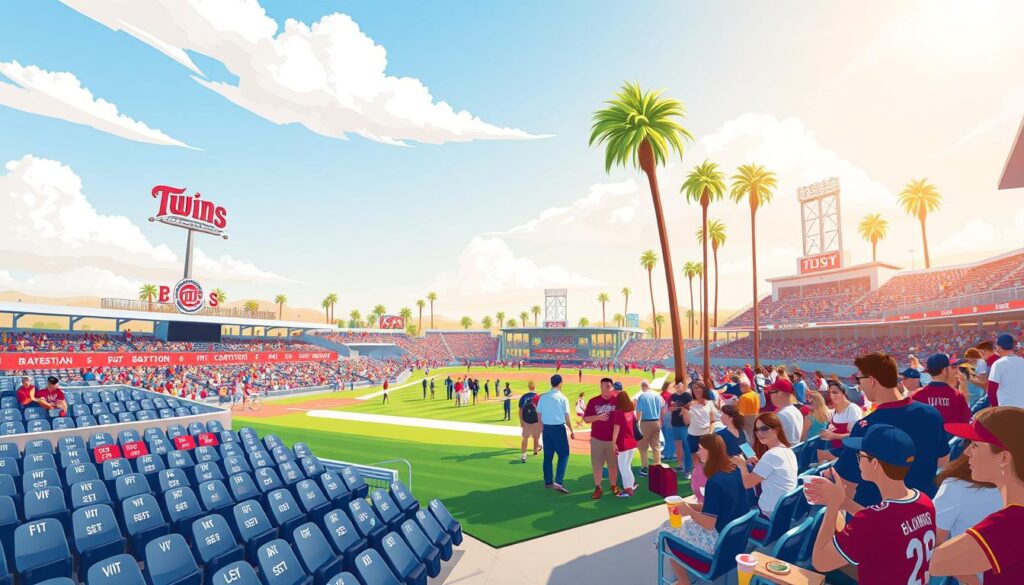
Spring training stadiums have evolved from simple practice fields to architectural marvels. The 1990s saw the rise of Hammond Stadium, a modern change from Terry Park’s old charm. Opened in 1991, it welcomed the Minnesota Twins as their Florida home, seating 9,300 fans.
Why would a baseball stadium look like Churchill Downs? It’s a question that puzzled many. Yet, the Minnesota Twins made Hammond Stadium their own, creating lasting memories. It’s like a southern plantation house for baseball.
In 2012, JetBlue Park was unveiled, a game-changer in stadium design. The Boston Red Sox aimed to bring Fenway Park to Florida, with palm trees included. The result is a 10,800-seat stadium that’s almost a replica of Fenway.
They got every detail right:
- The 37-foot Green Monster with manual scoreboard
- Fenway’s exact field dimensions and angles
- Yawkey Way’s carnival feel (without Boston’s cold)
This wasn’t just building a stadium—it was creating a piece of nostalgia. The Boston Red Sox aimed to bring back memories for New England fans. Fans even hope to see Ted Williams’ frozen head throw out the first pitch.
Hammond Stadium stands out with its unique charm, unlike JetBlue’s exact replica. Both show how spring training has become more than just practice. It’s about creating an immersive experience for fans.
The contrast between these stadiums shows baseball’s love for both history and modern design. Hammond Stadium asks “What would Fenway do?” while JetBlue Park wonders “What looks good with palm trees?”
A day in the life: Fan rituals, autographs, memorabilia
When baseball fans and players meet, something special happens. It’s not just a game; it’s a spiritual journey. Fans see athletes turn into heroes for the season.
The Bullpen Picnic Pavilion is like a medieval court. Fans come for autographs, armed with sharpies and vintage cards. It’s like a dating app for memorabilia collectors, where a signature is the ultimate prize.
Smart fans know the rules: arrive early, be polite, and don’t ask during warmups. Those who succeed leave with signed baseballs, priceless for the moment they were signed.
Sundays are special during spring training. Fans walk the same grass as future stars. It’s like touching a sacred relic, with the smell of fresh grass and hot dogs.
The left-field concourse beer garden is a place for fans to gather. Over $12 craft beers, they discuss the future of minor leaguers. It’s a mix of sports talk and theological debates.
Collectible giveaways are like indulgences. Pin trading shows the power of supply and demand. Senior days offer deals that make baseball accessible to all.
What makes these rituals so powerful? They turn training into a cultural event. Autographs and memorabilia are proof that heroes are real. They become family treasures, passed down through generations.
Fireworks shows light up the Florida sky, not just as entertainment. They mark the end of days filled with baseball worship. Spring training is more than training; it’s a spiritual awakening for baseball fans.
Minor-league ties: Mighty Mussels and development pipeline
Hammond Stadium changes its role when the MLB players leave. It turns into a place for the next baseball stars. It’s like a Field of Dreams for the Minor League world.
The Fort Myers Mighty Mussels have a name that’s both cute and strong. They are Single-A affiliates, where talent is honed into pro players. It’s like watching diamonds form, but with more sunflower seeds.
The Gulf Coast League Twins are for finding future stars early. It’s like finding rare vinyl before it’s famous. The GCL is baseball’s secret lab, full of young talents.
The CenturyLink Sports Complex is also the Twins Player Development Academy. It’s like baseball’s Hogwarts. Young players learn to master the game, turning raw talent into skill.
Lee County sports tourism is more than just watching games. It’s about seeing careers start. Spring training is the sparkle, but the minor leagues are the heart of Fort Myers’ baseball scene.
St. Patrick’s Day traditions and other fan favorites
Imagine America’s favorite sport meeting America’s favorite drinking holiday. That’s what happens at JetBlue Park on St. Patrick’s Day. Fans show up dressed as leprechauns, filling the park with green.
But there’s more. Jimmy Buffett Day turns the park into a margarita paradise. Even cheeseburgers seem healthy here. The Twins celebrate “Minnesota Day” on March 15, helping fans shake off winter.
These themed games are baseball’s clever trick. They make adults wear costumes and drink bright drinks. It’s all about embracing the fun.
Watching Yankees-Red Sox spring training with a green beer is special. It’s where sports, holidays, and fun come together. It’s a unique American experience.
Teams know we’re all kids at heart. Themed games let us be silly. Imagine high-fiving a parrot while getting a signed scorecard.
These events are key to spring training. They’re not just games; they’re cultural events. Baseball is the stage for human connection. And that’s the real win.
Economic engine: Hotels, restaurants, seasonal jobs
While baseball fans argue over stats, Southwest Florida’s economy scores big in February. The six-week spring training season turns Fort Myers into a financial powerhouse. It’s a feat that would impress Adam Smith.
Hotels lead the charge in this boom. From budget to luxury, they see high occupancy rates. Fans booking rooms months in advance create a steady income stream, like Mariano Rivera’s cutter.
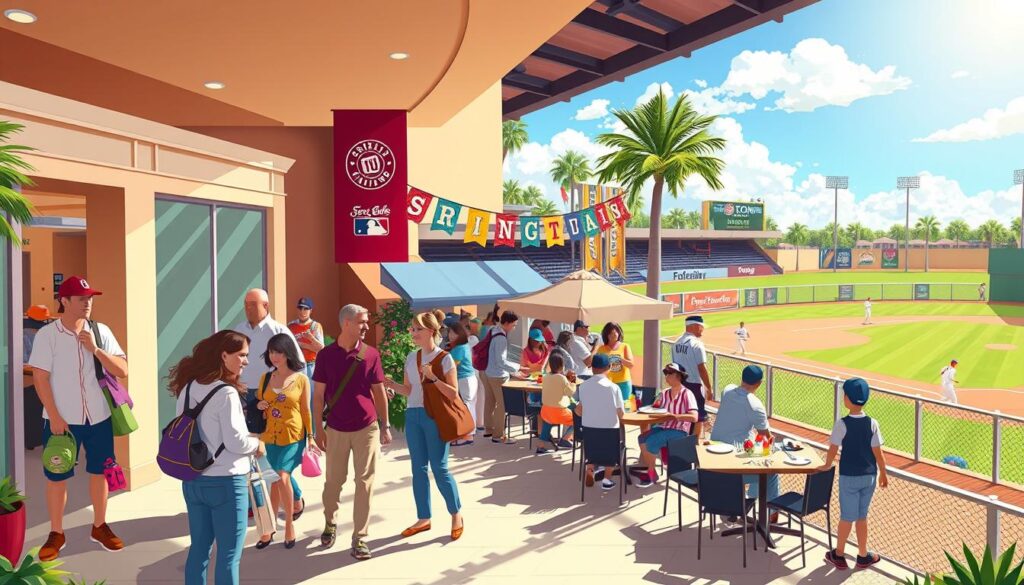
Restaurants and bars see a surge in business, lasting six weeks. Local spots serve more food and drinks than a college town during finals. Near the ballparks, fans discuss the game over craft beers.
Seasonal jobs pop up quickly, like a fast pitch. Students, retirees, and part-timers fill roles. They keep the baseball season running smoothly:
- Stadium operations and concessions staff
- Hotel housekeeping and front desk personnel
- Restaurant servers and kitchen teams
- Retail associates at sports merchandise shops
- Transportation and rideshare drivers
This job surge boosts local businesses. It’s like a positive externality, with extra money flowing through the community. The impact is felt in rental cars, sunscreen, and even grocery stores.
| Sector | Pre-Season Revenue | Spring Training Peak | Year-Round Impact |
|---|---|---|---|
| Hospitality | $18M | $42M | +133% Increase |
| Food & Beverage | $12M | $31M | +158% Increase |
| Retail | $9M | $19M | +111% Increase |
| Transportation | $5M | $14M | +180% Increase |
This economic boost comes when snowbirds and tourists are around. It’s a perfect time for local businesses to thrive. It’s a financial wave that supports the area all year.
Spring training in Fort Myers is more than baseball. It’s about the local economy working at its best. The season brings financial stability, showing that the real MVP is often the one handling the cash.
Preserving history: Museums, plaques, and archives
Fort Myers treats its sports history like a precious manuscript. In 1995, Terry Park was named to the National Register of Historic Places. This was more than just paperwork—it showed that spring training is important.
Getting this honor is rare. It usually goes to places like Civil War battlefields and presidential homes. But Terry Park is different. It’s where baseball legends once practiced.
What’s amazing here isn’t just the plaques and markers. It’s the community’s deep connection to baseball. The archives and museums are like time capsules. They show that spring training is more than just games.
Fort Myers does something special with its baseball history. You can almost smell the pine tar and hear the bats crack. It’s a living history that continues every spring.
These efforts create a unique bond between baseball’s past and future. The archives don’t just record games. They capture the heart of a community that values baseball’s legacy.
Neighborhood impacts and traffic/transport planning
The Boston Red Sox spring training brings a lot of traffic. But, amazingly, the roads handle it well. People show pride and patience, impressing city planners.
Parking becomes a huge task, but it’s done with precision. Temporary lots turn empty spaces into money makers while keeping roads open.
Uber drivers learn the best times to pick up and drop off. They know secret routes that help avoid traffic.
The community welcomes many visitors with open arms. Businesses adjust their hours, and people plan their shopping around games. Everyone gets used to the temporary changes.
| Time Period | Traffic Pattern | Parking Availability | Community Response |
|---|---|---|---|
| Pre-Game (3 hours) | Steady inbound flow | Premium lots fill first | Residents avoid main roads |
| Game Time | Peak congestion | Secondary lots utilized | Local businesses peak hours |
| Post-Game (2 hours) | Staggered outflow | Rapid clearance | Residents delay errands |
| Non-Game Days | Normal patterns | Minimal impact | Regular routines resume |
This dance between locals and visitors is impressive. The benefits of the Red Sox training far outweigh the hassle. It’s a lesson for other cities hosting spring training.
How to plan your visit: Seating, parking, tips
This is your guide for the Florida baseball trip. The Minnesota Twins spring training is a big deal. It’s all about being ready or getting burned by the sun.
Getting tickets is urgent, like a playoff game. Good seats go fast, like Shohei Ohtani’s fastball. Don’t wait, or you’ll miss out.
Parking is a survival of the fittest. Early birds get spots, while latecomers find new ways to park. The lots fill up quickly, like a double play.
Your seat choice shows your baseball style. Do you like the sun in right field or prefer the shade? It’s more important than the umpire’s calls.
The Florida sun is tough on pale skin. Use sunscreen like a defensive shift. Keep applying to stay protected.
Look for discounts. Military, teachers, and first responders get deals. These can make tickets feel like a home run.
Between innings is where the magic happens. Talk in the beer garden, take field walks, and discuss prospects. These moments last longer than any game.
| Seating Section | Sun Exposure | Player Access | Price Range |
|---|---|---|---|
| Green Monster Replica | Full sun | Limited | $$$ |
| Shaded Club Seats | Protected | Good | $$$$ |
| Left Field Lawn | Partial | Excellent | $ |
| Baseline Boxes | Variable | Best | $$ |
Get to the game early to see batting practice. It’s more fun than fighting for parking. You’ll also get the best autograph chances.
Drink water like it’s desert survival. Florida’s humidity is no joke. Staying hydrated is cheaper than medical bills.
Check the schedule for special days. Some days offer free stuff that’s worth the price. Others give memories that are priceless.
The future of spring training in Fort Myers
What’s next for America’s favorite pastime in Southwest Florida? The future looks bright, like a Clayton Kershaw curveball. JetBlue Park has become more than a baseball field. It hosts concerts and RV shows, showing it’s smart and adaptable.
The economic outlook is strong, like a .400 batting average. Snowbirds will keep coming, trading cold for sunshine and baseball. JetBlue Park will likely get bigger screens and better food, making it a year-round hit.
The heart of spring training remains the same. It’s about hope, history, and hot dogs. JetBlue Park is a mix of tradition and new ideas, where memories and stars are made. It’s a place for baseball, beer festivals, and car shows.
Fort Myers is keeping baseball alive and building its future. As long as there’s winter and baseball, this partnership will thrive. The future is bright, with a perfect record and playoff hopes.