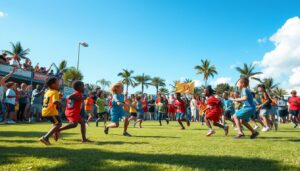
Get ready to sit at the table of Southwest Florida’s competitive spirit. The recent Lee County Athletic Conference Hall of Fame induction was more than just a ceremony. It was a chance to update the local pantheon.
Nine new legends, from NFL veterans to pioneering coaches, were honored. It wasn’t about giving them a gold watch. It was about giving them the keys to a community’s collective memory.
But why does this matter beyond the plaques and speeches? What does it truly say about a region when it formally enshrines its heroes?
These events are the season finales of our local drama series—the critically acclaimed kind. Each ceremony introduces unforgettable characters to an ever-growing lore. It’s the alchemy of turning Friday night lights into lifelong inspiration.
Private School Athletic Excellence
Forget the one-trick pony. In the world of Lee County sports awards, private schools are creating a new kind of champion. They’re not just about winning state titles. They’re about building a resume that colleges dream of.
Take Evangelical Christian School as an example. Here, being a “student-athlete” is a real goal, not just a dream. Seniors Derek Washington and Marlee Appell are great examples. Derek excelled in wrestling and football. Marlee was a star in soccer and a cheerleader leader. They both won the Fort Myers Rotary Club Scholarships.
The Rotary award is key to understanding this model. It looks for a high GPA, athletic skills, and community service. It’s not just about winning. It’s about being well-rounded.
Some public schools focus too much on winning. But ECS asks more. What’s the value of a trophy if the person holding it isn’t also smart and community-minded?
Washington and Appell show us what “excellence” in Lee County sports awards really means. It’s not just about winning. It’s about winning with character, brains, and a commitment to something bigger than sports.
This success changes how we see sports in Lee County. It shows that the best honors are those that value well-roundedness. The private school model is not just an option. It’s a strong case for what Lee County sports awards should celebrate.
Youth Sports Program Achievements
In Fort Myers, the journey from peewee leagues to college is real. Success is not just about winning games. It’s about doing well in school too.
Florida Gulf Coast University is a key part of this journey. It’s not just about sports. It’s about being a scholar-athlete. Recently, 87 student-athletes had GPAs over 3.5.
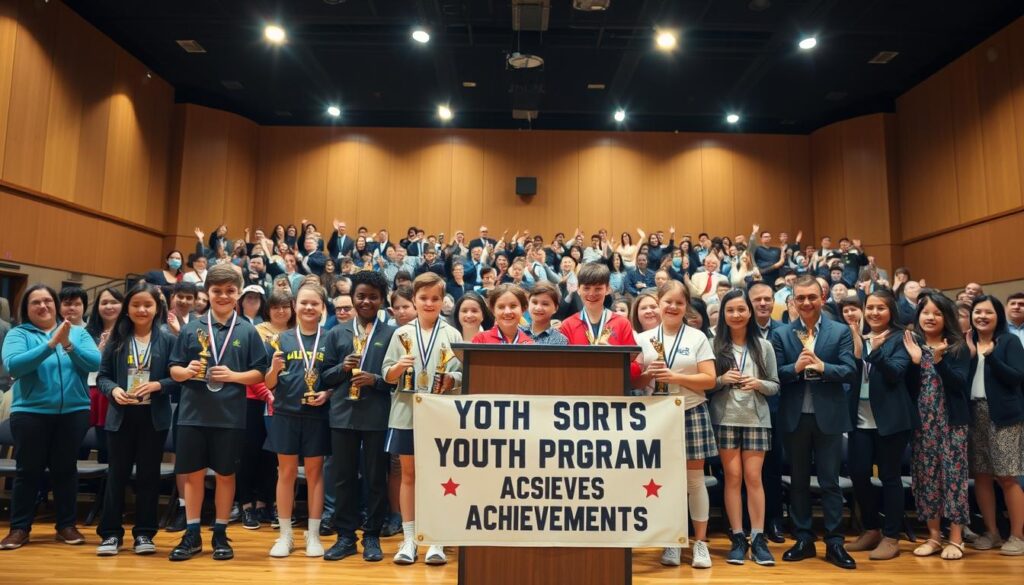
This number shows a system working well. It’s the result of good youth development. The Women’s Tennis team’s 3.52 GPA is not a coincidence. It shows a strong culture.
FGCU’s latest report highlights some amazing team achievements:
- Volleyball: Leading with a 3.58 team GPA
- Women’s Tennis: Showing focus off the court with a 3.52 GPA
- Department-Wide: 25th semester beating the general student body
This success challenges the “dumb jock” stereotype. In Fort Myers, success is not just about sports. It’s also about doing well in school. This is shown in the 2025 Athletic Hall of Fame inductees.
So, what’s the secret? It’s a community effort that starts early. Local youth programs teach more than just sports. They teach discipline, time management, and drive for success.
This balance is key. It shows that our local sports recognition values the whole athlete. The student who does well in school and sports is the best investment. This success is priceless.
Golf and Tennis Championship Recognition
Forget the roar of stadiums—sometimes the most profound athletic achievements in Fort Myers happen in near silence. While football fields echo with collective triumph, golf and tennis championships whisper a different story. This is the realm of the solo performer, where recognition carries a unique, almost intimate weight.
Consider George McNeill. His journey from North Fort Myers High School to over 315 PGA Tour starts reads like a local legend. But here’s the twist: his recognition isn’t about last-second touchdowns. It’s about the thousand hours of solitary practice, the mental fortitude to sink a putt with millions watching, yet feeling utterly alone. McNeill represents a specific strain of Fort Myers athletics excellence—one built on precision, not power.
Then there’s Margaret Sirianni. In the 1970s, she didn’t just play golf; she built the entire architecture for girls’ golf in Lee County. Her recognition isn’t found in trophy cases alone, but in the generations of young women who now swing clubs because she first cleared the path. Sirianni’s championship was societal—winning the right for girls to compete at all.
So what makes this recognition different? In team sports, glory is shared, diluted, communal. In golf and tennis, the athlete stands completely exposed. Every mistake is theirs alone. Every victory is a solitary conquest. The local awards circuit honoring these athletes isn’t just celebrating skill—it’s acknowledging a particular brand of courage.
This is athletic poetry of a different meter. It’s the tension of a match point, the agonizing wait as a birdie putt rolls toward the cup. The crowd’s silence isn’t indifference; it’s reverence. In Fort Myers athletics, we celebrate both the cacophony of a game-winning drive and the quiet drama of a perfectly executed backhand.
The table below captures this essential dichotomy. It shows how recognition operates in two parallel but distinct worlds within our local sports culture:
| Aspect of Recognition | Team Sports (Football, Basketball) | Individual Sports (Golf, Tennis) |
|---|---|---|
| Primary Focus | Collective strategy and group execution | Personal skill and mental resilience |
| Moment of Triumph | Shared celebration with teammates | Solitary acknowledgment of personal achievement |
| Community Engagement | Mass spectator events, school spirit | Smaller, focused audiences, personal following |
| Path to Recognition | Through team success and league standings | Through tournament results and personal rankings |
| Local Legacy | Remembered as part of historic teams | Remembered for individual career milestones |
This contrast matters. When we honor a golfer like McNeill or a pioneer like Sirianni, we’re validating a different athletic psychology. We’re saying that the patience to master a tiny white ball matters as much as the strength to throw a larger one. That the focus to return a 120-mph serve deserves its own spotlight.
The championship recognition in these sports is more personal, more biographical. It’s not “our team won.” It’s “George McNeill qualified for the U.S. Open.” It’s “Margaret Sirianni changed the landscape.” This specificity gives Fort Myers athletics its rich texture—a community that cheers for teams but profoundly respects individuals.
Next time you drive past a quiet golf course or tennis court, remember: championship history is being written there too. Just without the marching band.
Water Sports and Sailing Achievements
While Friday night lights get all the attention, a different kind of athleticism thrives in our pools and waterways. Here, success is measured in strokes, laps, and dives. In a community surrounded by beaches and bays, you’d expect our Lee County sports awards to celebrate aquatic achievements more.
But there’s a paradox. We admire sailboats at sunset, yet overlook the excellence in swimming and diving. FGCU’s swimming and diving program is a prime example. It shines in the “aquatic shadows,” away from the spotlight but full of talent.
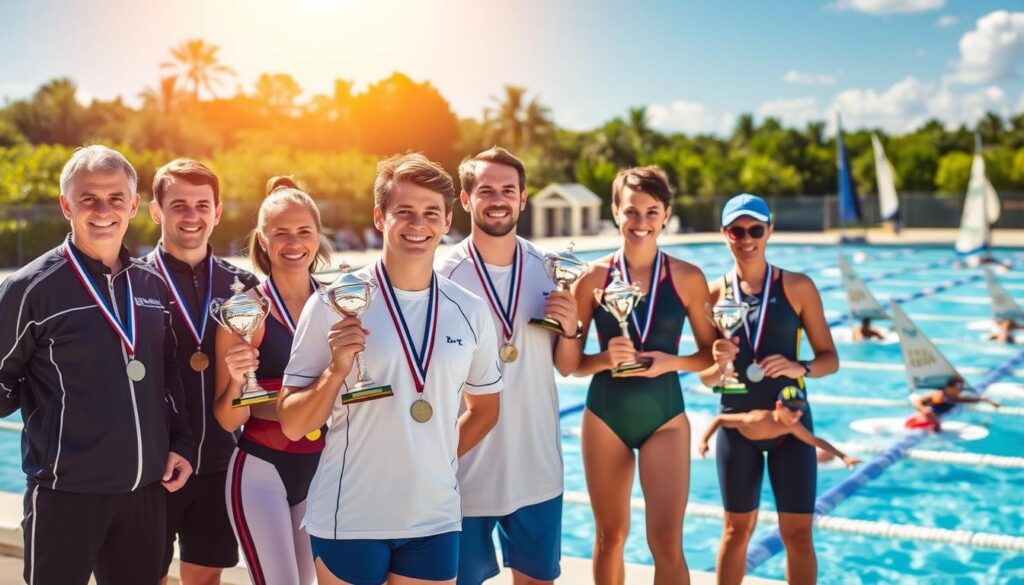
FGCU’s scholar-athletes are a diverse group. They come from places like Iceland and Poland. They’re not just swimmers; they’re also academic stars. Their presence makes us question our award criteria.
FGCU’s success shows that sports and academics can go hand in hand. But many Lee County sports awards don’t recognize this. They struggle to categorize athletes who excel in both areas.
| Athlete | Country | Academic Focus | Competitive Specialty |
|---|---|---|---|
| Karen Arngeirsdottir | Iceland | Environmental Studies | Distance Freestyle |
| Zuzana Rabiniak | Poland | Business Management | Butterfly & IM |
| Marcus Fernandez | United States | Marine Science | Diving (Platform) |
| Elina Virtanen | Finland | Exercise Physiology | Backstroke |
This table is more than a list. It’s a call to rethink how we honor athletes. Each athlete brings a unique aspect of excellence. They show that success is not just about winning.
So, how do we celebrate these water athletes? Our current Lee County sports awards need to change. They focus too much on sports like football and basketball. Water sports require different skills and achievements.
Expanding our awards could help. We need categories that value academic-athletic balance, international contributions, and technical skills. FGCU’s success shows what’s possible when we look beyond the obvious.
Recognizing water sports excellence strengthens our sports culture. It shows that success comes in many forms, whether in chlorinated or saltwater. It reminds us that Lee County sports awards should reflect our true geography and sports preferences. The water is not just our backdrop; it’s a competitive arena.
Community Recreation Program Awards
The scoreboard tells one story; the soup kitchen tells another. True local sports recognition often happens where the bleachers end and the community begins. It’s in the free clinic run by a coach on her day off, the tutoring session led by the star point guard, and the food drive organized by the entire swim team.
What is sport for, if not to build something stronger than a league standing?
The connective tissue between athletics and a healthy town is service. Take the Fort Myers Rotary Club. Their scholarship doesn’t just ask for a GPA or a stat sheet. It demands proof of community involvement. They get it. The award isn’t for athletic prowess alone; it’s for the citizen-athlete.
Then there’s FGCU. In 2017, their Eagles logged a staggering 7,200 volunteer hours. That’s not a typo. It’s a full-time job for three and a half people. They didn’t stop there. The #FeedFGCU campaign turned athletic energy into meals for local food pantries. This is the playbook for civic impact.
These stories force a question. Shouldn’t our awards reflect this? The most meaningful “recreation program award” might be the one given for the intangible assist—the block that never shows on a stat sheet but builds a neighborhood.
We can start by redefining the categories. It’s not just “Coach of the Year.” It’s “Community Builder of the Year.” Not just “MVP,” but “Most Valuable Participant” in civic life.
| Award Category | Traditional Focus | Community-Focused Lens | Example from Fort Myers |
|---|---|---|---|
| Program of the Year | Win-loss record, tournament wins | Volunteer hours per athlete, community partnerships formed | FGCU Athletics’ structured volunteer programs |
| Scholar-Athlete Award | GPA, academic honors | Academic tutoring provided to peers or younger students | Rotary Club scholarship requirements |
| Leadership Award | Team captaincy, on-field direction | Organizing team-wide service projects (food drives, clean-ups) | #FeedFGCU campaign leadership |
| Lifetime Achievement | Career wins, championships | Decades of running free youth clinics, mentoring beyond sport | Local coaches operating non-profit clinics |
This shift in local sports recognition does something powerful. It tells young athletes their value isn’t confined to the court. It tells coaches their legacy is measured in lives touched, not just titles won. It tells the community that its teams are invested partners, not just weekend entertainment.
In the grand ledger, these contributions are the community-building blocks. They define a program’s soul far more permanently than any trophy. After all, trophies tarnish. A reputation for service? That’s a legacy that lasts.
Special Needs Athletic Recognition
Let’s ask the question the trophy case doesn’t. Our Fort Myers athletics scene is full of champions and scholar-athletes. But does our applause overlook something important? Imagine a finish line where the greatest victory is the courage to start.
Where is the standing ovation for that triumph? Our celebration ecosystem often misses the mark. This isn’t just about adding a participation ribbon. It’s about redefining the podium itself.
Imagine a ceremony with the same pomp and spotlight. But the athletes’ victories challenge our definition of competition. Recognizing these achievements does more than honor individuals. It makes us rethink what “athletic excellence” means.
Is it only a state title? Or can it be the will to swim a first lap, or to race with different rules?
The impact is profound. For the athlete, it’s validation on a grand scale. For the audience, it’s a lesson in perspective. For the broader SW Florida sports awards framework, it’s a sign of growth. A mature sports culture celebrates all human endeavors.
Consider the shift. We’re moving from a system that occasionally includes, to one designed to celebrate all winners.
| Traditional Recognition Paradigm | Inclusive Recognition Paradigm | Community Impact |
|---|---|---|
| Focus on metrics: points, times, rankings. | Focus on milestones: personal bests, perseverance, teamwork. | Broadens the definition of success for all young athletes. |
| Awards elite, peak physical performance. | Awards triumph over personal and physical challenges. | Fosters empathy and respect across all sports programs. |
| Ceremonies often segregate “adaptive” events. | Integrates all athletic achievements into a unified celebration. | Builds a stronger, more cohesive sports community. |
| Inspiration is tied to winning. | Inspiration is tied to effort and courage. | Creates more relatable role models for every child. |
This is the next frontier. It’s where a community’s conscience gets its reps in. By creating dedicated awards for special needs athletics, Fort Myers wouldn’t just be checking a box. It would be making a statement. The statement is simple: every struggle, every breakthrough, every finish line crossed against different odds is worthy of our highest honor.
Our local sports narrative is rich. Let’s ensure it’s also complete. Celebrating these athletes lifts everyone. It reminds us that the heart of sport isn’t just in the victory. It’s in the effort. And that effort, in all its forms, is what truly deserves a spotlight in Fort Myers athletics.
Senior Athlete Programs
The most valuable player in sports might not wear cleats. They might just have a whistle and years of dedication. The Lee County sports awards honor those who have been around for a long time. It’s not about being young; it’s about being a cornerstone.
Martin Cardenas is a great example. He’s been coaching soccer for over thirty years, with hundreds of wins. When he got into the Hall of Fame, he talked about the people, not just wins. “It’s about the people,” he said, highlighting the importance of relationships.
What counts here? Wins are important, but so is building a community. The Lee County sports awards celebrate coaches who have changed lives. Their legacy is seen in the people they’ve helped, not just wins.
In today’s sports world, these awards stand out. They remind us that showing up for years is valuable. It’s about dedication, not just winning.
These awards are a nod to those who have been there for years. They built the foundation for today’s stars. Without them, today’s athletes wouldn’t have the opportunities they have.
This part of the Lee County sports awards is special. It values those who have shaped athletes over the years. It shows that building character is just as important as winning games.
These coaches are constants in a changing world. They stay for decades, shaping athletes and communities. Their awards are landmarks, showing what commitment means.
This section of the awards doesn’t just honor individuals. It celebrates the idea of legacy. It shows that building a community is just as important as winning games. In the world of Lee County sports awards, both are valued.
Facility Development and Recognition
We’ve cheered for the athletes and praised their programs. But let’s not forget the stage they perform on. Every touchdown, every buzzer-beater, every personal best needs a proper venue. Think of FGCU’s E.A.G.L.E. Campaign.
Its goal for “facility expansion and improvement” is more than just words. It’s a community building the shelf for future trophies.
Facility awards are about more than just grass. They show a town’s foresight. This recognition might seem official. But it’s the most practical way to celebrate.
Great infrastructure is the real hero. A weight room doesn’t win games. It shapes the athletes who do. A shiny arena doesn’t score points. It inspires the kids who will.
When we applaud a new complex, we’re not just celebrating bricks and mortar. We’re recognizing the foundation of every future victory. True local sports recognition looks to the future. It builds the theaters for tomorrow’s dramas.