Southwest Florida is a hotbed for baseball talent. The journey from local fields to collegiate diamonds is highly competitive. For athletes and their families, navigating this landscape requires a proactive and informed strategy.
Major events like Perfect Game showcases are critical. They are heavily utilized by university programs and MLB scouts for player evaluation. Choosing the right event for your skill tier is a key first step in gaining exposure.
This process is a marathon, not a sprint. Success demands a long-term plan that balances athletics, academics, and strategic visibility.
Our guide will highlight top prospects and break down the essential showcase calendar. Understanding this roadmap is the first step toward turning your dreams into reality.
How College Scouting Works (Quick Primer for Families)
Every college scholarship offer comes from a detailed evaluation process. This process goes beyond what fans see on Friday nights. Families in Southwest Florida need to understand this to navigate the college recruiting SWFL landscape well. Scouts and coaches look at a mix of skills and personal qualities.
They divide an athlete’s ability into two parts: physical skills and intangibles. Physical skills are the numbers and actions they can measure and film. Intangibles show how good an athlete could become in the future.
Here are the main physical tools scouts record at combines and showcases:
- 60-Yard Dash: Speed is key for almost every position.
- Arm Velocity: How fast the ball leaves the hand is important for baseball and softball players.
- Swing Metrics: In baseball, this includes bat speed, exit velocity, and launch angle.
- Vertical Jump & Broad Jump: These measure lower-body power and explosiveness.
Then, there’s projectability. It’s not about how good you are now. It’s about how good scouts think you can be in two, three, or four years. They look at your frame, athleticism, and how quickly you learn new skills. A projectable athlete has a high ceiling for growth.
Intangibles are also key. Coaches want players with strong character, coachability, and competitive fire. They watch how you interact with teammates, handle failure, and respond to instruction. These traits often decide between two talented athletes.
Not all showcases are equal. Experts say Perfect Game national events are for the nation’s top 2,000-2,500 prospects. If your athlete is in that elite tier, those are the right events.
For athletes who are developing, regional events from organizations like Prep Baseball Report (PBR) or Prospect Select are better. You get more chances to show scouts your skills without getting lost in a sea of talent. Choosing the right event tier is as important as knowing the combine dates.
The table below compares the focus of different major showcase organizers to help guide your decision:
| Showcase Organization | Primary Target Prospect Level | Key Metrics Emphasized | Best For |
|---|---|---|---|
| Perfect Game | National Top 2,000-2,500 | Elite tournament performance, advanced swing/arm metrics | Athletes with multiple D1 offers or elite national ranking |
| Prep Baseball Report (PBR) | State & Regional Top Prospects | Showcase data (exit velo, 60-time), in-game evaluation | Players seeking regional D1, D2, or high-level Juco exposure |
| Prospect Select | Developing & Regional Talents | Fundamental skills, projectable tools, tournament play | Athletes aiming for NAIA, D3, or looking to build a recruiting profile |
This knowledge empowers you. Instead of guessing, you can plan a strategic schedule. Look at combine dates with an understanding of which events match your athlete’s current development stage. This approach sets clear expectations and increases the chances of getting seen by the right coaches in college sports.
SWFL prospect watchlist by class/position with recent offers or interest levels
A good SWFL prospect list is always changing. It’s based on real reports and ongoing checks. It’s more useful to create your own than to find one ready-made.
Platforms like Perfect Game are key. They’re followed by college scouts for good reasons. They turn game performances into detailed data—similar to how college recruitment systems evaluate athletes.
There are two main sources of credibility. The PG Grade scores hitting, pitching, or fielding. Detailed reports also analyze a player’s tools and future.
These parts, with verified offer reports, make up a real watchlist. Watching “recent offers or interest levels” shows who’s being actively recruited.
| Graduation Class | Key Position(s) to Watch | Primary Data Source | Indicator of Active Interest |
|---|---|---|---|
| 2025 (Senior) | Pitcher, Middle Infield | Verified Offer Reports, Commitment Announcements | Official visits scheduled, signing date proximity |
| 2026 (Junior) | Power Bat, Catcher | Summer Showcase Results, Updated PG Grades | Surge in new scholarship offers post-summer |
| 2027 (Sophomore) | Multi-sport Athletes, Projectable Frame | Early Showcase Evaluations, First PG Report | Initial contact from D1 programs, camp invites |
| 2028 (Freshman) | All Positions | Youth Tournament Highlights, Coach Recommendations | Early identification by national scouting services |
Why focus on recent offers? A burst of new scholarship chances means a player’s value is going up. It shows coaches are really competing for them.
But, silence can also mean something. If there’s no new interest, it might mean a player needs to improve. It shows what they need to work on before the next check.
Here’s how to make your own prospect list for college recruiting in SWFL:
- Start with the Platforms: Bookmark the player search and news sections on Perfect Game and other major scouting sites. These are your primary sources.
- Filter by Geography: Use the site tools to filter players by Southwest Florida zip codes or high schools. This creates your regional pool.
- Track the Metrics: For each player, note their PG Grade, top tool ratings (e.g., Fastball Velocity, Exit Velocity), and the date of their last report update.
- Log the Interest: Create a simple spreadsheet. Document every verified offer or report of school interest, along with the date. This creates a timeline of momentum.
- Monitor Weekly: Set a weekly reminder to check for updates on your tracked players. Look for new reports, updated grades, or offer announcements.
This active approach makes you more than just a spectator. You’ll know not just who is trending, but why their college recruiting journey is speeding up.
Where to be seen: camp/combine/showcase calendar (summer/fall)
Summer and fall are key times for SWFL athletes to shine. It’s not about going to every camp. The goal is to pick events that fit your athlete’s level and get them seen by college coaches.
Exposure events come in three levels. Knowing this helps families plan better.
Local Camps & Clinics are run by schools, travel groups, or private coaches. They focus on improving skills in a relaxed setting. They’re great for young athletes or those new to recruiting.
Regional Combines test athletes with events like the 60-yard dash. They create a profile that colleges can see. Keeping up with combine dates is key for athletes ready to show their numbers.
National Showcases are the biggest deal. They draw top talent and lots of scouts. Events like Perfect Game showcases and PBR are the top spots.
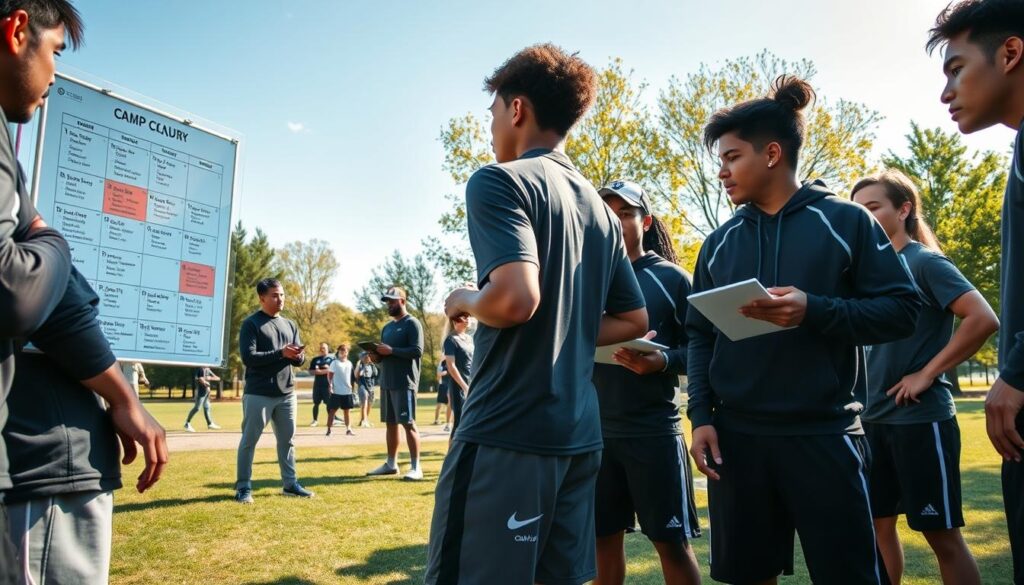
Choosing the right event depends on your athlete’s level. Top players aim for major showcases. Regional athletes do a mix of combines and showcases. Young players should focus on local camps to build skills.
For example, the Hoop Vibe Spring Showcase costs $140. It includes games, an evaluation, and seminars. Plus, it’s live streamed on Hudl, reaching more people.
When choosing an event, consider cost, structure, location, and special features. Ask what the event offers beyond playing time.
| Event Type | Best For | Typical Cost | Key Features |
|---|---|---|---|
| Local Camp/Clinic | Skill development, beginners | $50 – $200 | Direct coach instruction, low-pressure environment |
| Regional Combine | Posting verified metrics, broad exposure | $150 – $300 | Standardized testing, profile distribution to colleges |
| National Showcase | Elite, ranked prospects | $300 – $600+ | Highest competition level, heavy scout attendance, national ranking impact |
Start making your showcase calendar by researching. Note down combine dates from your sport’s top organizations. Balance travel and costs. Quality is more important than quantity.
For baseball, Perfect Game has workouts and games. Prospect Select focuses on detailed analytics. PBR has strong regional presence. Choosing depends on which colleges follow each organization most.
Your showcase calendar should change as new events come up or your athlete’s goals shift. Combine event attendance with a plan for school eligibility and highlight videos. This approach helps get prospects noticed, evaluated, and offered.
Building a highlight reel: what coaches want, free tools, do/don’ts
Your highlight reel is like a digital handshake with college coaches. It makes a strong first impression. A good video can open doors, while a bad one can shut them before you even get a chance.
This guide will help you create a reel that coaches will watch, evaluate, and remember. We focus on what recruiters really need to see.
What College Coaches Look For First
Coaches are always busy. They often only watch the first 30 seconds. Your reel must start with your best, most measurable tools. This matches the scouting priorities we discussed earlier.
Start with your top athletic metrics. For many sports, this means speed and power. Include clear footage of a 60-yard dash time. Show your arm strength velocity on a throw. Display swing metrics or pop times if you’re a catcher.
This data proves your physical capabilities. Next, show clean, technical plays. Show your fundamentals in game situations. Coaches want to see skill, not just athleticism.
You don’t need expensive software. Several free tools can help you create a professional-looking package.
- Editing: DaVinci Resolve is a powerful, free editing suite for desktop. CapCut is a user-friendly mobile and desktop option. Both allow you to trim clips, add text labels, and compile sequences.
- Hosting: Upload your final video to YouTube or Hudl. Set the privacy to “Unlisted” so only people with the link can view it. This gives you control. Always include the direct link in your emails and profiles.
Keep your editing simple. Fancy transitions and effects distract from your performance. The focus should always be on you.
The Value of Professional Showcase Footage
Sometimes, the best footage comes from events you attend. Showcases and combines provide neutral ground and verified data. Services like Skillshow are valuable here.
They professionally film and produce video from the event. You receive high-quality clips with your performance metrics overlayed. This saves you time and ensures the footage meets coaching standards.
Investing in such a service can be worth it. It guarantees you have broadcast-quality highlights from a competitive setting.
Essential Do’s and Don’ts for Your Reel
Follow these rules to keep your video effective. The table below summarizes the key actions to take and to avoid.
| Do’s | Don’ts | Why It Matters |
|---|---|---|
| Keep it under 3-4 minutes. | Don’t create a 10-minute marathon. | Coaches have limited time. Show your absolute best work quickly. |
| Label every clip clearly. Include your name, position, event, and metric. | Don’t assume coaches know what they’re watching. | Clear labels provide immediate context and verify your metrics. |
| Lead with your best measurable plays. Speed, power, key skills. | Don’t bury your top plays in the middle. | You must capture attention immediately with your top assets. |
| Use simple, quiet background music or none. | Avoid loud, dramatic music that drowns out the game audio. | Music should not distract from the coach’s evaluation of the play. |
| Include contact info and link in the video description. | Don’t make a coach search for how to reach you. | Make the next step for the recruiter as easy as possible. |
Final Step: Review and Share
Before sending it out, have a trusted coach or trainer review your highlight reel. Get feedback on clip selection and clarity. Then, share the link proactively.
Add it to your recruiting profiles. Email it directly to programs. A great reel is a tool, but you must use it. It showcases the hard work you’ve put in on the field.
Eligibility and academics: NCAA core courses and timelines
The NCAA Eligibility Center is the academic gatekeeper for Division I and II student-athletes. Your academic record, not just athletic talent, determines eligibility. It reviews your high school coursework, grades, and test scores.
Think of the Eligibility Center as your academic partner. Its standards prepare you for college coursework. Ignoring these rules can sideline a promising athlete, regardless of their on-field abilities. We’ll break down the core-course mandate and provide a clear year-by-year timeline to keep you on track.
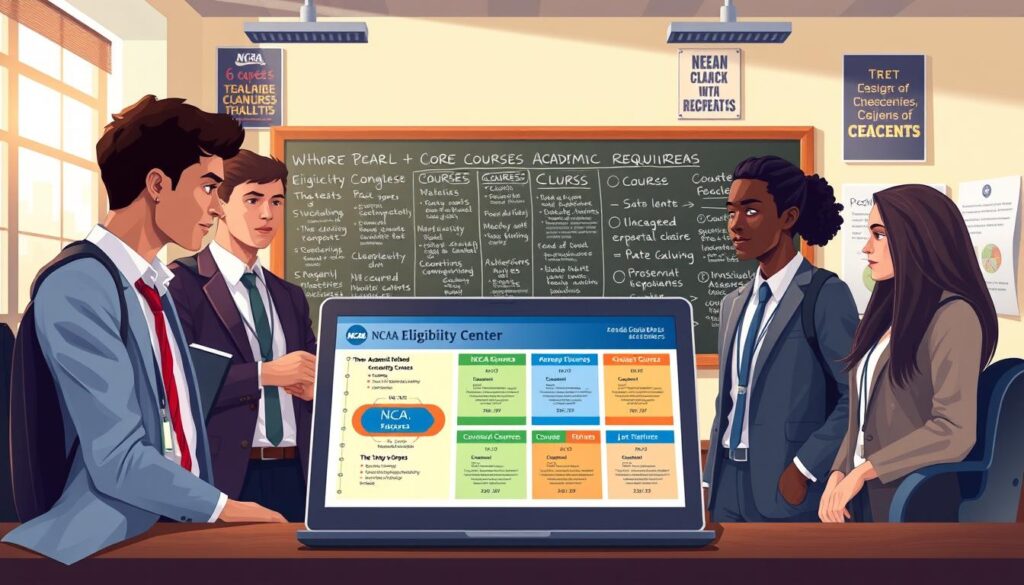
At the heart of NCAA eligibility is the requirement to complete 16 core courses in high school. These are specific classes approved by the NCAA in key subject areas. Your high school counselor has a list of approved courses for your school.
The core course breakdown is as follows:
- 4 years of English
- 3 years of Math (Algebra 1 or higher)
- 2 years of Natural/Physical Science (including one lab science)
- 1 extra year of English, Math, or Science
- 2 years of Social Science
- 4 years of additional core courses (from any area above, or foreign language, comparative religion, or philosophy)
It’s not just about passing these classes. You must earn a minimum core-course GPA on a 4.0 scale. This GPA is combined with your SAT or ACT score to create your Academic Index, which determines if you meet the sliding scale standard for Division I or II.
The Four-Year Eligibility Timeline
Procrastination is the enemy of eligibility. Follow this annual checklist to stay ahead. This table outlines the critical academic actions you must take each year of high school.
| High School Year | Academic Focus | Key Actions for the NCAA Eligibility Center |
|---|---|---|
| Freshman | Lay the foundation. | Start taking approved core courses. Meet with your counselor to plan your four-year schedule. Focus on building strong study habits. |
| Sophomore | Stay on track and test. | Continue with core courses. Consider taking the PSAT. Register for a free Academic Certification account with the NCAA Eligibility Center to monitor your course list. |
| Junior | The most critical year. | Complete most core courses. Take the SAT/ACT. At the end of the year, ask your counselor to upload your official transcript to your Eligibility Center account. Re-check your core-course progress. |
| Senior | Finish strong and finalize. | Complete all remaining core courses. Take the SAT/ACT again if needed. Request final amateurism certification. Ensure your counselor sends your final transcript with proof of graduation. |
This timeline is your roadmap. No college coach can offer a scholarship to a player who is not academically eligible. Your talent on the field is worthless if you are ineligible off it. Treat your academic plan with the same seriousness as your training regimen.
Actionable Steps for Families
Empowerment comes from taking control. Here are concrete steps you can take today:
- Initiate the Conversation: Schedule a meeting with your high school counselor. Bring a copy of the NCAA core-course requirements. Create a four-year plan together.
- Create Your Account: Go to the NCAA Eligibility Center website and register for a free Academic Certification account. This portal allows you to track your approved core courses and status.
- Monitor Progress Semiannually: At the end of each semester, review your transcript against your plan. Ensure every grade is the best you can achieve, as core-course grades cannot be replaced or improved after graduation.
- Understand the Sliding Scale: Know that a lower test score requires a higher core GPA, and vice versa. Use the NCAA’s sliding scale tools to see where you stand.
The NCAA Eligibility Center is not a hurdle, but a guide. By mastering its requirements early, you remove a major source of stress from the recruitment process. You prove to coaches that you are a disciplined student-athlete, fully prepared for the next level. Let your academic record be as impressive as your athletic one.
Community resources: local trainers, clinics, scholarship workshops
Success in recruiting in Southwest Florida relies on a strong team. Local resources offer the expert help and support needed. They guide through the complex process.
It’s important to find skilled trainers and strength coaches in SWFL. They provide sport-specific training that goes beyond regular practice. This training builds the athletic skills colleges look for.
Local clinics and showcases offer exposure and education. The Hoop Vibe Showcase, for example, includes free seminars for parents. These sessions teach about negotiating scholarships and talking to coaches.
National groups like Perfect Game have local contacts. By emailing showcases@perfectgame.org, families can get advice specific to SWFL. These experts know the area’s talent well.
Scholarship workshops are also key. They explain NCAA rules and financial aid. This knowledge helps avoid costly errors later on.
Building a network of local trainers and clinic leaders is beneficial. It makes the recruiting journey more manageable and informed. Using SWFL resources prepares athletes for their next step.