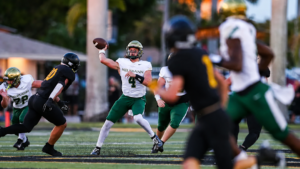
Under the Friday night lights in Southwest Florida, something special happens. The local high school football game is more than a sport. It’s a community event that brings people together.
These annual matchups are deeply woven into the area’s identity. They create stories that families share for generations. The energy in the stadium defines what it means to be from here.
This article opens the Rivalry Files. It’s your guide to the traditions that shape our region. We’ll explore how these contests started and why they matter so much. You’ll learn about legendary games and the modern dynamics that keep the spirit alive.
Whether you are a longtime local or new to the area, this is for you. We look at the cultural forces that build a strong community. Get ready to dive into a rich legacy of pride and competition.
Origins and geography: why these schools clash
The map often shows why two schools become rivals. Living close to each other creates a natural competition. When communities share streets and colors, a divide forms.
Students from rival schools often live next to each other. They play sports together as kids, then compete in high school. This close living makes every game personal.
Geography is just the start. Community dynamics add more to the story. Things like money, history, and town identity make rivalries stronger. A school’s history and resources can make games feel like battles.
The “Fort Myers vs” rivalry has a deep story. The city is at the center of many rivalries. The Fort Myers vs. Dunbar rivalry is fueled by history and culture. The Fort Myers vs. Riverdale rivalry comes from county pride and school history.
| Rivalry Matchup | Geographic Proximity | Primary Catalyst | Historic Spark |
|---|---|---|---|
| Fort Myers vs. Dunbar | Inner-city, neighborhoods divided by major avenues. | Community identity & historical socio-economic lines. | Decades of competing for city supremacy and playoff bids. |
| Fort Myers vs. Riverdale | Different regions of Lee County, a short drive apart. | County-wide dominance & competing school district narratives. | Historic playoff upsets and battles for district titles. |
| Naples vs. Barron Collier | Located within the same city, serving different zones. | School zoning creating “neighbor vs. neighbor” tension. | The founding of a new school splitting a single community. |
School zoning is another key factor. Redrawn district lines can split neighborhoods. This turns friends into rivals. The rivalry becomes a way to find a shared identity through competition.
These elements—maps, community stories, and district decisions—shape SWFL football. They explain why some games are more important. To learn more, check out the history of local rivalries. The origins lead to legendary streaks and unforgettable games.
Series record and memorable streaks
The series history between rival schools is more than numbers. It’s a story that shapes athletes and fans. This record is the ultimate measure of local pride.
For the leading side, it’s a source of lasting pride. For the trailing side, it’s a driving force. It fuels every practice and game.
A lopsided series history can create an underdog’s spirit. Every game is a chance for redemption. It’s a mission to change the narrative of disadvantage.
On the other hand, a close record makes every game intense. Each win is precious, and each loss is a big setback. The balance of power is always at stake.
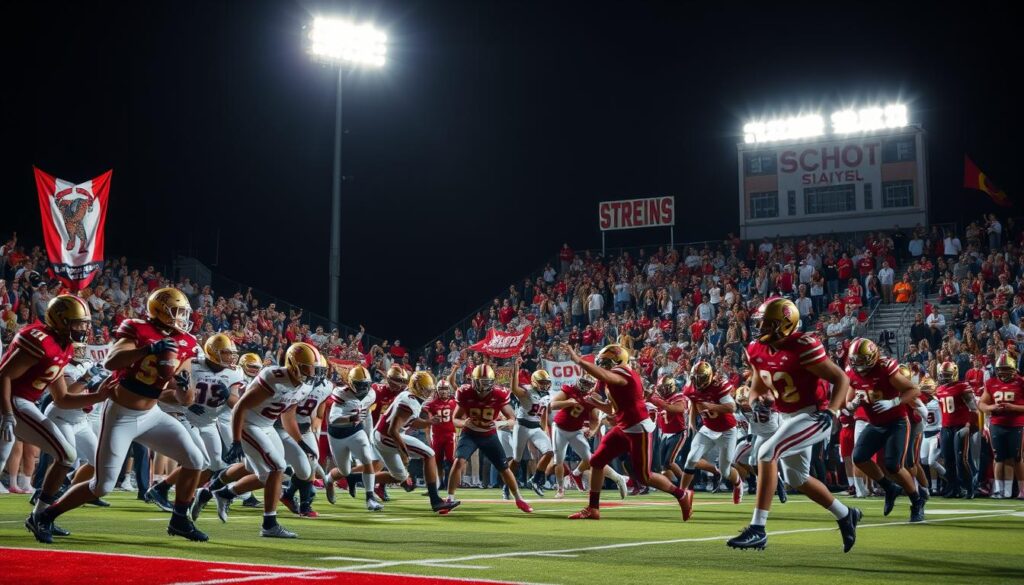
Memorable streaks add legendary chapters to the series history. A “Decade of Dominance” is more than wins. It’s part of the local culture.
Ending such a streak has a huge impact. The “streak-buster” game becomes a local legend. It’s the night a senior class leaves a lasting legacy.
Coaches and star players are forever remembered for their roles in these streaks. The coach who extended a dynasty becomes iconic. The quarterback who ended the streak is a hero.
Looking at the win-loss record and streaks is not just about data. It’s exploring a story that gives the rivalry its deep meaning. The series history is the foundation, and streaks are the dramatic twists that keep the story alive for each new generation.
Top 5 games ever with fan memories and archived quotes
Some Friday nights in SWFL football history are unforgettable. They become legends passed down through generations of fans. These are the classic games where seasons were defined, heroes were made, and community pride swelled in the stands. We’ve curated the five definitive contests that every rivalry follower must know, complete with the stakes, the drama, and the voices that lived it.
| Game | Year | Final Score | What Was at Stake | Legendary Performer |
|---|---|---|---|---|
| The “Mud Bowl” Championship | 1998 | 21-20 (OT) | District title & undefeated season | QB Mike “Slick” Henderson |
| The Streak-Breaker | 2005 | 17-14 | Ending a 12-year drought | LB Sarah Chen (3 sacks) |
| The Thanksgiving Showdown | 1987 | 35-34 | Playoff berth decided on final play | WR/KR Marcus “The Flash” Bell |
| The Goal-Line Stand | 2012 | 10-7 | Defensive battle for city bragging rights | DT Carlos “The Wall” Rodriguez |
| The Comeback for the Ages | 2019 | 38-35 | Rivalry trophy & conference supremacy | RB Jasmine Cole (289 yds, 3 TDs) |
Torrential rain turned the field into a quagmire, setting the stage for a legendary game. The district title and an undefeated season hung in the balance for both teams. Every yard was a war of attrition fought in the trenches.
The key turning point came in overtime. After a sloppy, scoreless fourth quarter, the home team scored but missed the extra point. QB Mike “Slick” Henderson then engineered a masterful drive, culminating in a play-action pass for the tying touchdown. He then willed himself across the goal line for the winning two-point conversion.
Coach Alan Riggs was quoted in the Gazette the next day: “In thirty years, I’ve never seen a kid want it more than Slick did on that final drive. He was covered in mud from head to cleat, but his eyes were clear as day. He knew.”
Fan memory from Donna P., class of ’99: “We were all standing in ankle-deep water. When Slick plunged in, the entire sideline erupted. I lost a shoe in the mud celebrating. I didn’t even care. That night, we weren’t just wet; we were champions.”
2. The 2005 Streak-Breaker
For twelve long years, one school had owned the rivalry. The 2005 contest was about more than a game; it was about reclaiming pride. The visiting team played with a desperation that was palpable from the opening kickoff.
The unforgettable game was decided by defense. Linebacker Sarah Chen was a force of nature, recording three sacks and a critical fourth-quarter interception. Her performance anchored a unit that allowed only 14 points against a powerhouse offense.
The streak ended on a 42-yard field goal as time expired. Kicker Ben Soto, a sophomore, recalled in a yearbook interview: “The snap was good, the hold was perfect. I just thought about all the seniors who never got to beat these guys. I kicked it for them.”
Fan memory from Mark T., longtime booster: “When that ball went through the uprights, it was like a dam broke. Grown men were crying. We rushed the field and carried Sarah Chen off on our shoulders. That night, the whole town felt lighter.”
3. The 1987 Thanksgiving Showdown
Scheduled unusually on Thanksgiving night, this epic clash had a simple, brutal stakes: the winner went to the playoffs, the loser went home. A record crowd bundled up in the cold, their breath visible under the stadium lights.
The game featured six lead changes. The legendary performance belonged to return specialist Marcus Bell, who took a kickoff 99 yards for a touchdown to swing momentum in the third quarter. He later caught the game-winning two-point conversion pass with just eight seconds left.
Archived from the opponent’s coach, Vince Harrow, in a post-game presser: “We had them. We absolutely had them. But number 23 (Bell)… he’s a once-in-a-generation talent. You can’t scheme for that kind of speed and heart.”
Fan memory from James L., who was 10 at the time: “My granddad let me stay up past midnight for it. We ate leftover pie during timeouts. When Bell scored that final conversion, my granddad picked me up and spun me around. He’s gone now, but I think of him every Thanksgiving.”
4. The 2012 Goal-Line Stand
In a low-scoring, defensive slugfest, the entire season boiled down to one final play. With three seconds left, the visiting team had the ball at the one-yard line, trailing by three. One yard for glory, one yard for heartbreak.
The defense, led by tackle Carlos Rodriguez, called its final timeout. Rodriguez gathered the unit and pointed to the stands. On the snap, he blew through a double-team, meeting the fullback in the hole and stopping him cold for no gain. The roar was deafening.
Rodriguez told the student paper: “We knew the play. We practiced it. In that huddle, I just said, ‘This is our house. They don’t score here.’ It wasn’t just me; the whole line fired off like rockets.”
Fan memory from Principal Elena G.: “As an administrator, I’m supposed to stay neutral. But in that moment, I was a fan. I was hugging strangers. The next Monday, we had a school-wide assembly for the defense. We called it ‘The Wall’s Wall of Fame.'”
5. The 2019 Comeback for the Ages
Down 28-7 at halftime, hope seemed lost for the home team. The rivalry trophy and conference supremacy were slipping away. What followed was the most explosive half of football in the series’ history.
Running back Jasmine Cole put the team on her back, rushing for 289 yards and three touchdowns. Her 65-yard scamper to tie the game with under a minute left is now iconic footage. The winning field goal sailed through as the clock hit zero.
Offensive coordinator Lisa Tran’s quote was printed on t-shirts: “At halftime, I told them, ‘Legacies aren’t built when it’s easy. They’re built right now, in this room.’ Jasmine looked at me and said, ‘Give me the ball.’ The rest is history.”
Fan memory from a visiting fan, Dave K.: “I have to admit, even though my team lost, I witnessed something special. That comeback was artistry. I was mad, but I also felt privileged to see it. That’s what a true classic game does—it transcends sides.”
These five contests are more than entries in a record book. They are the emotional pillars of the rivalry. Each classic game represents a shared experience that binds students, alumni, and the community across decades. They answer the question, “Where were you when?” and ensure the rivalry’s fire burns bright for generations to come.
Culture and traditions: bands, trophies, game‑week rituals
The game on the field is just part of a bigger story. It’s filled with school spirit, marching bands, and special customs. This turns a simple game into a big community event, making memories that last long.
Rivalry week starts with a burst of energy. Schools have themed dress-up days like “Jersey Day” or “Class Color Wars.” This turns hallways into seas of school pride. Pep rallies and bonfires in the evening get everyone excited.
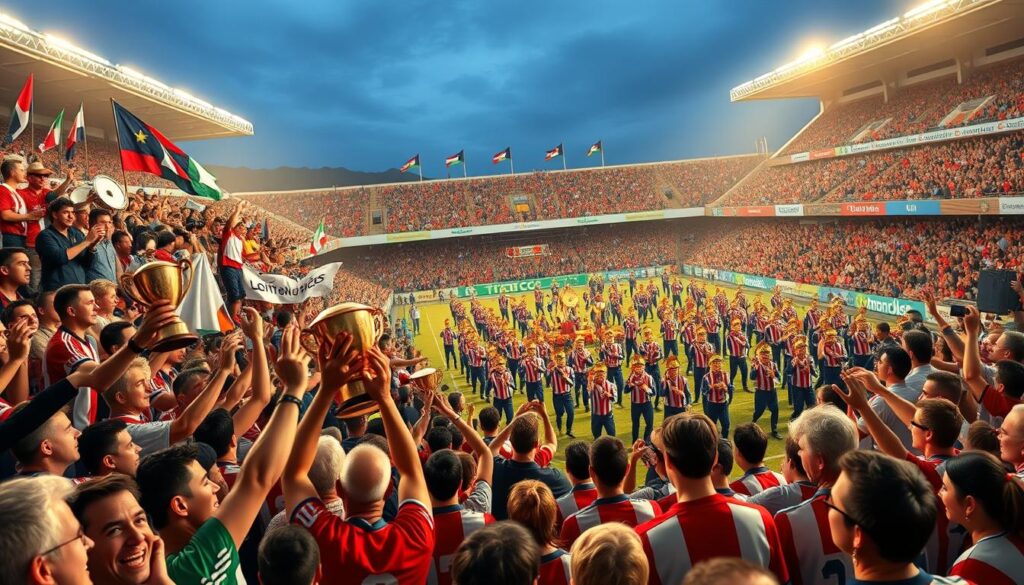
The marching bands are key in setting the game’s mood. Their performances before and during the game are a battle of anthems and precision. It’s a competition of spirit and sound between the bands.
Many rivalries in Southwest Florida are about a traveling trophy. For example, the “Mayor’s Cup” goes to the winning school in the Naples vs. Barron Collier game. This trophy is a symbol of bragging rights, staying with the winning school for a year.
Game-week rituals vary, like the Naples vs Gulf Coast rivalry. They might include:
- A Thursday night “Parade of Champions” through a neighborhood.
- Painting a “spirit rock” by students at night.
- A pre-game team walk through a tunnel of fans.
- An alumni dinner to connect past and present students.
These customs do more than entertain. They build immense anticipation and school spirit. They create a shared story, like corporate team-building, but with more passion.
The game day is filled with more than just the game. It’s the band forming the school’s initials, victory chants, and trophy handovers. These moments unite students, families, and alumni across years.
The culture around a rivalry like Naples vs. its foes makes the game more than just an event. It’s the heart of community pride, shown in marches, cheers, and symbols.
Modern era: how styles and coaches changed the rivalry
Modern coaching has changed the face of Southwest Florida football rivalries. Gone are the days of simple, run-heavy games. Now, coaches use complex systems that define their teams. This has led to exciting style clashes that mark eras.
The spread offense has changed the high school rivalry Southwest Florida scene. Teams that use this fast-paced, pass-heavy approach have an advantage. This has created a divide between new and old ways of playing, making games more than just about athletes.
Top coaches have shaped these new eras. Their unique strategies, like the triple option or no-huddle air raid, push rivals to adapt. This has brought a college-level strategy to local games. The best coaches focus on building programs to dominate rivals for years.
Year-round training has sped up this change. Summer tournaments and camps are now common. Rivals scout each other’s plans and players all year. This has raised the game’s quality but also the pressure on coaches to keep innovating.
Transfer rules have added complexity to the balance of power. The movement of key players can change a rivalry’s direction. A single transfer can shift the balance for seasons, making roster management key.
Social media has added a new level of excitement to rivalries. Hashtags, videos, and online talk build hype weeks before games. This digital aspect has made local rivalries known worldwide. The rivalry experience now includes both real and virtual spaces.
Some classic matchups have kept their essence despite these changes. Community pride and bragging rights remain unchanged. But, some rivalries have seen big changes as teams adapt at different rates.
The strategic changes reflect trends in college rivalries too. What makes Southwest Florida unique is how these changes tie to local identity.
Modern factors that changed rivalry dynamics:
- Schematic Specialization: Coaches build programs around specific systems
- Data Analytics: Film study and stats inform game plans
- Player Development Systems: Year-round training improves athlete skills
- Recruiting Awareness: Programs track middle school stars
Today’s high school rivalry Southwest Florida games are a mix of tradition and new ideas. The excitement and passion are timeless, but the game strategy is more complex than ever. This evolution ensures that while rivalries honor their past, their future will be shaped by modern coaching and systems.
Family guide to rivalry night: tickets, arrival times, noise level, safety tips
Going to a local rivalry game is a big highlight of the season. With the right planning, a busy night can become a smooth and fun experience for everyone.
Buy your tickets early. The best places to get them are the official athletic websites of the schools playing. Avoid secondary markets, as they can be unreliable. These games often sell out fast.
Get there early to skip the crowds. Aim to arrive 60 to 90 minutes before the game starts. This gives you time to park, get in, and find your seats before the game begins.
The noise level shows how passionate the fans are. It’s the game’s soundtrack. For little ones, consider foam earplugs or headphones to protect their hearing.
Make sure you know the basic safety rules. Pick a meeting spot outside the gates. Make sure your phones are charged. Listen to security and stay with the crowd flow.
With good planning, you can enjoy the game fully. Cheer with the fans and feel the special energy of rivalry night.