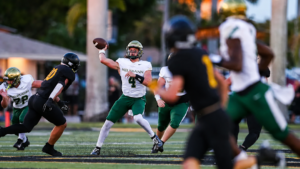
Southwest Florida athletes to watch are no longer just local standouts waiting for a lucky break. In 2026, the region is starting to look like one of Florida’s most interesting sports development zones, where raw talent, population growth, stronger programs, and year-round competition are reshaping what local athletic success can become.
The story is bigger than one recruiting class or one star player. Southwest Florida is building a deeper sports identity, and the next wave of athletes will show whether the region can move from occasional headline-maker to consistent statewide force.
Southwest Florida Athletes To Watch Are Changing The Regional Conversation
For years, Southwest Florida sports coverage has often been framed around individual breakthroughs: a football prospect earning attention, a baseball player making a jump, a basketball scorer carrying a team, or a multi-sport athlete becoming impossible to ignore. That still matters. But the more important shift in 2026 is the widening talent base.
Lee, Collier, Charlotte, Hendry, and nearby communities now produce athletes who are not only competing locally but also being measured against statewide standards. That changes expectations. A good season is no longer just about winning a district game or leading a county leaderboard. The real question is whether an athlete’s production, discipline, and physical development can translate beyond the region.
This is why the phrase next sports powerhouse is not empty booster language. It reflects a visible change in how local programs are being evaluated. More athletes are training earlier. More families understand recruiting timelines. More coaches are building systems rather than simply relying on one exceptional player. More local teams are testing themselves against stronger schedules.
That combination matters because talent alone rarely builds a sports market. A true sports region needs competition, infrastructure, exposure, coaching stability, and proof that athletes can move successfully from high school to college or beyond. Southwest Florida is not fully there yet, but it is closer than many outside the region may realize.
The athletes to watch in 2026 will not all be household names. Some will be football players whose best position is still being defined. Some will be baseball and softball players developing quietly in travel circuits. Some will be girls’ basketball, soccer, volleyball, track, and flag football athletes who are forcing local coverage to expand beyond traditional attention patterns. That is where the real growth story lives.
Why 2026 Feels Like A Turning Point For Local Talent
The timing matters because Southwest Florida is sitting at the intersection of several forces. Population growth has expanded the athletic pool. Private training has become more accessible. Club and travel sports have increased competitive reps. Social media has made local highlights easier to distribute. Recruiting platforms have made performance more visible, even when an athlete plays outside Florida’s traditional metro power centers.
That does not mean every athlete suddenly becomes a major college prospect. It means the path to recognition is less isolated than it used to be. A strong athlete from Fort Myers, Naples, Cape Coral, Lehigh Acres, Immokalee, Port Charlotte, or Bonita Springs can be evaluated more quickly if the production, film, grades, measurables, and competition level support the case.
The Florida high school landscape remains demanding, and the Florida High School Athletic Association remains the central structure through which most school-based competition is organized. That matters because Southwest Florida athletes are not developing in a vacuum. They are being tested inside a state where speed, depth, and physical maturity are often national-level talking points.
The misunderstood part is that becoming a stronger sports region is not only about elite recruits. It is also about the second layer of athletes: the reliable starters, the late bloomers, the multi-sport competitors, the girls’ sports standouts, the defensive specialists, the pitchers who gain velocity, the linemen who reshape their bodies, and the runners who shave crucial time at the right moment.
Those athletes create depth. Depth creates better practices. Better practices create stronger teams. Stronger teams create postseason credibility. Postseason credibility creates attention. That is the cycle Southwest Florida needs to sustain.
The biggest opportunity in 2026 is not simply producing one star. It is proving that regional depth matters across several sports at once.
The Athlete Profiles That Could Define The 2026 Breakout Class
Without a confirmed final watch list from every school and sport, the smartest way to evaluate Southwest Florida in 2026 is by athlete profile. Some types of athletes are especially important because they reveal whether the region is developing complete competitors, not just highlight performers.
| Athlete Profile | Why They Matter In 2026 | What To Watch |
|---|---|---|
| Multi-sport football athletes | They often bring speed, toughness, and adaptability that translate to several positions | Position changes, offseason size gains, two-way production |
| Baseball and softball prospects | Southwest Florida’s climate supports year-round skill development and travel competition | Pitching velocity, plate discipline, defensive versatility |
| Girls’ soccer and volleyball standouts | These sports can reveal strong technical development and college-ready discipline | Club exposure, leadership, postseason consistency |
| Track and field sprinters/jumpers | Speed affects football, soccer, basketball, and recruiting perception | Personal records, relay dominance, state meet qualification |
| Basketball guards and wings | Modern basketball rewards pace, shooting range, defensive length, and decision-making | Efficiency, strength, ball security, late-game poise |
| Flag football athletes | Girls’ flag football continues to grow as a serious competitive platform | Route running, coverage skills, quarterback development |
| Late-blooming linemen and pitchers | Physical maturity can change recruiting value quickly | Body transformation, mechanics, measurable improvement |
This kind of framework is useful because it avoids the lazy preseason habit of ranking only the loudest names. The athletes who matter most by the end of 2026 may not be the ones with the biggest social media presence in January.
A football player who adds 20 pounds of functional strength can become a college-level defender. A softball pitcher who sharpens command can transform an entire season. A soccer forward who improves decision-making can move from scorer to complete attacking threat. A track athlete who breaks through in the spring can suddenly change how football coaches view their ceiling.
Southwest Florida’s next wave will be defined by those jumps. The region does not need every athlete to become a five-star recruit. It needs more athletes to make credible, measurable progress that changes how opponents prepare for them.
Girls’ Sports May Be The Region’s Most Underestimated Growth Story
One of the easiest mistakes in local sports coverage is treating girls’ athletics as a secondary storyline. In Southwest Florida, that approach is outdated. The region’s rise as a sports market will be incomplete if the 2026 conversation does not seriously include girls’ soccer, basketball, volleyball, softball, track, weightlifting, tennis, golf, and flag football.
Girls’ sports may be one of the strongest signs that the area is becoming more competitive overall. These athletes often move through demanding year-round ecosystems, balancing school seasons with club schedules, private training, showcases, and recruiting pressure. The result is a group of competitors who can be technically polished earlier and mentally prepared for bigger stages.
Flag football deserves special attention because it gives more athletes a visible platform built around speed, spacing, anticipation, and playmaking. It also changes how schools think about spring competition and female athletic identity. A standout flag football player may also be a basketball guard, a sprinter, a soccer player, or a volleyball defender. That crossover creates better athletes across the board.
Softball is another major area to monitor. Southwest Florida has the climate, field access, and travel culture to produce strong players, but the region’s next step is consistency. Can more programs build pitching depth? Can hitters adjust against elite velocity? Can defensive players show the athleticism and decision-making that college programs value?
The opportunity is clear: girls’ sports visibility can help Southwest Florida build a fuller sports reputation. A region cannot call itself a powerhouse if half of its athletic talent is treated like a side note. The 2026 class should be judged partly by how many female athletes force their way into the main conversation.
Recruiting Attention Will Follow Development, Not Hype
Recruiting is often misunderstood at the local level. A viral clip can introduce an athlete, but it rarely sustains attention by itself. College coaches want traits, production, academics, coachability, health, and proof that the athlete can handle a higher standard. That is where Southwest Florida’s 2026 athletes face both opportunity and pressure.
The region has enough talent to draw attention, but attention is not the same as trust. Programs outside the area will keep asking the same questions: Who did the athlete compete against? How consistent was the production? Does the film match the measurements? Is the athlete improving year over year? Can the player handle a bigger role without losing discipline?
That last question is especially important. Some local athletes dominate because they are physically ahead of their competition. Others dominate because they understand the game. The second group often travels better. Coaches at higher levels want athletes who can process quickly, adjust, and contribute even when they are no longer the best athlete on the field or court.
Families and athletes should treat 2026 as a year of documentation. Verified film matters. Updated stats matter. Grades matter. Communication with coaches matters. So does patience. Not every athlete’s timeline moves at the same speed, and the local sports culture should be careful not to label a player too early.
Southwest Florida’s best recruiting story will not be built only by the obvious prospects. It will be built by athletes who keep improving after the first wave of attention passes.
That also means local coverage should be more thoughtful. The purpose of a watch list should not be to crown teenagers before they finish developing. It should be to help readers understand who is trending, why they are trending, and what kind of growth would make the next step realistic.
The Local Ecosystem Is Becoming More Competitive
A sports powerhouse is not created by athletes alone. It depends on the ecosystem around them: coaches, schools, parents, trainers, media, facilities, competition, and community support. Southwest Florida’s growth is meaningful because more of those pieces are beginning to connect.
High school athletics still sit at the center of the local sports identity. Rivalries matter. County matchups matter. District races matter. But the modern athlete’s development rarely starts and ends with the school season. Club teams, offseason camps, strength programs, private skill sessions, and showcase events all influence who rises.
That creates an advantage for athletes with access, but it also creates a challenge for the region. If Southwest Florida wants to become a true statewide force, development cannot be limited to the most connected families or the most visible schools. The region needs broader opportunity, especially in communities where athletic ability is high but exposure is harder to secure.
Immokalee remains a good example of why local sports conversations should not focus only on polished suburban programs. Some of the area’s toughest, most compelling athletes come from places where football, soccer, track, and other sports carry deep community meaning. Cape Coral, Lehigh Acres, Fort Myers, Naples, and Port Charlotte each bring different athletic cultures into the regional mix.
That variety is a strength. It gives Southwest Florida a wider talent personality than outsiders may expect. The region can produce speed, power, technical skill, toughness, and multi-sport versatility. The challenge is turning those traits into consistent development pipelines.
The NFHS Network’s FHSAA coverage also reflects how accessible high school competition has become for families, fans, and evaluators who cannot always be in the stands. More visibility does not guarantee opportunity, but it lowers the barrier for athletes and programs trying to show they belong in larger conversations.
The next phase is execution. More athletes need structured development plans. More schools need stability. More coaches need support. More local media attention needs to go beyond final scores and highlight plays. The region has the ingredients. The test is whether it can build a system.
Life Beyond The Scoreboard Should Shape The 2026 Conversation
The best sports regions do not only celebrate who wins on Friday night. They also understand what happens after the season, after graduation, and after the final whistle. That perspective matters in Southwest Florida because the region’s athlete development story should not be reduced to recruiting offers.
For some athletes, the next step will be college sports. For others, it may be academics, coaching, military service, trade school, entrepreneurship, or another path shaped by the discipline they learned through competition. That is why local sports coverage should keep connecting athletic achievement with personal development and community impact.
A more mature sports culture recognizes that development goes beyond scholarships. The point is not only to produce bigger prospects. It is to build stronger people, more prepared students, better leaders, and young adults who can handle pressure.
That is where stories about life after the game for local athletes belong inside the larger conversation. They remind readers that the region’s sports rise should be measured not only by rankings and championships, but by what athletes carry forward when competition changes.
This matters for parents, too. The watch-list culture can become unhealthy when it treats teenagers like finished products. A player may be overlooked as a sophomore and become essential as a senior. A standout may need time to recover from injury. A talented athlete may choose a smaller college because the fit is better. A multi-sport player may decide specialization is not the right path.
Southwest Florida’s next sports powerhouse moment should be built with ambition, but also perspective. The region can celebrate its rising athletes without turning every season into a recruiting referendum.
The Signals That Will Separate Hype From Real Powerhouse Growth
The next year will reveal whether Southwest Florida’s sports rise is sustainable or simply exciting in flashes. The difference will show up in several signals.
The first signal is postseason performance. Local athletes can dominate regular-season matchups, but statewide credibility grows when teams and individuals win deeper into the bracket. Close losses can still matter if they show the region is competing at a higher level, but eventually the area needs more breakthrough results.
The second signal is multi-sport excellence. If the same conversation keeps returning only to football, the region’s growth will be limited. A true powerhouse produces attention across baseball, softball, basketball, soccer, track, volleyball, flag football, wrestling, golf, swimming, and more.
The third signal is player development. Are athletes getting better from one season to the next? Are they stronger, smarter, healthier, and more technically complete? Are younger players stepping into bigger roles without programs collapsing? That is how depth becomes visible.
The fourth signal is college placement. Not every placement needs to be a major Division I signing. Strong fits at Division II, Division III, NAIA, junior college, and other competitive levels still tell the story of a region producing serious athletes. The most sustainable sports communities understand that opportunity comes in different forms.
The final signal is coverage discipline. Local media, schools, and fans should avoid inflating every good player into a superstar. The region will gain more credibility by being precise. Who is producing? Who is improving? Who has projectable traits? Who is leading? Who changes how opponents play?
Those questions create a better watch list. They also protect the athletes from empty hype.
FAQs About Southwest Florida Athletes To Watch In 2026
Why Are Southwest Florida Athletes Getting More Attention?
Southwest Florida athletes are getting more attention because the region is producing deeper talent across multiple sports, not just occasional standout players. Population growth, year-round training, club competition, improved visibility, and stronger local programs have all helped more athletes enter statewide conversations.
Which Sports Should Fans Watch Most Closely In 2026?
Football, baseball, softball, girls’ soccer, track and field, basketball, volleyball, and flag football all deserve attention. Football may attract the loudest recruiting conversation, but the region’s sports growth is easier to see when fans follow several sports instead of focusing on one.
Does Southwest Florida Have Enough Talent To Become A Statewide Powerhouse?
The region has enough talent to become more influential statewide, but the next step is consistency. A powerhouse is not built by one class or one star athlete. It requires strong coaching, player development, postseason success, recruiting visibility, and depth across schools and sports.
What Makes An Athlete Worth Watching In 2026?
An athlete is worth watching when their performance, development, leadership, athletic traits, and competitive context suggest they could make a meaningful jump. Production matters, but so do improvement, versatility, discipline, and the ability to perform against stronger competition.
Why Should Girls’ Sports Be A Bigger Part Of The Conversation?
Girls’ sports are essential to understanding Southwest Florida’s full athletic rise. Soccer, softball, volleyball, basketball, track, flag football, and other girls’ sports are producing athletes with technical skill, competitive experience, and leadership qualities that deserve serious coverage.
How Can Local Athletes Improve Their Recruiting Chances?
Local athletes can improve their recruiting chances by building strong film, staying academically eligible, communicating professionally, competing against quality opponents, tracking verified measurables, and continuing to develop physically and mentally. Hype may create interest, but consistent improvement keeps attention.
Southwest Florida athletes to watch in 2026 represent more than a preseason list. They represent a region trying to prove that its sports future is deeper, broader, and more serious than outsiders have assumed.
The opportunity is real, but it comes with pressure. Southwest Florida must show that it can develop athletes consistently, support girls’ sports more visibly, turn raw ability into complete performance, and build pathways that last beyond one standout season. If the region does that, 2026 may be remembered as the year Southwest Florida stopped asking for attention and started earning it.