My first time experiencing Southwest Florida’s sports culture was unforgettable. It involved a manatee, but not the animal itself. Instead, it was a person in a fuzzy gray costume doing a pre-game dance. It was both majestic and absurd. It was perfect.
Without the rituals, sports would just be athletes in uniforms. The real magic lies in the customs.
American sports have a rich history. They started from British games and Native American ceremonies, like lacrosse. By the late 19th century, they became professional leagues, shaping our identity.
So, those quirky rituals like the manatee dance and specific chants are more than just fun. They are the heart of a community. Let’s explore why they’re so important.
Introduction: The Power of Tradition in Local Sports
Local sports traditions might seem odd to outsiders—but they reflect the passion behind local sports traditions and community identity.
I think it’s deeper. In Southwest Florida, where people come and go, these traditions are key. They help create a sense of belonging through team spirit.
This idea isn’t new. In the 19th century, sports helped unite America. By 1920, it was seen as a way to bring people together and welcome immigrants. Teddy Roosevelt’s idea of a “strenuous life” was about finding common purpose.
Today, how do newcomers and temporary residents bond? Often, it’s through sports. It’s not about winning. It’s about showing up every year for the same traditions.
I’ve felt the excitement when a local chant starts. It’s a moment of belonging. This team spirit turns strangers into a community with a shared spirit. The table below shows how this has changed from a national goal to a local need.
| Era | Primary Goal | Key Mechanism | Resulting “Spirit” |
|---|---|---|---|
| Historical National Purpose (Late 1800s-1920s) | Assimilate immigrants, unify a post-Civil War nation. | Organized leagues, “Americanizing” through shared rules and competition. | Patriotic unity, a collective American identity. |
| Modern Local Function (Southwest Florida Today) | Create instant community and identity in a transient region. | Hyper-local rituals, chants, and legacy fan traditions. | A deep sense of local belonging and team spirit against the backdrop of constant change. |
| Core Commonality | Using shared experience to build a “we.” | Ritual and repeated participation. | A powerful, collective identity stronger than individual differences. |
So, why do we care? It’s not about holding onto the past. It’s about building the present. Knowing the fight song in a place where you might not know your neighbors is powerful. It creates a connection that’s the real legacy.
The traditions of Southwest Florida teams are more than quirks. They show the heart of the community, beating together in a shared rhythm.
Pre-Game and Post-Game Rituals
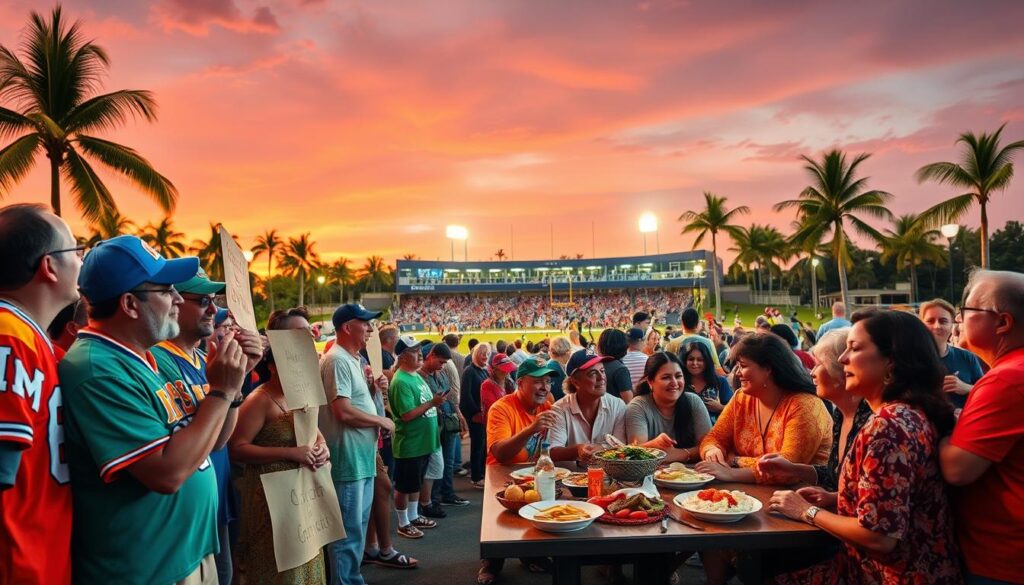
Game day isn’t just about the kickoff in Southwest Florida. It starts with the smell of grills hours before the game. Fans enjoy unique burgers, like key lime pie-infused patties, showing their team spirit.
These traditions are not random. They are personal and quirky. Fans do lucky rituals like tapping a sign or wearing a special hat. These acts give them a sense of control in the unpredictable world of sports.
The NFL knows how to connect communities through sports. The Dallas Cowboys played mariachi music, and the Oakland Raiders had Ballet Folklorico. These were more than just halftime shows. They were local rituals to build emotional ties.
In Southwest Florida, the pre-game is a special experience. It’s filled with citrus smells, fight songs, and family meals. These moments create a shared story for everyone.
When the game ends, the celebration begins. Fans go to a specific bar to celebrate wins or a quiet pub for losses. The location is key, showing the power of these local rituals.
These traditions turn sports into a community event. The NFL’s “Carne Asada” events are a great example. They create shared memories and a sense of belonging.
In Southwest Florida, our traditions are more natural but just as important. The key lime burger, lucky hat, and post-game dock are our threads. They give us a sense of continuity in a changing world.
Are these local rituals a bit odd? Yes. Are they essential? Definitely. They make fans feel like they’re part of something bigger than sports. They remind us that being a fan is about sharing a hopeful tradition.
Signature Cheers, Songs, and Celebrations
I once stood next to a 70-year-old season-ticket holder. We both tried to sing an old cheer. It sounded like a secret language. Cheers are like living hymns, always changing.
What makes a chant last? It’s not just “Let’s Go [Team Name].” It’s something unique, like a pun on a player’s name. Or a pop song melody with a twist. It’s like insider baseball for everyone.
The NFL has tried to get fans involved with campaigns like #FeelTheOrgullo. It was a big success, encouraging Hispanic fans to share their pride. Teams were asked to create community celebrations.
The Carolina Panthers highlighted a local Hispanic business each week. The Arizona Cardinals featured a dance group at halftime. The Miami Dolphins held fitness events with schools. These efforts brought culture into the game.
In Southwest Florida, our community celebrations are unique. We have cheers that reference local events, like hurricanes or citrus harvests. These are hidden gems you learn by attending games year after year.
The real magic is in the moments that can’t be scripted. Like when a rain delay turns into laughter. Or when you learn an old cheer from a fan twice your age.
In those moments, we forget about teams. We become a tribe. It’s a feeling that can’t be captured by any chant. That’s the true community celebration.
Historic Team Legacies
Southwest Florida’s sports scene is young, but its teams are already building legacies. A legacy is more than just wins and losses. It’s the stories a community tells and retells.
The Cincinnati Red Stockings are seen as the first pro team (1869). The Kentucky Derby has been running non-stop for 147 years. We’ve turned Babe Ruth into a hero and made Abner Doubleday the inventor of baseball, even though it’s not true.
Legacy is a mix of real history and made-up stories. The Doubleday tale is a made-up origin story for baseball. But lacrosse has real spiritual roots, played by Indigenous peoples for centuries.
In Fort Myers, Naples, or Cape Coral, legacy is created. It’s not passed down. It’s about the stories of teams that played through tough times or local heroes who never left.
These sports traditions are shaped by the community. They’re not fixed like Boston or Chicago’s legacies. They’re stories that grow and change, often with a nod to their own fiction.
The answer is both. In Southwest Florida, a legacy is about the stories we tell today. It’s a powerful, modern kind of history.
The Role of Community in Sustaining Traditions
Traditions don’t just live on memories. They need the community’s support to survive. That team spirit you feel on game nights? It’s something we all need to keep alive.
The NFL’s Hispanic Heritage Leadership Awards show how traditions can thrive. They give $2,000 to 32 local groups each year. It’s not just giving money; it’s investing in the future of fan loyalty.
So, what does this mean for us? Does our booster club’s fish fry do more than just raise money? Yes, it creates a sense of belonging. It keeps traditions alive, even after the stars have moved on.
Our local families don’t just show up. They make sure everyone feels welcome. They remember who likes extra pickles and who needs a quiet seat. This care makes traditions strong.
This care takes many forms:
- Financial Stewardship: Fundraisers that directly tie community success to team support.
- Volunteer Ethos: The unpaid labor that keeps game day operations, and traditions, alive.
- Intergenerational Transfer: Knowledge and roles passed down, like operating that iconic popcorn machine.
- Civic Contribution: When team identity expands to support local causes, mirroring that strategic community investment model on a hometown scale.
The final score may fade, and the banners may gather dust. But a community-owned legacy, grown through shared effort, lasts forever. That’s the true power of team spirit: feeling it and building it for the next generation.
Interviews: Fans and Players on What Tradition Means
I searched for the heart of Southwest Florida’s sports traditions. I found it in the passionate words of fans and players. Their stories show tradition as a personal thing, not just a big idea.
Carl has been in Section 208, Row G, Seat 5 for thirty years. He keeps his dad’s old cap on the seat next to him. For Carl, this is more than just a memory. It’s a way to connect with his family through sports.
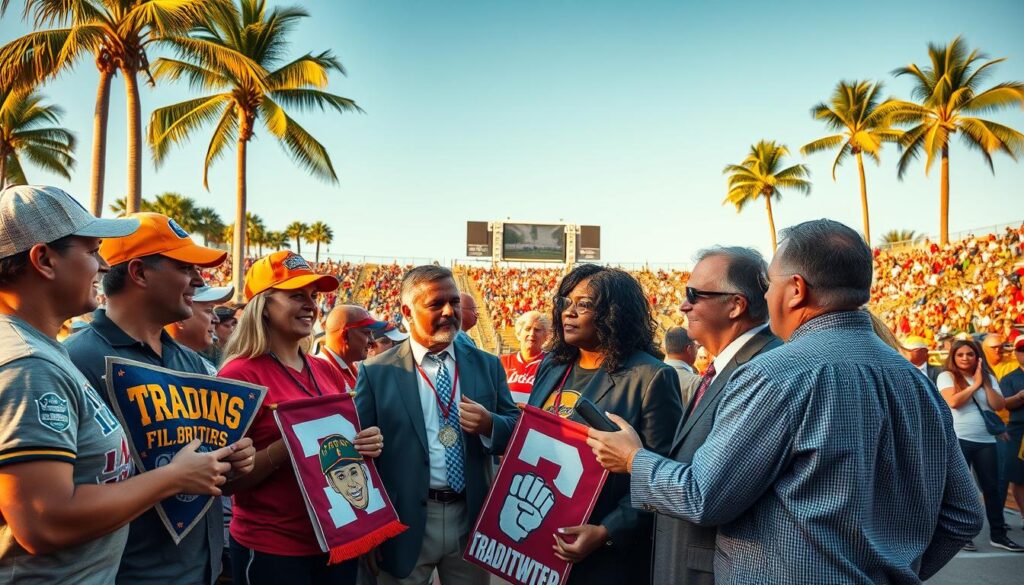
Javier, a former minor-league pitcher, shared his rookie initiation. He was duct-taped to a dugout pole and sang a bad victory song. It was embarrassing but helped him feel part of the team.
NFL players like Xavier Su’a-Filo surprise teens at cooking classes. They also lead PLAY 60 camps. It’s not just PR; it’s a chance for them to connect with the community.
So, what is tradition? For some, it’s family ties. For others, it’s finding a place to belong. Even for pros, it’s a chance to feel part of something bigger than themselves.
These stories show us that tradition is alive and complex. It’s not just about winning or losing. It’s about the people and their experiences.
Tradition isn’t found in trophies or records. It’s in the people who keep coming back to their favorite teams and sports.
Conclusion
So, what’s the final score on all this tradition talk?
The rituals, cheers, and legacies we’ve looked at are powerful. They drive local identity. These aren’t just game-day antics. They are key community celebrations.
Remember that manatee mascot? Seen through new eyes, it’s more than silly. It’s a symbol of shared belonging, built one sunrise tailgate at a time.
This legacy mixes spontaneous fan joy with careful storytelling. The result is a dynamic, living history. It helps us cope with life’s ups and downs. It’s a strong form of local pride.
In a world that often feels broken, that sense of “ours” is the real win. The true celebrations happen in parking lots, stands, and memories we make together.
Now, if you’ll excuse me, I have a very specific parking spot to claim.