When you think Florida sports factories, does your mind go to Miami’s neon glare or Tampa’s pirate ship?
Let’s rewire that. The real secret sauce is simmering in the overlooked corners of SWFL.
From NFL halls to NASCAR ovals, this region isn’t just producing pros; it’s exporting cultural icons. Consider the evidence: a Hall of Famer turned revolutionary coach (Deion Sanders). A two-time MLB All-Star (Shane McClanahan). A watermelon-smashing, eighth-generation farmer turned racing sensation (Ross Chastain).
They all share the same 941 area code.
This isn’t an underdog story. It’s an analytical examination. Why is this stretch of coastline a persistent, if quiet, engine for elite talent?
I’ll blend observation with a dash of sarcasm. Who wouldn’t chuckle at the sheer absurdity—and brilliance—of a “Hail Melon” move originating from Alva?
We’re moving past the feel-good narrative. Let’s dig into the how and why SWFL stars keep making the leap from local fields to the national stage.
The Journey from High School to College Athletics
Forget the highlight reel. The real story of an athlete journey to campus is written in visa applications, academic transcripts, and showcase evaluations. It’s a bureaucratic decathlon where pure talent is merely the qualifying round—just like the process explored in college athlete journeys.
The path isn’t one road. It’s at least two parallel tracks, running simultaneously. One is an international odyssey, like Kelvin Cheruiyot’s from Iten, Kenya, to the University of Florida. The other is a domestic proving ground, like the All Ivy Futures hockey showcase in Estero.
On the surface, a Kenyan distance runner and a Florida hockey player have little in common. Dig into their college recruitment sagas, and you find the same core variables: timing, paperwork, and a system that demands more than a fast time or a hard slap shot.
Take Cheruiyot. His motivation wasn’t just personal. It was communal, sparked by friends who had already made the leap. His training ground was the legendary high altitude of Iten. Yet, his ticket to UF wasn’t stamped by race results alone.
It was secured through a complex network of coach vetting. Then, it was nearly voided by a U.S. student visa freeze. Talk about a hurdle race before the actual race. His subsequent challenge? Acclimating to Florida’s humid, sea-level climate—a stark contrast to the thin, cool air of home.
Now, pivot to the hockey showcase. This isn’t a simple tournament. Harvard’s Matt Gilroy frames it as a critical “next step” on the “long road” to college hockey. It’s a four-game microcosm of the entire college recruitment process.
Players compete, yes. But they also sit through workshops. They are evaluated on and off the ice. It’s a crash course in becoming a commodity that a college program would want to invest in. The athlete journey here is accelerated and put under a microscope.
| Variable | The International Pathway (Cheruiyot) | The Domestic Showcase Pathway (All Ivy Futures) |
|---|---|---|
| Primary Hurdle | Immigration logistics (visas) and cultural acclimation | Visibility and differentiation in a crowded recruitment pipeline |
| Key Support System | Transnational coaching networks and personal references | Showcase organizers, evaluators, and skills workshop leaders |
| Defining Moment | Clearing a government visa freeze | Performing under combined pressure of games and formal evaluations |
| Post-Transition Focus | Adapting to new climate, food, and academic life | Translating showcase feedback into sustained performance for scouts |
So, what’s the common denominator in these tales? The paperwork gauntlet is real. The transition is multifaceted. It asks a young person to be a diplomat, a student, and an immigrant, all while maintaining peak athletic form.
This brings us to the million-dollar question. We glorify the “athlete” part. But in the modern athlete journey, is the “student” – and all the bureaucratic baggage that title now carries – the most challenging position to play?
Notable College-Bound Athletes
If you think Southwest Florida’s athletic legacy is just a dusty trophy case, you haven’t been paying attention. The “Suncoast to Syllabus” pipeline is real. It’s a path made by athletes who’ve gone to college and those trying to get there.
Let’s look at the blueprint. Names like Deion Sanders are not just footnotes. They’re the whole story. His influence at North Fort Myers High is huge. He shows that the region can produce top talent.
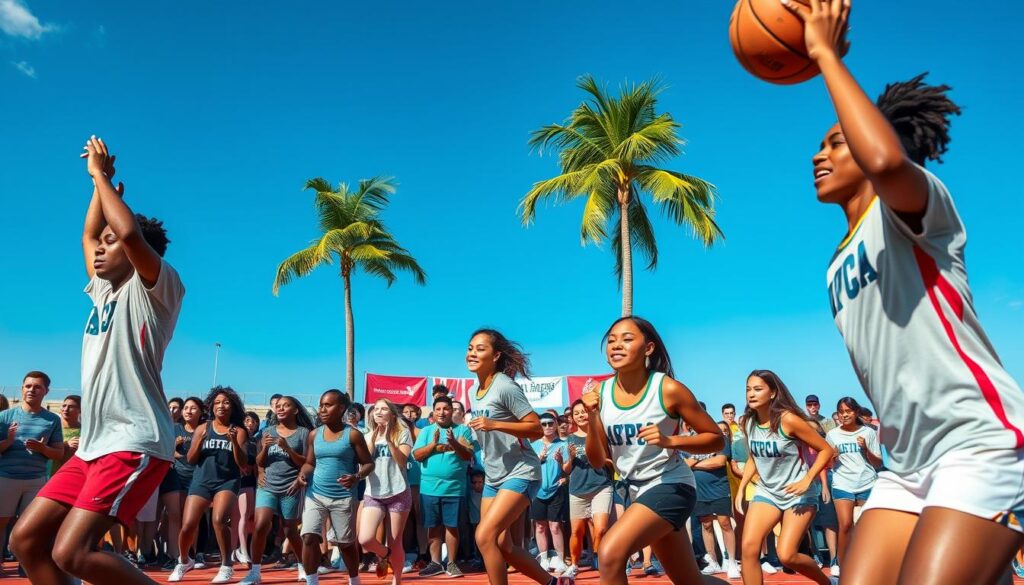
Now, let’s talk about today. The Matterhorn Fit showcase is more than a game. It’s a chance for kids like Esteban Boyer and Dylan Delgado to show their skills. Ivy League and NCAA scouts are looking for more than just talent. They want to see if these players are ready for college.
This is where local meets college. It’s where kids from all over can become college athletes. The journey from local hero to college athlete is carefully watched.
Here’s a list of what’s happening:
- The Legacy: Pro athletes from SWFL (Sanders, others) who validated the path.
- The Current Aspirants: Elite youth players like Boyer and Delgado, using showcases as their audition.
- The System: Events and circuits designed to bridge the gap for local to college sports.
Is this talent output a fluke? No way. It’s a regular part of the scene. The setup—the high school programs, travel teams, and showcase events—keeps the cycle going. Success from one generation helps the next.
The real analysis isn’t just about scholarships. It’s about seeing the pattern. When a scout watches a local to college sports prospect in Fort Myers, they see more than a player. They see a product of a proven system. That’s what makes a prospect stand out.
Profile Features: Early Journey, Local Impact, College Transition
The story of a Southwest Florida athlete is complex. It’s a mix of where they started, how they made a difference locally, and their move to college. Each part shows a different side of the athlete journey.
This isn’t just a biography. It’s a guide on how talent is developed, shared, and improved.
Early Journey
Kelvin Cheruiyot’s story isn’t just about his speed. It’s about growing up in Iten, Kenya, where winning is common. Training at 8,000 feet is not just a choice; it’s a way of life.
His early years were a lesson in environment. The red dirt, thin air, and constant sight of champions. This shaped his mindset and body. For Cheruiyot, running was more than a hobby; it was his family’s business and the town’s pride.
This phase answers the “why.” Why endure pain? Because everyone around you does, and those who succeed look like giants. The early journey sets the foundation. All future efforts build on it.
Local Impact
The story gets interesting here. Athletes who succeed often give back to their community. They help the next generation.
Take Ross Chastain, who visits his old school, South Fort Myers High. He doesn’t just talk; he gets his hands dirty. It’s a powerful way to give back.
Sammy Watkins and others host youth camps. They share their stories. Their presence inspires and shows the possibilities.
The message is clear: “This guy was once where you are.” It’s a boost of confidence. The community celebrates and reinvests in its stars.
College Transition
This phase is key. It turns raw talent into something college-ready. It’s not the same for everyone. Some get a structured chance to prove themselves.
For example, there’s a hockey showcase for Ivy League scouts. It’s a chance to show off skills. It’s a controlled test.
For others, like Cheruiyot, it’s a big change. Moving from Kenya to Florida is a culture shock. Learning new things, like what a “big hoodie” means, is part of adapting. His time at UF is about more than just running faster.
The best transitions honor the past but also learn new things. This phase polishes the athlete’s skills.
| Profile Feature | Defining Characteristic | Key Example | Primary Outcome |
|---|---|---|---|
| Early Journey | Cultural & Environmental Immersion | Kelvin Cheruiyot training in Iten, Kenya | Instills foundational mindset & grit |
| Local Impact | Community Feedback Loop | Ross Chastain at South Fort Myers Auto Academy | Inspires next generation; reinforces local pride |
| College Transition | Structured Adaptation & Code-Switching | Hockey showcase evaluations; Cheruiyot at UF | Translates raw talent into collegiate system readiness |
The three parts are connected. The early journey fuels the athlete. The local impact validates their path. The college transition directs that energy into a new arena. Missing one part means missing the whole athlete journey. This triptych predicts success in local to college sports.
Coach and Mentor Interviews
Forget the highlight reels and scouting reports. The real blueprint for college recruitment comes from candid talks with coaches. They are the ones who know the talent pipeline inside out.
Matt Gilroy, a Hobey Baker winner at Harvard, cuts through the noise. He sees elite showcases as seminars, not cattle calls. “The best current event for us is about information,” Gilroy states. “It’s teaching families the different avenues.” He looks for athletes who can be taught, not finished products.
Scott Harff from St. John’s School shares a similar philosophy. He focuses on families, not just athletes. He looks for “patient” families who invest in personal development, not early fame. In a world obsessed with metrics, Harff values character above all.
Will Palmer, Associate Head Coach at the University of Florida, talks about recruiting international talent. Recruiting someone like Kenyan runner Brian Cheruiyot is a high-stakes game. It involves trusted networks and navigating bureaucracy.
“Vetting is everything,” Palmer explains. “You’re not just evaluating an athlete. You’re evaluating a situation—visas, acclimation, support systems.” This adds a chess-like complexity to the college recruitment process.
So, are these development-focused coaches the last true talent scouts? The ones who value the craft of building a player? Their wisdom suggests yes.
Their insights point to a deeper, more nuanced game. It’s about cultivated growth, not instant gratification. They show us what really moves a prospect from local name to college roster spot.
The modern college recruitment landscape is loud. But the signal comes from the sidelines. From mentors who measure progress in years, not likes, and who build pipelines with patience, not pressure.
Scholarship and Recruitment Tips
The college recruitment game isn’t just about winning on the field. It’s about paperwork, showcases, and fitting in culturally. Talent gets you noticed, but strategy gets you the scholarship. Our Southwest Florida case studies show the real playbook.
First, Seek Exposure, Not Just Adulation. Winning local tournaments boosts your ego but doesn’t help if coaches aren’t watching. The showcase model, like the hockey event we discussed, is key. It’s a setup for coaches to evaluate you, not just compete.
Coaches also get to see how you handle workshops and pressure. It’s not just about winning. It’s about showing you can solve problems under scrutiny.
Second, Master the Paper Trail. Dreams meet bureaucracy here, and bureaucracy often wins. Kelvin Cheruiyot’s visa freeze nearly ended his journey. For international athletes, the process is tough and slow.
Domestic athletes face similar challenges with academic paperwork. Your transcript is as important as your athletic tape. A missing core credit can block your path. You need a good immigration lawyer and academic advisor.
Third, Find Your Cultural Bridge. Cheruiyot felt at home with other Kenyan athletes at UF. This isn’t just a soft tip. It’s a survival strategy. College is a mental marathon. Finding your community helps.
You’re not just joining a team. You’re joining an ecosystem. Look for programs where you can find your community. This makes integration easier, not harder.
Let’s break this down strategically. The old model was passive: play well, hope to be discovered. The new model is active and multi-fronted. The table below contrasts the two approaches.
| Recruitment Dimension | Traditional (Passive) Approach | Strategic (Active) Approach | Key Insight |
|---|---|---|---|
| Exposure | Relies on local league performance and word-of-mouth. | Targets structured showcases, video platforms, and coach-recommended events. | Creates a verifiable “paper trail” of evaluations beyond win-loss records. |
| Administration | Treats academic/visa paperwork as a last-minute hurdle. | Initiates compliance processes 12-18 months in advance; uses checklists. | Turns bureaucratic necessity into a demonstrated strength (organization). |
| Cultural Fit | Chooses school based solely on athletic program prestige. | Researches team composition, alumni networks, and campus support systems. | Prioritizes long-term mental health and retention over short-term brand name. |
| Network Building | Communicates only with head coaches during recruitment. | Engages with assistant coaches, academic liaisons, and current players. | Builds a multi-point entry into the program, insulating against staff turnover. |
Your college recruitment is a campaign. It needs intelligence, logistics, and diplomacy. A great highlight reel isn’t enough. You need a strategy that makes coaches feel secure.
Start local. Use platforms that connect you with programs. For example, researching opportunities at a Florida Southwestern State College basketball program can provide a blueprint. Understand their roster, coach’s history, and academic supports.
Ultimately, the successful athlete journey is managed, not miraculous. You are the CEO of your own future. Start acting like it. The game begins long before you step on campus.
Conclusion: Keeping an Eye on Local Talent
Watching homegrown talent is more than just a hobby. It’s a way to see how American sports are changing.
These stories of athletes moving from local to college sports are full of depth. They show the human side of ambition and growth. Take Vincent Cheruiyot, for example. He dreams of a “huge reunion” at NCAA Nationals, inspiring others back home.
College athletes often come back to help the next generation. This mentorship keeps the talent flowing. It’s a cycle of growth and success.
Following these athletes is not just about their achievements. It’s about the stories they tell. From Deion Sanders to Ross Chastain, Southwest Florida is full of fascinating athletes.
Their journeys are real and full of ups and downs. Watching local to college sports gives us a unique view. We see ambition, community, and the journey to success.
Next time you see a great college play, look at the roster. You might find an athlete who grew up near a watermelon patch or a Gulf Coast beach. That’s a story worth following.